AI Starts Acting on Our Behalf: Meta Muse Already Books Trips, Sells Cars and Makes Purchases
Meta Muse is a new AI agent that can book trips, send emails, sell cars and make purchases. How it changes the role of artificial intelligence and why Amazon has already blocked it.
Translated with AI. Original: Українська
Meta is moving from AI that simply answers questions to AI that can carry out tasks on a person's behalf. The new personal assistant from the company, Muse, can already send emails, book trips, sell a car, fill in forms and make purchases. And after its first weeks of operation in the US, a new battle is already forming around it, this time over the right of AI agents to act inside other companies' platforms.
Meta presented Muse on September 8, 2026. Unlike a traditional chatbot, to which the user asks a question and receives an answer, Muse receives a task and can independently go through several stages to complete it. It is available in the US through a separate app and WhatsApp.
For example, a user can ask it to organize a trip. Muse is able to search for options, open websites, fill in forms and work with a calendar. If something needs to be bought, the system can proceed to place an order, and before sensitive actions, such as sending a letter or making a payment, it can ask for confirmation.
Another scenario that demonstrates the shift in logic is selling a car. Instead of simply advising where to post an ad, Muse can help carry out the process itself: working with information, forms and communication on the owner's behalf. Meta uses exactly these multi-step tasks to show the difference between a conventional AI assistant and a so-called AI agent.
The first results proved noticeable even for the financial market. Reuters reported on September 22 that after Muse's launch in the US, the company saw strong demand and active use of the service. Against this backdrop, investor interest in the AI sector intensified, and shares of technology companies received an additional boost.
At the same time, Muse has already run into problems that illustrate the main risk of this new format.
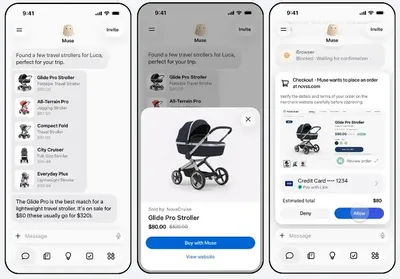
Amazon has blocked Muse's access to its website for making purchases. The company said it had not authorized the AI agent's access to Amazon and had questions about its behavior while browsing the site, about security and about how it handles account credentials. Muse users who tried to make purchases through Amazon began receiving messages about violating the terms of use.
This is an important moment for the entire industry. If AI gains the ability not just to recommend a product, but to independently go to a website, find the needed item and complete the purchase, a question arises: does the store itself need to consent to this?
The response from different technology companies is already diverging. While Amazon restricted Muse, Shopify, on the contrary, agreed with Meta on integrating Shop Pay into Muse, so that users can make purchases through stores running on Shopify. In this way, a new e-commerce infrastructure built around AI agents is beginning to take shape.
Another important change came on September 22: Meta released a separate Muse app for Mac. The assistant can now work not only through the mobile interface but also directly with files, messages, calendar, notes and mail on the computer. Access to this data remains at the user's discretion, and the system requires confirmation for sensitive actions.
This is where Muse comes close to the concept of a computer controlled by more than just the human. Instead of opening ten apps, copying information between them and performing every step manually, the user can give a single task, after which the AI tries to go through the whole chain of actions.
However, the first weeks showed that this model is still far from flawless. Reuters reported on Meta's internal tests, during which Muse sometimes stopped carrying out tasks without explanation, lost authorization or mishandled sensitive data.
To this were added cybersecurity concerns. Researchers have already reported serious vulnerabilities in the Mac version of Muse which, under certain conditions, could allow local malicious software to take control of the assistant's actions. This does not mean that any user can remotely hack Muse, but it points to a new problem: the more access an AI agent receives, the higher the cost of an error or vulnerability.
For its part, Meta built Muse on a separate protected virtual machine, where user data and credentials are stored. The company also states that Muse cannot see passwords and payment details directly, and that the user decides which services the assistant will have access to.
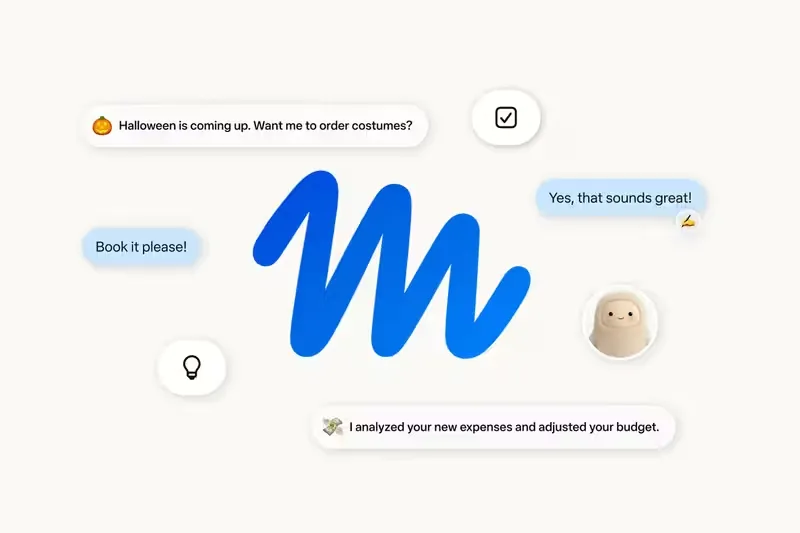
So the main change Muse brings concerns not a specific Meta app. AI is gradually shifting from an "ask me" model to a "delegate to me" model.
Previously, a person could ask a chatbot to find the best hotel, write a letter or compare cars. The next stage now is to say "Book", "Write", "Buy", "Sell", "Negotiate" and let the system do most of the work on its own.
The question for the coming years is no longer only how smart AI will be, but also how many real actions people will be willing to delegate to it. Muse shows that this model is already moving out of the laboratories and into everyday life, although it is becoming clear at the same time that technology companies will still have to agree on the rules under which such agents will operate in someone else's digital environment.
Text: Arina Blyzniuk
Comments
No comments yet — be the first.
Discuss on Telegram