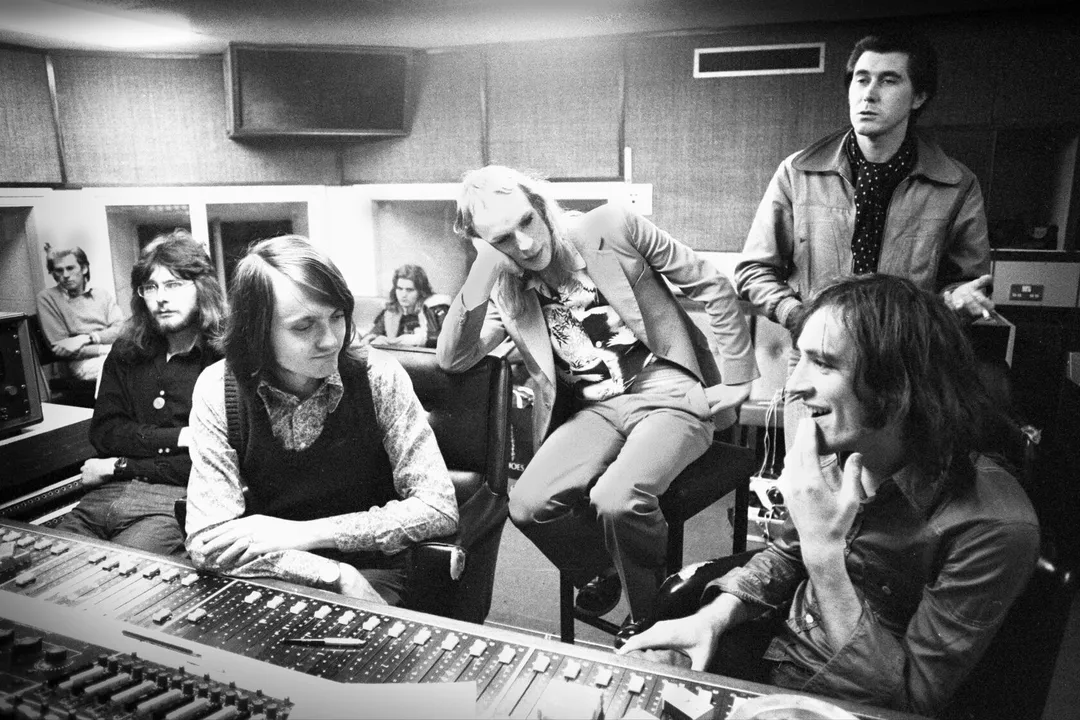
Brian Eno Revives His Own Music Label Opal Records
Braian Ino is reviving Opal Records and preparing to release previously unpublished music. How ambient music changes our attitude to sound and turns it into part of everyday life.
Translated with AI. Original: Українська
Braian Ino is relaunching Opal Records, the label he founded in 1988 for music that falls outside the conventional pop format. The plans include reissuing old releases and publishing previously unreleased recordings, including music created for specific activities and environments. This brings attention back to an idea Ino has been developing for decades: sound does not necessarily have to be the main object of attention. It can shape the atmosphere of a space, influence the perception of time and stay in the background without requiring the listener's focus.
Ino is often named as one of the key popularizers of ambient music, a genre in which texture, space and mood matter more than melody and rhythm. His 1978 album Ambient 1: Music for Airports was conceived as an alternative to intrusive background noise in airports. Instead of drowning out the sounds around it, the music was meant to interact with them and change the feeling of being in a space. This approach became the foundation for an entire culture of sound design.
Music for a specific environment works differently from an album that is listened to from start to finish. It can accompany work, reading, rest or time spent in a public space. Its purpose is not always to attract attention, but to create conditions for a certain experience. That is why such compositions often lack a clear climax or a conventional song structure: they can last a long time, repeat and remain almost unnoticeable.

Braian Ino is relaunching Opal Records, the label he founded in 1988 for music that falls outside the conventional pop format. The first releases after the return will be reissues of two of his albums, and future plans include a collection of 12 albums of previously unpublished music. Ino describes it as recordings for specific activities and environments: for example, for reading or cleaning. This brings attention back to an idea he has been developing for decades: sound does not necessarily have to be the main object of attention. It can shape the atmosphere of a space and stay in the background without requiring the listener's focus.
Ino is often named as one of the key popularizers of ambient music, a genre in which texture, space and mood matter more than melody and rhythm. His 1978 album "Music for Airports" was conceived as an alternative to intrusive noise in airports. Instead of drowning out the sounds around it, the music was meant to interact with them and change the feeling of being in a space. This approach became one of the landmarks for the further development of sound design.
Music for a specific environment works differently from an album that is listened to from start to finish. It can accompany work, reading, rest or time spent in a public space. Its purpose is not always to attract attention, but to create conditions for a certain experience. That is why such compositions often lack a clear climax or a conventional song structure: they can last a long time, repeat and remain almost unnoticeable.
A similar principle has long been used in hotels, restaurants, shops and workplaces. Music helps create a recognizable atmosphere, set the pace of a stay and separate one space from another. Sound becomes part of a place's identity, just like lighting, scent or interior design. At the same time, poorly chosen volume or an intrusive melody can have the opposite effect, which is why the sound environment deserves no less attention than the visual one.
Technology has made this kind of music available at home too. Playlists for concentration, sleep, meditation and relaxation have turned sound into a tool for organizing everyday life. But there is a difference between music that is played for a specific function and music that is listened to attentively. In one case, sound helps set up an environment; in the other, it becomes an experience in itself. These approaches do not contradict each other: the same composition can be background today and an object of focused listening tomorrow.
The return of Opal Records shows that a music archive can be more than a collection of old releases. The label is restoring albums that for a long time were hard to find outside Japan and is considering releasing previously unpublished recordings. For Ino, this is a continuation of an experiment with how sound affects our sense of place, time and activity. Here, music is not limited to the stage, headphones or the concert hall.
We are used to judging music by whether we want to sing along, whether the melody sticks in our heads, or whether we will return to the album. Ambient music offers a different scale: whether the sound helps us concentrate, whether it changes the atmosphere of a room, or whether it makes an ordinary activity more pleasant. Perhaps the future of music lies not only in what we listen to, but in how sound quietly fits into our lives.
Also read: Oasis return to Knebworth 30 years later: band announces new world tour
Text: Arina Blyzniuk
Comments
No comments yet — be the first.
Discuss on Telegram