Is Messi Ending His Football Career? The Legend Says Goodbye to Argentina's National Team
Lionel Messi has retired from international football at 39. 207 matches, 125 goals, a World Cup title, two Copa América trophies and a farewell note he wrote right after the 2026 World Cup final.
Translated with AI. Original: Українська
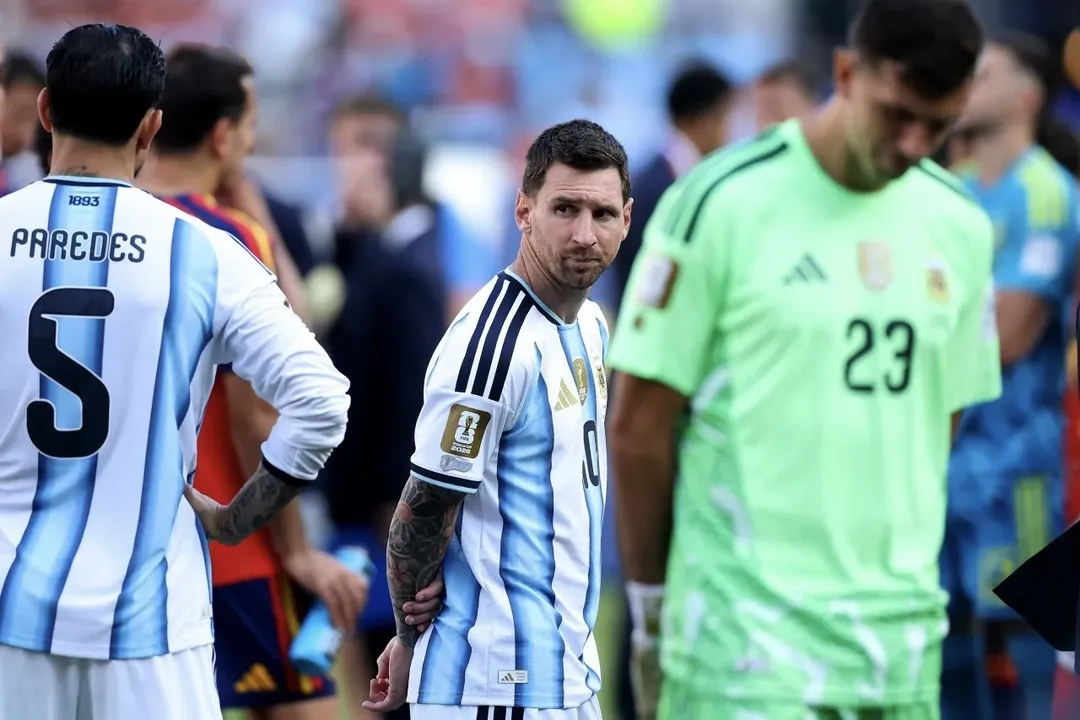
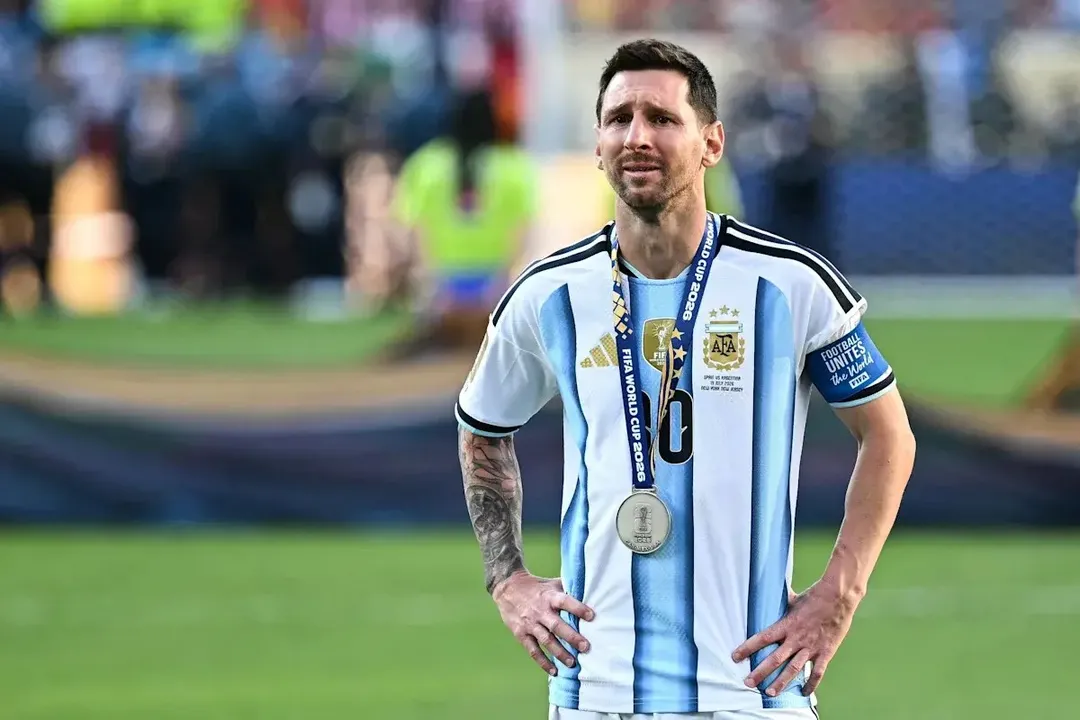
Lionel Messi has retired from international football. At 39, he is leaving the Argentina national team after 21 years, 207 matches and 125 goals, and will forever remain its all-time top scorer and record appearance holder. The footballer announced his decision on August 31 on Instagram, posting a handwritten note that turned out to be far more significant than a routine retirement announcement. Messi wrote the text as early as July 21 — two days after Argentina's loss to Spain in the 2026 World Cup final, but did not dare to make it public then. After the death of his father, Khorkhe Messi, on August 8, this decision became final for him.
The sequence of events is important in this story. Messi did not make the decision to step away a few weeks after the final — he already knew he wanted to close this chapter when he wrote his farewell words on July 21. Spain's 1-0 win in extra time was the last match for the 39-year-old captain with Argentina. He returned home, and on August 8 his father, Khorkhe Messi, who remained one of the most important people in his life throughout his career, died. After this loss, the footballer finally became certain that the time had come to leave the national team.
For Argentina, this is not just a change in the squad. A player who for two decades had effectively become its main symbol is leaving the national team. Messi made his senior national team debut in 2005 and went through almost everything with it: early defeats, three lost finals of major tournaments, criticism from fans, the disappointing 2018 World Cup, a brief announcement of his retirement from international football in 2016 — and ultimately a period that turned him into an undisputed legend of Argentine football.
The most dramatic phase came in the middle of the 2010s. Argentina lost the 2014 World Cup final to Germany, and then twice in a row lost to Chile in Copa América finals — in 2015 and 2016. After the second final, Messi even announced his retirement from the national team, but he later returned. And it was after this that a completely different page of his story began.
In 2021, Argentina won the Copa América, and in 2022 the Finalissima, and then Messi finally received the main trophy he had been missing — the World Cup in Qatar. In 2024, the national team won the Copa América again. Thus, Messi is leaving the national team after winning a World Cup, two Copa América titles and the Finalissima. In addition, he won the 2005 FIFA World Youth Championship and Olympic gold in 2008.
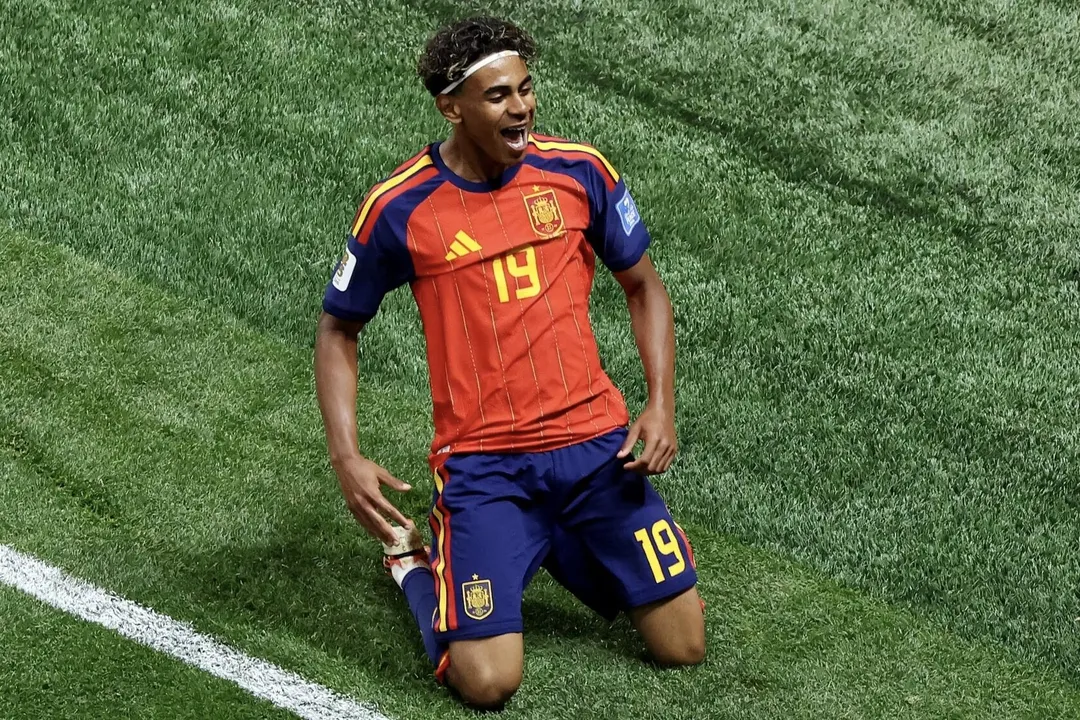
Yet his last tournament with Argentina did not end as a calm finale to his career. In 2026, Messi again led the team into the World Cup final, where Argentina lost to Spain. At 39, he scored eight goals at the tournament and provided four assists, finishing the championship among its most prolific players. His last match for his country was a final, not a group-stage game or an early exit — a symbolic ending for a footballer who played in six World Cups.
Over 21 years, Messi set records that the next generations will now have to chase. 207 matches and 125 goals — the best figures in the history of the Argentina national team. During this time, he scored 21 goals at World Cups, became Argentina's all-time top scorer and one of the most prolific footballers in the history of international football.
But the numbers are only part of this story. Messi is leaving the national team at a moment when he no longer needs to be compared with Diieho Maradona or prove his right to be called a legend. In 2022 he did what for decades had defined the status of Argentina's greatest footballers — he won the World Cup as captain. This very moment finally changed how the country viewed him: a footballer who was once accused of being unable to repeat Maradona's success has become the person with whom an entire generation will now associate Argentina's golden era of football.
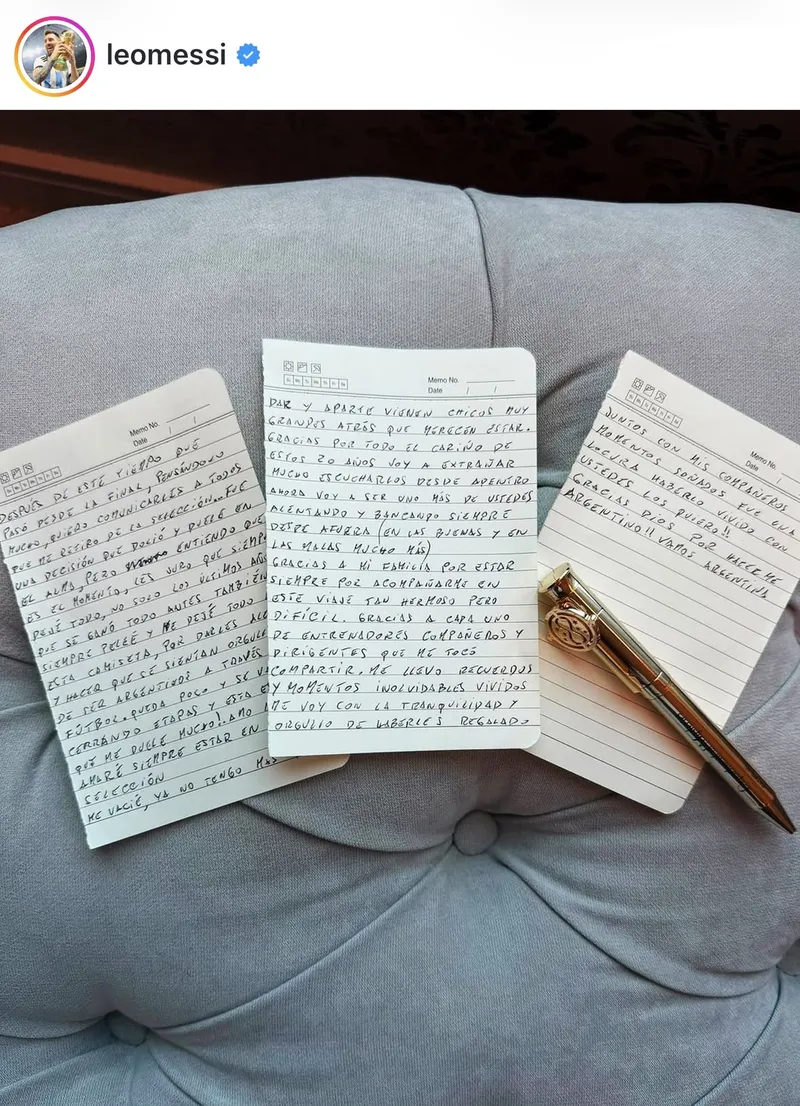
In his farewell note, Messi does not announce the end of his entire football career. It concerns the national team only. At club level he continues to play for Inter Miami, so fans will still see him on the football pitch. But the Argentina shirt will from now on remain part of the past.
His decision also opens the way for a new generation. In his statement, Messi stressed that young Argentine footballers deserve the chance to get their own opportunity with the national team. This is a logical moment to pass on the baton: a team that for so long was built around one footballer must now learn to exist without him.
Messi is leaving the national team not as a footballer who did not get the chance to finish his story, but as a captain who won the main trophy, set all the key national records and left behind a generation that grew up alongside him.
His last match ended in defeat. But the final chapter of his story with Argentina is not about that defeat at all.
He wrote his farewell as early as July 21. For more than a month it remained in his notes. On August 31, Messi finally published it — and put a full stop to a story that had lasted 21 years.
Read also: Lionel Messi: The Final That Could End an Entire Era
Text: Arina Blyzniuk
Comments
No comments yet — be the first.
Discuss on Telegram