Dzheff Bezos Refuses to Back Down: Blue Origin Gears Up to Return to the Space Race
Bezos's Blue Origin is preparing to return New Glenn to flight after an accident and is winning new NASA projects for the Moon and Mars. Can the company compete with SpaceX?
Translated with AI. Original: Українська
Dzheff Bezos has poured years of work and billions of dollars into Blue Origin, but the company still lives in the shadow of SpaceX. Now the situation may change. After the New Glenn rocket exploded in May, Blue Origin rebuilt its launch infrastructure, found the cause of the accident and is preparing to return the rocket to flight by the end of 2026. Meanwhile, NASA has already assigned the company new large-scale space projects.
The May accident was a serious blow for Blue Origin. During a test of New Glenn at the Florida spaceport, an explosion destroyed the rocket and damaged part of the launch complex. At first the company only talked about investigating the causes, but in August Blue Origin reported that the problem was in the main oxygen valve of one of the BE-4 engines. The company is already manufacturing upgraded parts and preparing them for installation on existing engines.
Rather than waiting for the full restoration of the old launch pad design, Blue Origin decided to change its approach to launches itself. The company is moving to a combined rocket preparation scheme that allows it to use existing infrastructure and return New Glenn to its operational cycle faster. According to Blue Origin's plan, the rocket should fly again before the end of the year.
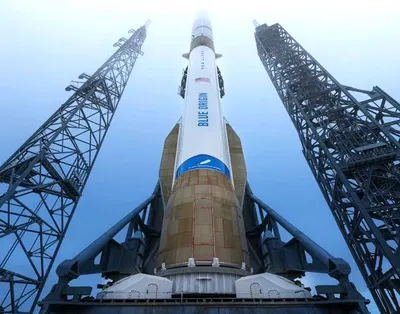
But now New Glenn matters to Bezos not just as a large rocket. It is meant to become the foundation of the entire Blue Origin ecosystem.
The company is simultaneously developing the Blue Moon lunar program, the Blue Ring spacecraft, the TeraWave satellite system and its own rocket engines. In other words, Bezos is building not one product but a vertically integrated space company that wants to control as many stages as possible, from the engine to cargo delivery and operations in orbit.
The most important signal came from NASA. In July the agency agreed with Blue Origin to test the upper stage of New Glenn at the historic B-2 test stand at the Stennis Space Center. This very infrastructure was once used to test systems connected with the Apollo program. Now it will be used to prepare a rocket that is to operate in the new US lunar program.
On September 2, Blue Origin won another major contract: NASA selected the company to develop and deliver the Mars Telecommunications Orbiter, a spacecraft that is to become part of a future telecommunications network around Mars. This is already a completely different level of ambition: Blue Origin wants to work not only near Earth and the Moon, but also in the Martian program.
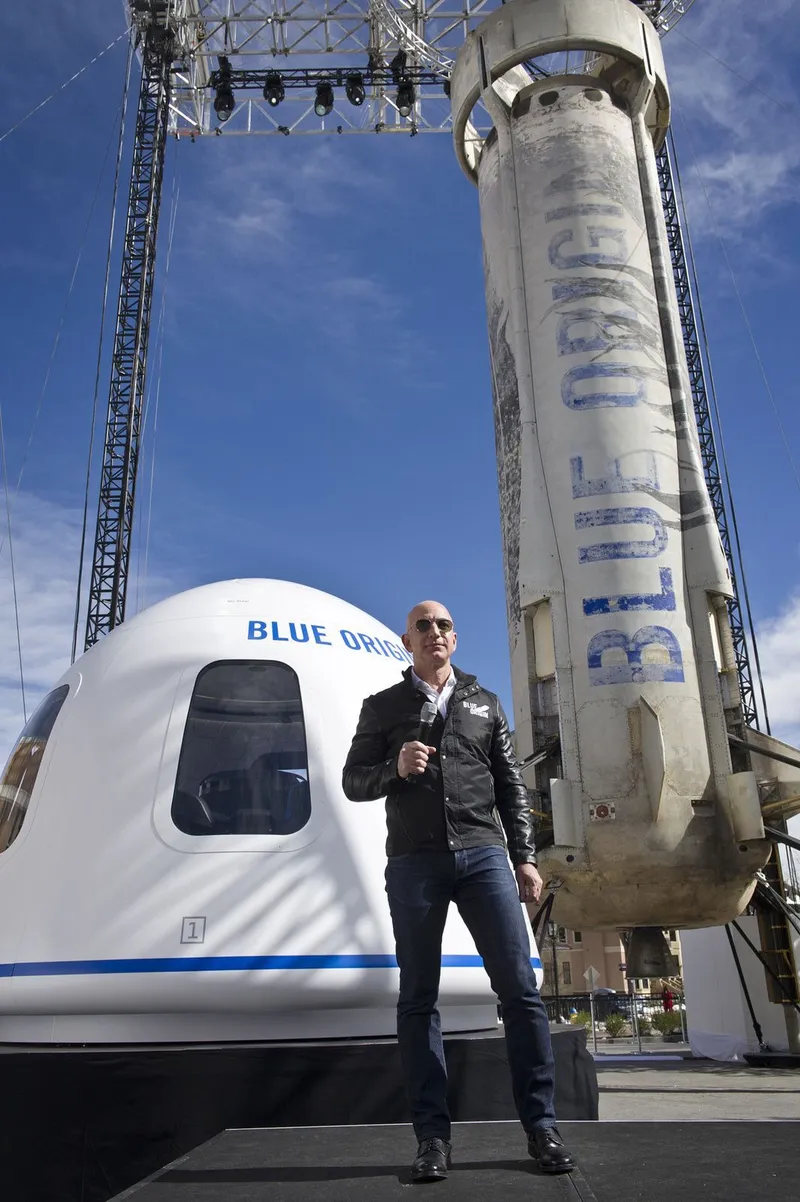
This is where Bezos's story becomes more interesting. His main rival, Ilon Mask, has already turned SpaceX into the de facto leader of private spaceflight. Blue Origin moved much more slowly, but now has a chance to claim its own niche: not to copy SpaceX, but to become the second major American space giant.
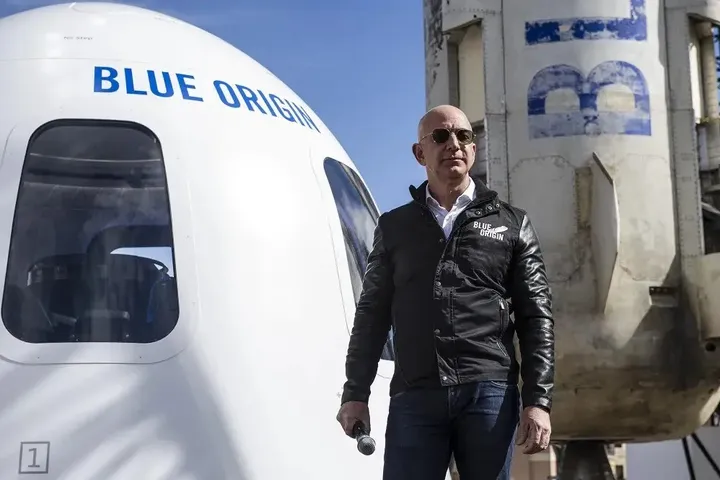
For Bezos this is also a personal bet. He founded Blue Origin in 2000, long before private spaceflight became a global industry. After stepping down as CEO of Amazon, he had far more time for long-term projects, and the space company became one of the main focuses of his attention.
Now Blue Origin has what the company long lacked: real infrastructure, government contracts, a large-class rocket and a whole system of future programs. But there is also a main problem: all of this must be turned into regular successful launches.
That is why the next New Glenn flight will be far more important than an ordinary rocket launch. It will show whether Blue Origin is truly entering a new stage, or whether Bezos's company will once again remain an expensive alternative to SpaceX.
So far Bezos has not won the space race. But he has certainly not left it. And now the question is no longer whether Blue Origin is capable of flying into space. The question is how far it is ready to go.
Also read: Prada Is Sewing for the Moon: What Lies Beneath NASA's New Spacesuit
Text: Arina Blyzniuk
Comments
No comments yet — be the first.
Discuss on Telegram