Tea Houses Are Making a Comeback: A New Format for Unhurried Downtime
Tea houses are once again becoming places to meet, work and relax. In Tokyo, London, Seoul and Paris, they are gradually displacing classic coffee shops, offering not just drinks but a new culture of spending time.
Translated with AI. Original: Українська
While coffee culture continues to evolve, another format is gaining popularity in major cities around the world: tea houses. These are no longer shops with dozens of packets on the shelves but modern spaces where tea becomes a distinct ritual.
This trend is especially noticeable in Japan, South Korea, China, Great Britain and France. Here, establishments are opening that specialize exclusively in tea, paying equal attention to the origin of the leaves, water temperature, brewing method and tableware.
In a good tea house, water is not heated to 100°C. Different varieties require different temperatures: Japanese sencha usually opens up at 70–80°C, gyokuro at roughly 50–60°C, oolongs at 85–95°C, while black teas are brewed almost with boiling water. Even a few degrees can completely change the taste of the drink.
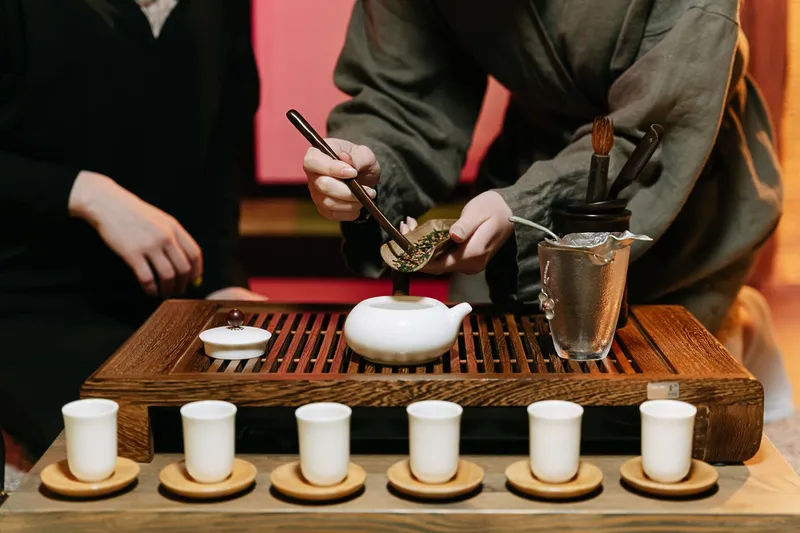
Equally important is the steeping time. If green tea is left to steep even a minute too long, it can become sharp and bitter. That is why in many tea houses each variety is prepared according to its own script.
The menu is changing as well. Alongside matcha, you can find gyokuro, hojicha, genmaicha, white teas, aged pu-erh, Taiwanese oolongs and rare seasonal harvests produced in small quantities.
Many establishments operate on the principle of a tea tasting. Guests are offered several varieties and told about the region of origin, the way the tea is grown and the features of its flavor. This format increasingly resembles a wine or coffee tasting.
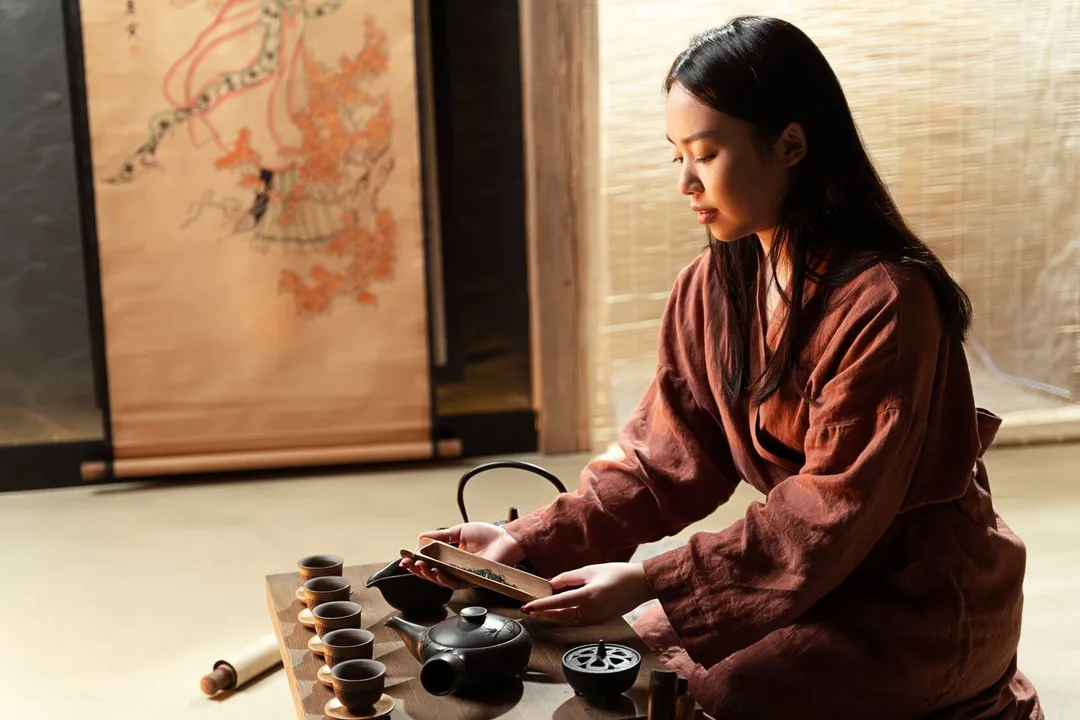
Interiors have changed too. Instead of bright signs and a large number of tables, there is natural wood, stone, ceramics, soft lighting and minimalist design. The space is created so that nothing distracts from the tea ceremony itself.
For many tea houses, silence has become important. Some establishments refuse loud music, and certain areas are specially arranged for reading, working or quiet conversation.
That is why tea houses are increasingly being called the "third space" — a place between home and work where you can spend an hour without rush, notifications and the noise of the big city.
The popularity of this format is easily explained. People increasingly seek not a new drink but a new rhythm of life. And a cup of properly brewed tea turns out to be far more valuable than yet another coffee on the go.
Also read: Matcha no longer the main one? How to choose truly high-quality Japanese tea
Text: Arina Blyzniuk
Comments
No comments yet — be the first.
Discuss on Telegram