When Human Handwork Becomes Luxury: Why Brands Are Returning to Stop-Motion Amid AI Advertising
Why Prada, e.l.f. and other brands are returning to stop-motion and hand-made animation, and how human craftsmanship is becoming a new marker of prestige in the age of AI content.
Translated with AI. Original: Українська
In a world where an advertising image can be created in seconds with artificial intelligence, brands are once again turning to techniques that require time, patience and physical labor. Puppets, plasticine characters, miniature sets and frame-by-frame animation are returning to advertising campaigns, not as a nostalgic experiment but as a way to remind us that a real human effort may stand behind a visual story. In the era of generative content, handmade work is increasingly becoming not just a technique but a statement about value.
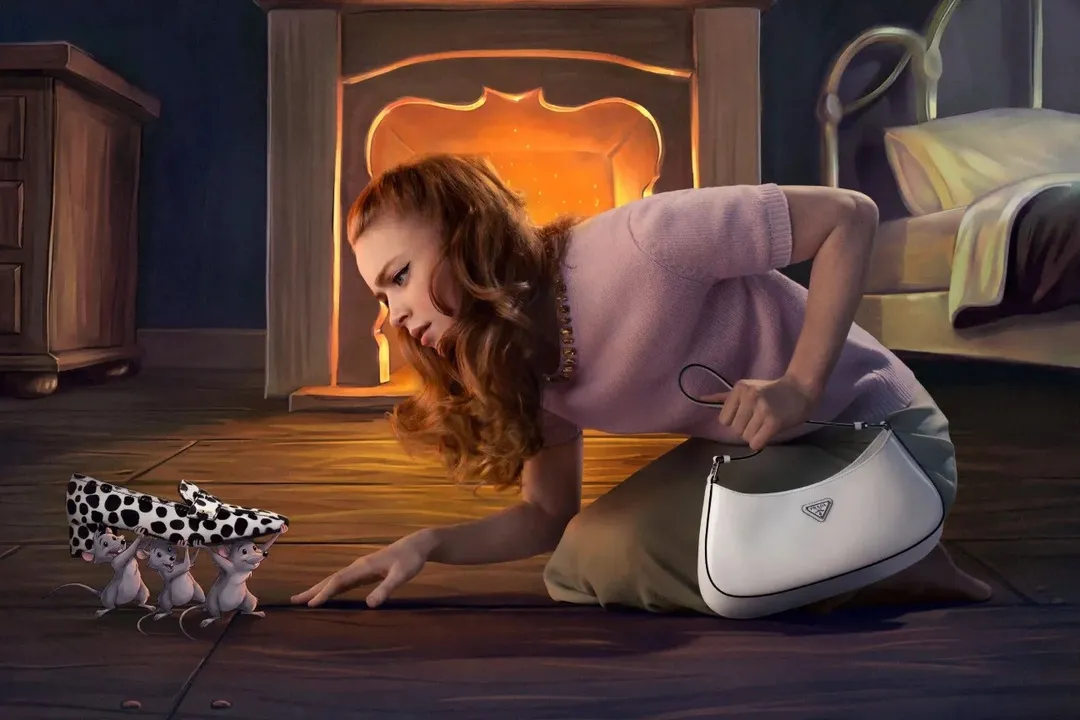
One of the most notable examples is Prada's holiday campaign Drawing Prada: Animated by Hand. The brand combined filming with live actors and hand-drawn characters, and the animation process was led by John Pomeroy, an artist known for his work on classic Disney animated films. Prada did not hide the production process: in the visual story and campaign materials, viewers see sketches and traces of the artists' work. The creative process itself becomes part of the advertising message.
A similar approach goes beyond fashion. In e.l.f. Cosmetics' holiday campaign, the brand used plasticine characters, miniature sets and stop-motion created by a team of female animators. Levi's has also turned to puppet animation, and Canva built its Wild Design campaign around handmade objects, from characters to set details. Different brands are using the same idea: to show materiality, imperfection and human presence where digital content often strives for flawlessness.
Stop-motion is a technique in which objects are photographed frame by frame, each time slightly changing their position. For a few seconds of video, a team may build sets, make characters, manually move details and shoot hundreds or thousands of frames. Such work is not necessarily faster or cheaper than digital animation. Its value lies in the physical presence of objects, the texture of materials and small imperfections that make every scene feel alive. What once could be perceived as a production limitation now becomes part of the aesthetic.
This matters especially for premium brands. Luxury has traditionally been associated not only with the result but also with craftsmanship, time and the complexity of creation. If a product sells the idea of handmade work, a campaign created by hand can reinforce that promise. At the same time, the mere use of stop-motion does not make an advertisement premium: the technique must match the character of the brand rather than serve as a fashionable decoration. A successful campaign turns the production process into a story that audiences want to look at and discuss.
This shift also has a practical dimension. In a feed saturated with digital images, an advertisement that looks physical and tangible can stand out precisely because of its unusualness. Brands increasingly show behind-the-scenes footage: sketches, mock-ups, film sets and the hands of artists. This helps demonstrate that human involvement is not merely a marketing claim. Yet even a "handmade" style can be imitated with AI, so transparency of production becomes no less important than the picture itself.
Is "made by hand" becoming a new marker of prestige? Partly, yes. But the value lies not in an automatic opposition of humans to technology, but in brands once again making authorship, craftsmanship and time visible. Artificial intelligence can help create content faster, yet against the backdrop of its mass spread, carefully made handwork acquires a different weight. In the future, luxury may mean not just a flawless result, but a story about who created it, how and why.
Read also: Prada Revives the Magic of Hand-Drawn Animation: Why Human Creativity Is Becoming the New Luxury
Text: Arina Blyzniuk
Comments
No comments yet — be the first.
Discuss on Telegram