Gen Z's New Quiet Luxury: Why Wealthy Young Collectors Buy Art but Don't Show It Online
Affluent members of Gen Z spend more on art than older generations, but they are much less likely to show their collections online. Why is privacy becoming a new form of status?
Translated with AI. Original: Українська
A generation that grew up with Instagram as part of everyday life is unexpectedly learning not to show what costs the most. A new study by Art Basel and UBS found that in the first half of 2026, affluent members of Gen Z spent an average of about $329 thousand on visual art, more than double the figures for older generations.
This does not mean that all of Gen Z has suddenly become collectors. The study covered 3,100 affluent collectors in 10 countries, and its Gen Z sample consisted of people aged 20 to 29. It was among them that almost half of the buyers who acquired works costing more than $1 million in 2026 were found.
But the study's key figure concerns not money but privacy. Only 25% of Gen Z respondents published their own collections openly online, compared with 36% among millennials. Meanwhile, 42% of young collectors who shared art online did so in closed or invitation-only groups.
This is an important shift in the very meaning of status. In the past, a photo with a new painting could serve as proof of success: here is a work by a well-known artist, here is the apartment, here is the life that can be seen. Now, for some young wealthy buyers, the value lies precisely in the fact that access to the collection is restricted. 48% of Gen Z named uniqueness and rarity as the main priority of owning art, more than among baby boomers.
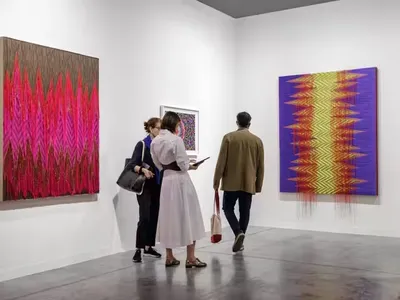
The reason may also be much more practical. Gen Z named the security of personal, financial and collection data as one of the main online risks. In addition, 39% of young collectors allow only family members or close friends to see their collection. In art, where the price of a single work can be measured in millions, privacy becomes not an absence of status but its new form.
Interestingly, young collectors are not abandoning traditions in favor of digital art. Paintings and sculptures remain the main point of entry, although Gen Z did indeed start collecting with digital art more often than other generations. And 40% name family as the main path to art, compared with 28% among all respondents.
As a result, a new model of conspicuous consumption is taking shape. Money remains visible, but the way it is displayed is changing: not a post in a feed but access for the chosen few; not a photo with a price tag but a conversation with a gallery; not the number of followers but knowledge about the artist, the origin of the work and its rarity. Gen Z is not rejecting status; it is moving it from the public space into the private one.
And this is perhaps the most interesting change in luxury culture in recent years. New luxury lies not only in owning a rare thing, but also in not being obliged to show it. For a generation that grew up under conditions of constant publicity, privacy itself becomes a privilege.
Read also: Why Zoomers Are Returning to Classics
Text: Arina Blyzniuk
Comments
No comments yet — be the first.
Discuss on Telegram