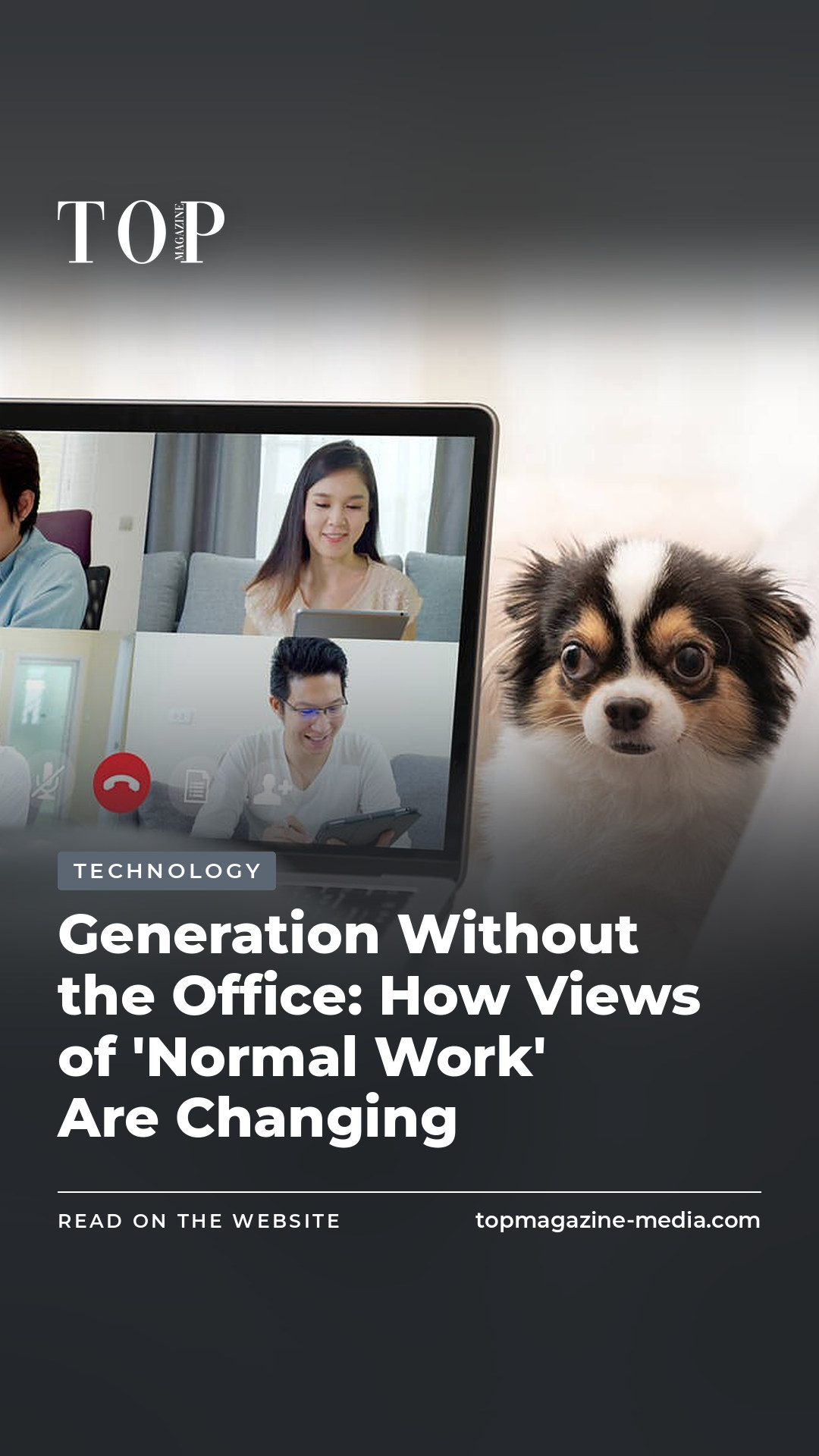
Generation Without the Office: How Views of 'Normal Work' Are Changing
How remote and hybrid work are reshaping young people's ideas of a normal career, the office, work schedules, and the balance between work and personal life.
Translated with AI. Original: Українська
For many young professionals, work no longer begins with a morning commute to the office. The laptop has become the workplace, and a café, an apartment, or a coworking space is its potential address. What until recently was seen as a privilege of certain professions is gradually turning into the expected format.
The answer to the question of what "normal work" should look like has changed too. Fixed schedules and presence for presence's sake are increasingly giving way to results. If a specialist can do the job well regardless of where they are, the office stops being an obvious necessity.
For employers, this means a different model of control. A manager no longer sees who arrived at 9:00 or how many hours someone spent at the computer. Deadlines, communication, and results come to the fore, rather than the number of hours in the chair. At the same time, remote work demands far more self-organization from the employee.
The paradox is that there is more freedom, but the boundaries between work and personal life have become thinner. A work chat can appear at 21:00 just as easily as at 10:00, and a laptop on the kitchen table is a reminder of work even after the day is over. That is why, for the new generation, flexibility increasingly means not simply "working from anywhere," but having the right to be unavailable after working hours.
At the same time, the office has not disappeared. For young professionals it can remain important because of training, networking, teamwork, and first professional contacts. Moments when a person learns a profession simply by observing colleagues are especially hard to fully replace with in-person interaction.
So the future of work will most likely not look like a complete victory for remote formats. The office is becoming one of the tools, not a mandatory symbol of a serious career. Companies are keeping space for meetings and teamwork, while employees gain more control over where and when they carry out individual tasks.
And this is where the main change lies. Normal work no longer necessarily means a specific building, an office, and a 9:00–18:00 schedule. For the new generation, the norm is work that allows professional effectiveness to be combined with one's own life, rather than requiring that the whole of life be organized around work.
Read also: The End of the Logo Era? Why Luxury Business Can No Longer Sell Status the Way It Used To
Text: Arina Blyzniuk
Comments
No comments yet — be the first.
Discuss on Telegram