Lab-Grown Diamonds Are Changing the Rules of the Game
Natural diamond prices have fallen 51% in five years. How lab-grown stones, weak demand and the De Beers crisis are reshaping the jewelry market.
Translated with AI. Original: Українська
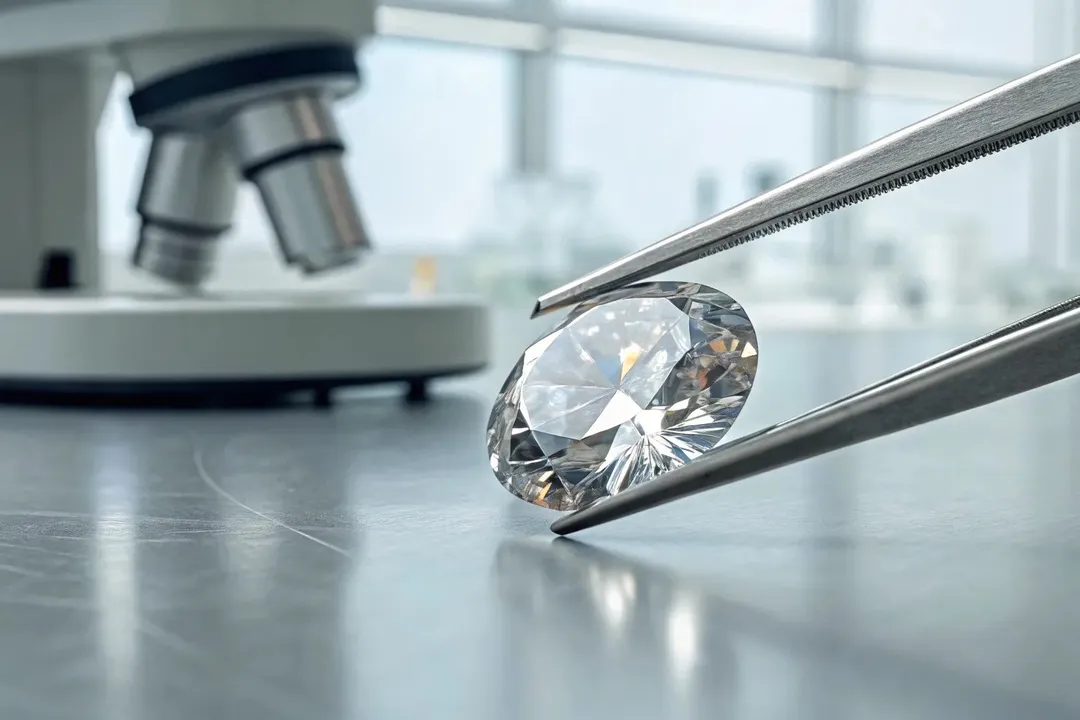
The scale of the change is clearly visible in the engagement ring market. According to The Knot, lab-grown diamonds already accounted for 61% of center stones in engagement rings purchased in the US in 2025. Just a few years ago this technology was a niche alternative; now it has become the mass-market choice.
The reason is simple: lab-grown stone production can be scaled. The more companies master the technology, the more diamonds appear on the market, and production costs fall. Lab-grown stones are losing value as a rare commodity, and that is what is putting pressure on their prices.
The paradox is that lab-grown diamonds have created competition not only for natural stones but also for themselves. A buyer who purchased such a stone for a certain sum today may see a similar one on sale a year later for much less. Lab production is not limited by deposit reserves, so supply keeps growing.
 Read alsoJewelry as an Investment: Why the Jewelry Market Is Experiencing a New Boom
The industry faces a problem that advertising cannot solve. For decades, natural diamonds were positioned as a rare resource, but now consumers can get a visually identical product at a much lower price. The romantic story of stones forming over billions of years remains important to some buyers, but it no longer convinces everyone to overpay.
China and the US are cooling demand. Technology is not the only factor affecting the situation. China, one of the largest markets for jewelry, has been going through a prolonged period of weak demand for diamond products. Consumers are spending more cautiously on luxury goods, and jewelry companies are cutting purchases.
The US, which remains a key market for diamond jewelry, is also changing its demand structure. Buyers are paying closer attention to value, and competition from lab-grown stones is forcing sellers to rethink their assortment and prices.
Trade restrictions, tariffs and supply chain problems add further pressure. India, where a significant share of the world's diamonds is cut and polished, depends on exports to the US. Trade uncertainty complicates the work of manufacturers and forces companies to build up inventories more cautiously.
The result is a vicious circle: buyers purchase less, stores order less, cutting and polishing businesses reduce purchases of rough stones, and mines are forced to rethink production.
De Beers can no longer dictate the rules. One of the symbols of the crisis is De Beers, the company that for decades shaped the global market for natural diamonds. Its owner, Anglo American, has written off billions of dollars in business value, while the company itself is cutting production and revising prices.
In 2025, De Beers' effective price index for rough diamonds fell 25%, taking into account special discounts on less sought-after inventory. In 2026, the company also cut prices on some stones to stimulate demand.
This is a telling moment for an industry that previously could maintain high prices through supply control and marketing of rarity. Now even large producers are forced to adapt to a buyer who has more alternatives and fewer reasons to pay for natural origin.
At the same time, not all diamonds are getting cheaper at the same rate. The pressure is strongest on commercial stones of roughly one carat or less, especially those with characteristics that are easy to replicate with lab-grown analogues. Large natural diamonds of exceptional quality, rare color or with confirmed provenance remain a separate category. Their value depends not only on weight but also on uniqueness.
In August 2026, the Rapaport index for one-carat diamonds showed growth for the first time in 15 months. This may indicate stabilization in certain segments, but it does not mean the market has returned to levels of five years ago.
The history of diamonds today is a story of changing values. The stone remains beautiful, but its beauty no longer guarantees investment appeal. For a buyer choosing a piece of jewelry, falling prices may be an opportunity to get the desired stone for less money. For those who bought diamonds as a way to preserve capital, the situation is far more difficult.
A diamond can remain a symbol of feelings, but that does not automatically make it a profitable investment. And perhaps this is the main change: buyers increasingly pay for jewelry they want to wear, rather than for the promise that it will be worth more someday.
Also read: Diamonds Have Lost 51%: Why the Stone Once Seen as Eternal Value Is Losing Billions
Text: Arina Blyzniuk
Comments
No comments yet — be the first.
Discuss on Telegram