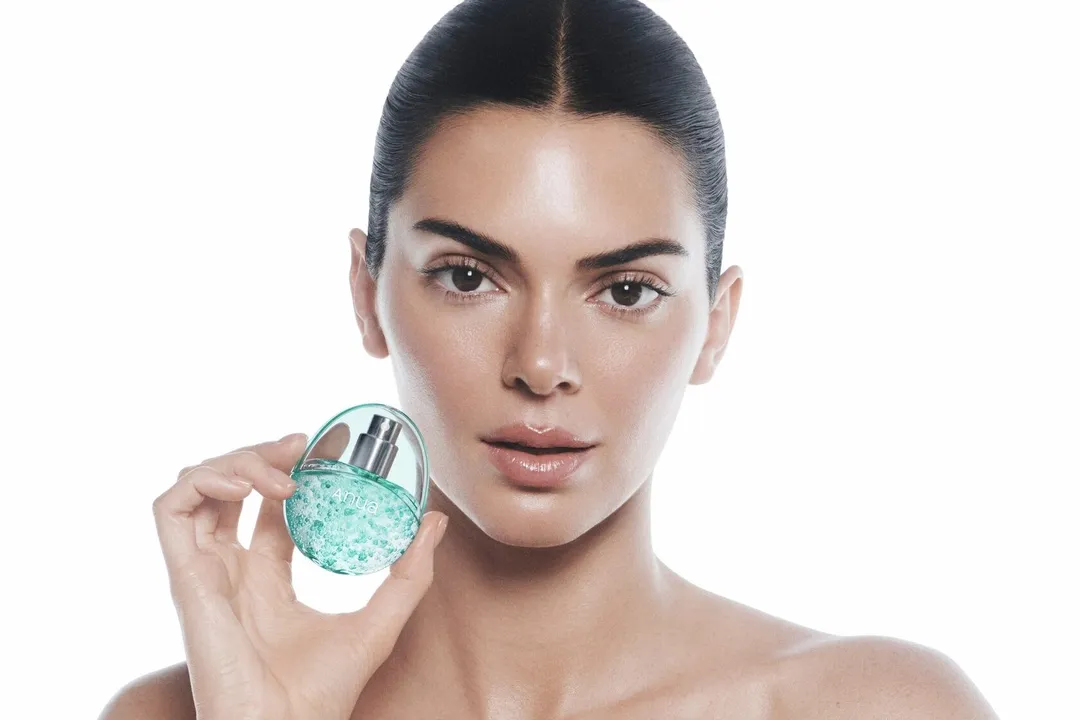
Kendall Dzhenner and $500 Million: How K-Beauty Learned to Sell Without Stars
ANUA grew to more than $500 million in global retail sales before Kendall Dzhenner came on board. Now the model has become its first global ambassador, and this is changing the rules of celebrity marketing.
Translated with AI. Original: Українська
A few years ago, the classic formula of the beauty industry looked simple: create a product, hire a famous girl, shoot a beautiful campaign, and wait for sales. ANUA decided to do the opposite. The Korean skincare brand entered the American market in 2022 without a loud celebrity face, without a large-scale advertising campaign, and without an obvious advantage over dozens of other K-beauty brands. Yet over the next four years, its global retail sales exceeded $500 million, while sales in the US grew by more than 200% a year. The brand is already present in more than 20,000 American retail outlets and in 2024 became the beauty brand No. 1 by revenue on TikTok Shop.
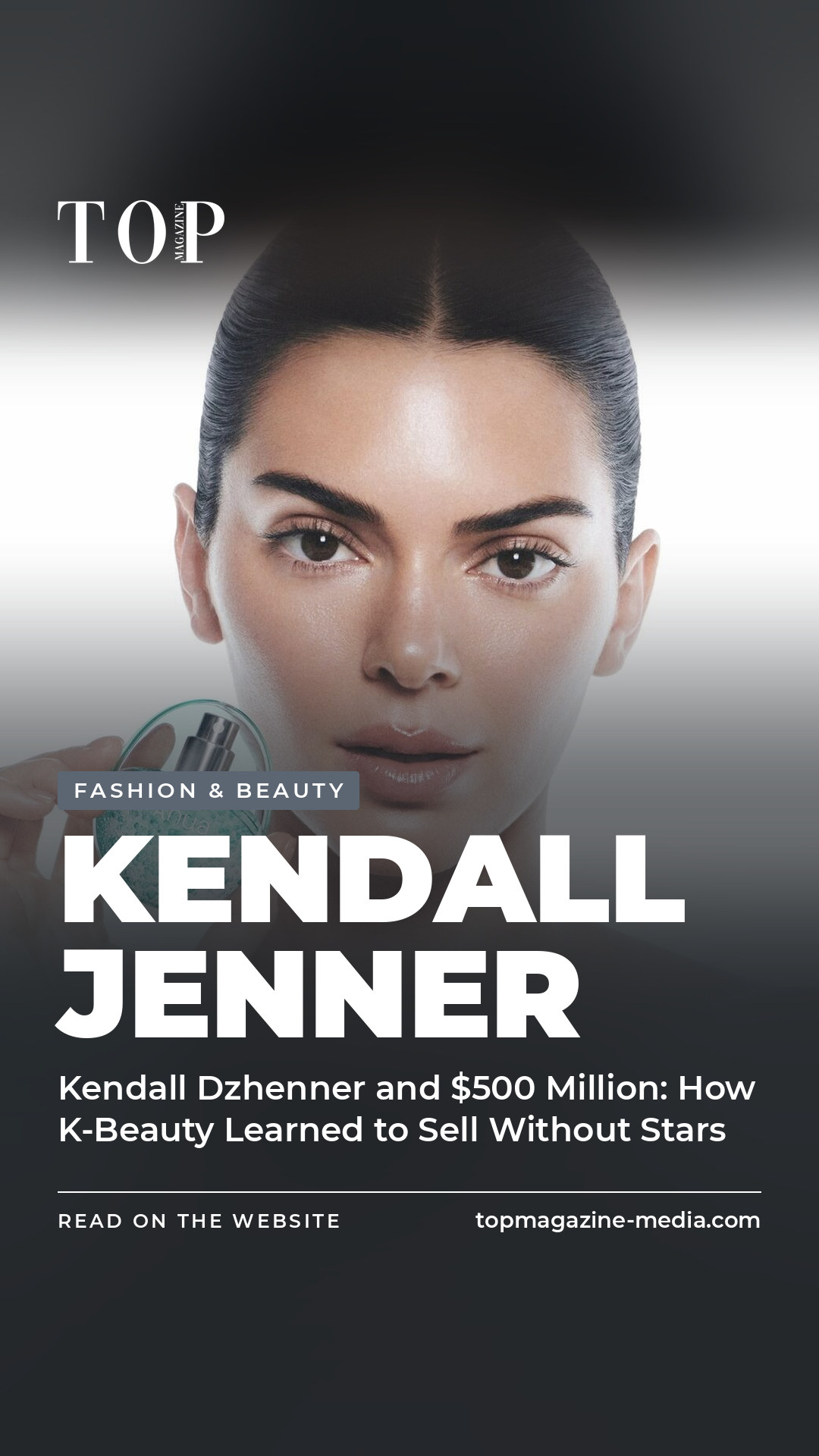
Only after that did Kendall Dzhenner appear in the story. In June 2026, ANUA announced her as its first global ambassador. The partnership is designed to last several years and includes global campaigns and future product launches. This is fundamentally different from ordinary celebrity advertising: Kendall did not come to rescue a brand that lacked recognition. She came to a brand that had already proven it can sell.
This is the most interesting part of the story. ANUA built its popularity on something that today works far more powerfully than a standard advertising banner: the product became viral on TikTok, consumers created content themselves, and K-beauty gradually turned into a separate global skincare culture. The brand did not just sell creams and toners; it sold the Korean approach to skincare: multi-step care, active ingredients, “glass skin”, and the sense that the buyer knows more about cosmetics than the generations before them.
Now ANUA is moving to the next level. Kendall is one of the most recognizable models in the world, but her value for the brand is not limited to the number of followers. According to the LA Times, Dzhenner began organically showing ANUA products on her social media even before the contract was signed. This means the brand received not just a celebrity endorsement, but an already formed personal attachment of the celebrity to the product. For a beauty company, this is a much stronger scenario: the audience sees not “a star who was paid for an ad,” but a product that the star supposedly chose herself.
The first major campaign with Kendall was a line featuring PDRN Collagen Glow Facial Serum Spray. PDRN is an ingredient derived from salmon DNA fragments that has long been used in the Korean beauty industry, but for Western audiences only a few years ago it would have sounded more like a laboratory term. Now it is becoming part of mainstream beauty vocabulary.
ANUA also showed that celebrity marketing in 2026 no longer necessarily begins with a billboard. To launch the campaign, the brand turned a New York location into a three-day pop-up “Dew on the Go”: visitors tested PDRN products, could step into an improvised “Dew Café”, take part in a branded claw machine, and take photos. At first glance, it was an ordinary Instagram-friendly event. In reality, it was also a way to gain new customers, content, and audience data.
And here the story of ANUA goes far beyond a single Kendall Dzhenner. Beauty brands no longer want to simply rent a celebrity’s face. They want to gain her cultural influence. That is why the new model of collaboration increasingly looks like a long-term partnership: the celebrity takes part in choosing products, creating campaigns, communication, and shaping the brand’s image itself.
ANUA is also interesting because it proved that a global beauty brand can be built with TikTok, a strong product, and the right cultural moment, and only then bring in Kendall Dzhenner. And perhaps this is one of the main changes in the beauty market of 2026: a celebrity no longer has to create the desire to buy a product. She can arrive when the desire has already been created by millions of buyers.
That is why the figure $500 million matters in this story not as an impressive estimate. These are ANUA’s global retail sales, achieved before Kendall.
And this is exactly what makes the partnership far more interesting than another star advertisement: Kendall Dzhenner did not give ANUA its popularity. ANUA had already become big enough to invite Kendall Dzhenner.
Read also: How much publicity costs and how the price of visibility is formed
Text: Arina Blyzniuk
Comments
No comments yet — be the first.
Discuss on Telegram