Solar Eclipse on August 12, 2026: What Happens to Earth, Nature and People
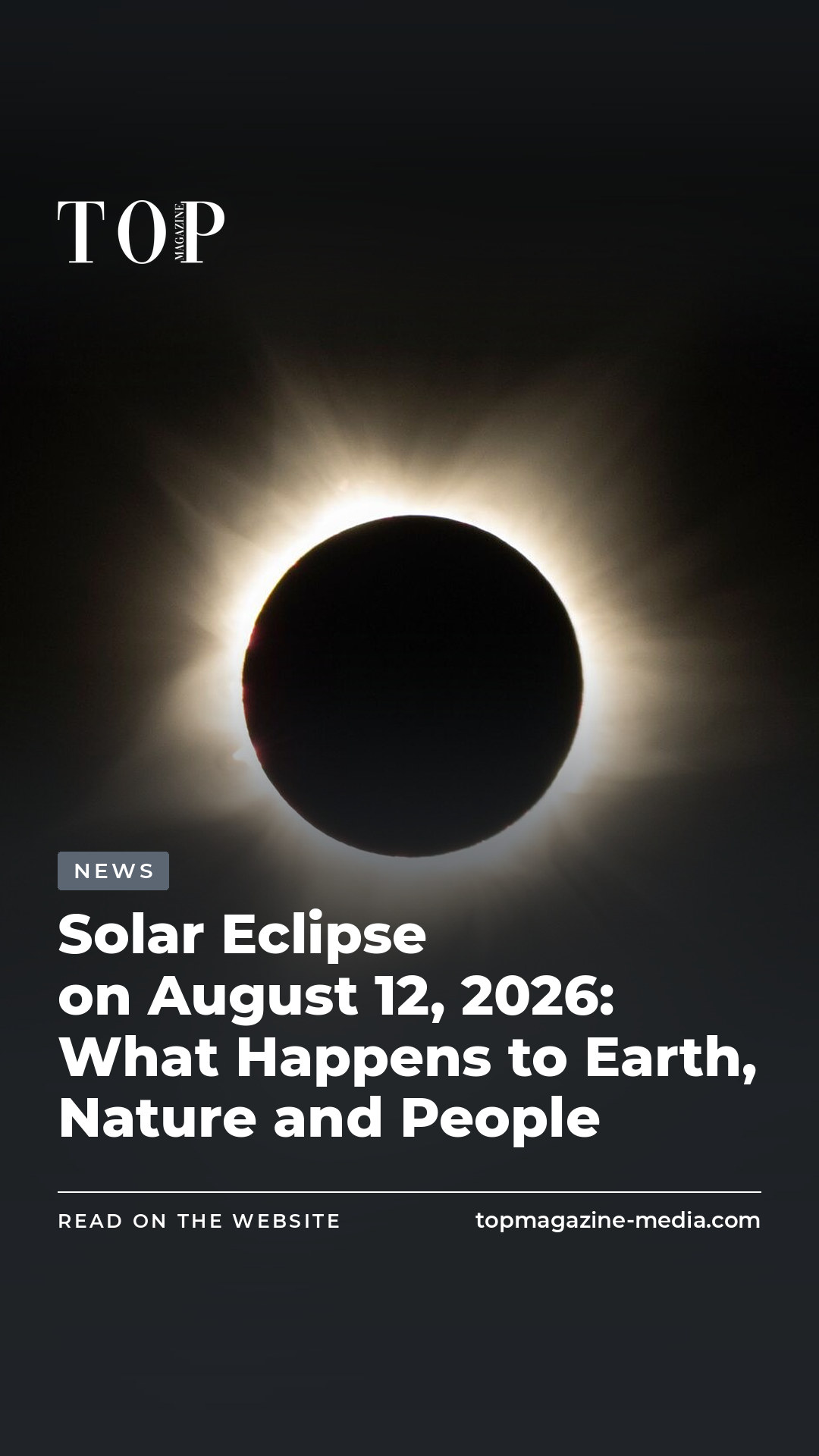
A total solar eclipse will take place on August 12, 2026. We explain why the Moon blocks the Sun, how the eclipse changes light, temperature and animal behavior, and what people can expect.
Translated with AI. Original: Українська
On August 2, 2026, the Moon will pass exactly between Earth and the Sun and briefly block the solar disk. This will be a total solar eclipse — the first total eclipse visible from mainland Europe since 1999. The total phase will be visible along a narrow band crossing Greenland, Iceland, northern Russia, the Atlantic, Spain and a small part of Portugal. A partial eclipse will be visible across a much wider area. According to timeanddate, at least part of the eclipse may be seen by about 980 million people.
WHAT ACTUALLY HAPPENS DURING AN ECLIPSE
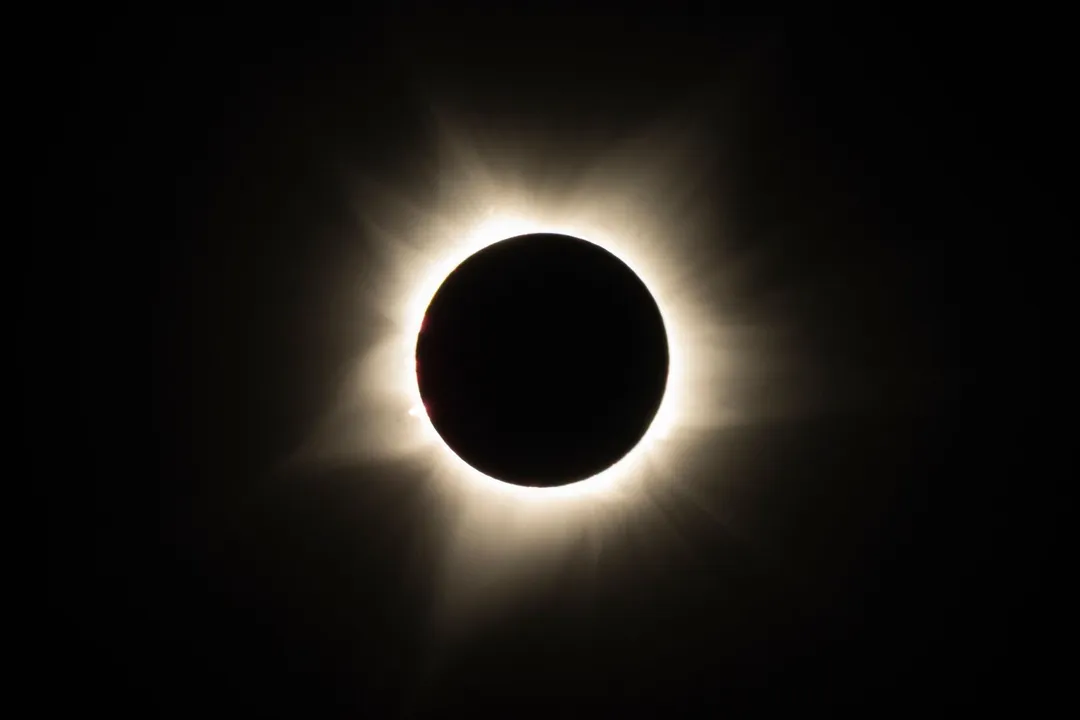
A solar eclipse is possible only during a new moon. The Moon passes between Earth and the Sun, and its shadow falls on the planet's surface. At the center of this shadow — the umbra — the Sun is completely blocked. Around it lies the penumbra, where a partial eclipse can be seen.
During the total phase, daylight dims sharply, the sky darkens, and around the black disk of the Moon the solar corona — the Sun's outer atmosphere — becomes visible, which is normally impossible to see because of the brightness of the solar surface. That is why eclipses matter not only to observers but also to science: they allow researchers to study the inner regions of the corona and processes linked to the solar wind.
Ukraine will not see the total phase. Ukraine will see only a partial eclipse, which will take place in the evening. In Kyiv, the maximum will occur at about 20:18, when the Moon will cover only a small part of the solar disk.
WHAT HAPPENS TO NATURE
The most noticeable change is in temperature and lighting. When the Sun is partly or fully covered, Earth's surface receives less solar energy. During total eclipses, a drop in temperature of about 4–5 °C has been observed, although the actual result depends on cloud cover, humidity and local conditions. Local winds may also change, since cooling of the surface affects air movement.
Animals react even more interestingly. Birds may stop singing and return to their roosts, crickets begin making sounds typical of evening, and some nocturnal animals become more active. Bees may return to their hives during an eclipse. NASA has even created the Eclipse Soundscapes project to systematically collect data on the behavior of animals and insects during eclipses. At the same time, researchers stress that the reactions of different species are still being studied, so it is wrong to speak of one universal scenario.
Plants also receive an unusual signal: in the middle of the day, the light suddenly resembles twilight. But a short eclipse does not cause a catastrophic effect on nature — ecosystems react mainly to the sudden change in light and temperature, and then return to their normal cycle.
WHAT HAPPENS TO PEOPLE?
Here it is worth separating facts from myths. There is no scientific evidence that a solar eclipse by itself changes human physiology, causes illness or affects the psyche. At the same time, the event itself can evoke strong emotions: NASA describes how during total eclipses people experience awe, anxiety, tears or a sense of the extraordinary moment. This is more a psychological reaction to an unusual change in the surrounding environment than a special physiological effect of the eclipse.
The only real rule that must not be ignored is this: do not look at the partly covered Sun without special eye protection. Even if the Sun appears dimmer, its radiation can still damage the retina. Special solar glasses or certified solar filters are needed during all partial phases.
A POPULAR FORECAST FOR THE ECLIPSE PERIOD
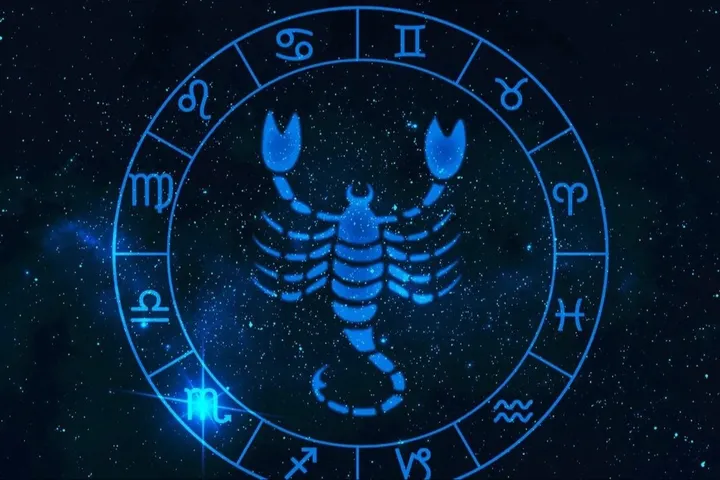
If we speak not about a scientific forecast but about astrological interpretation, a solar eclipse is traditionally seen as a symbol of a new cycle, a change of plans and a moment when old decisions may need to be reconsidered. In practical terms, this is a good period not for sudden moves driven by emotion, but for looking at what in your life has already stopped working.
In such interpretations, the greatest attention is paid to personal goals, work, relationships, finances and plans for the coming months. The desire to change something, to close unfinished stories or, on the contrary, to return to an idea that a person has long put aside may intensify.
At the same time, it is important not to confuse an astrological forecast with a scientific fact: there is no evidence that eclipses directly cause life events or change people's behavior. It can be seen as a symbolic point for reviewing plans, but decisions are better made based on real circumstances.
Astronomically, however, August 12 will bring a much more fascinating phenomenon: for several minutes the Moon will make part of Earth experience night in the middle of the day, changing temperature, light and the behavior of living organisms — and then everything will return to its normal rhythm. And it is precisely this, without any mystical explanations, that makes a solar eclipse one of the most spectacular natural phenomena on the planet.
Read also: Why everyone wants to “disappear”: the digital disappearance phenomenon
Text: Arina Blyzniuk
Comments
No comments yet — be the first.
Discuss on Telegram