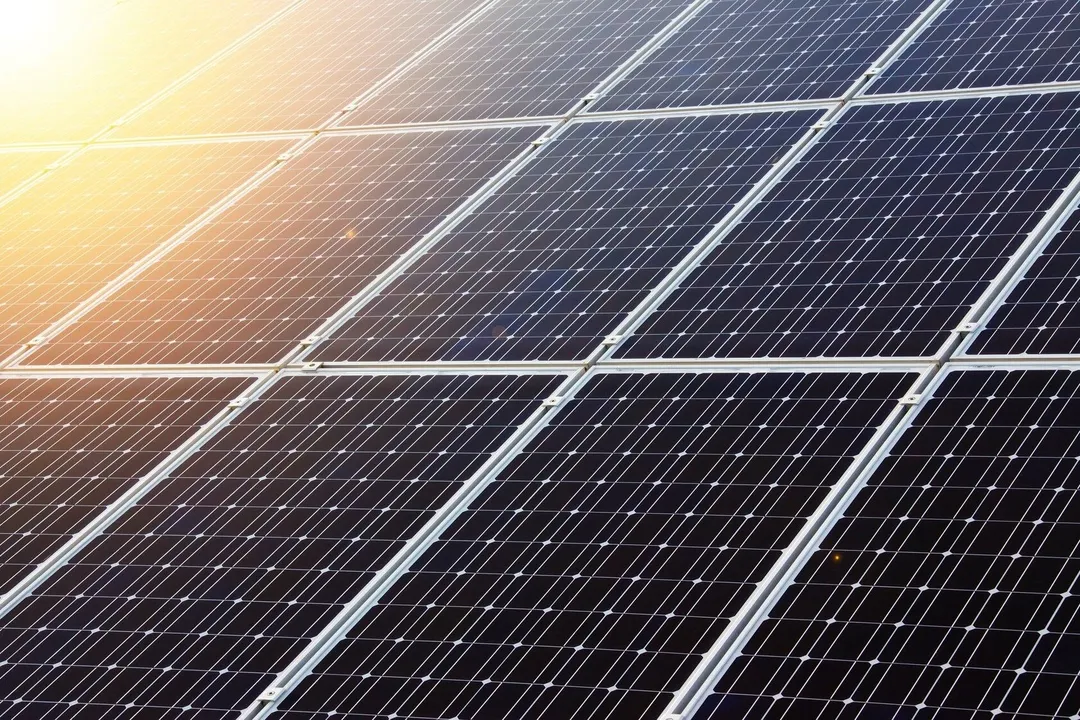
Solar Panels Could Become Far More Efficient: Scientists Find Way to Stop Losing Light Energy
Researchers at the University of Groningen have found out why tin perovskites can hold on to the energy of “hot electrons” up to 1,000 times longer. The discovery could boost the efficiency of solar cells.
Translated with AI. Original: Українська
Solar energy has one fundamental problem: some of the energy from light is lost as heat almost immediately after it hits a solar cell. Researchers at the University of Groningen in the Netherlands have found a way to explain why this process can be much slower in certain materials. The focus is on so-called “hot electrons”, which in a new type of perovskite can retain excess energy for roughly 1,000 times longer than usual.
The results were published in the journal ACS Energy Letters on September 11, 2026, and the University of Groningen presented the study on September 16. The scientists believe the discovery could potentially help create solar cells capable of using a larger share of the energy in solar radiation.
When sunlight hits a photovoltaic cell, its photons transfer energy to electrons. Some electrons receive more energy than needed to reach a working state. These become “hot electrons”.
In theory, this extra energy could be used to generate electricity and raise the voltage of the solar cell. The problem is that electrons usually lose their excess energy very quickly, within a few picoseconds, meaning trillionths of a second. It turns into heat before the electron has time to leave the solar cell material.
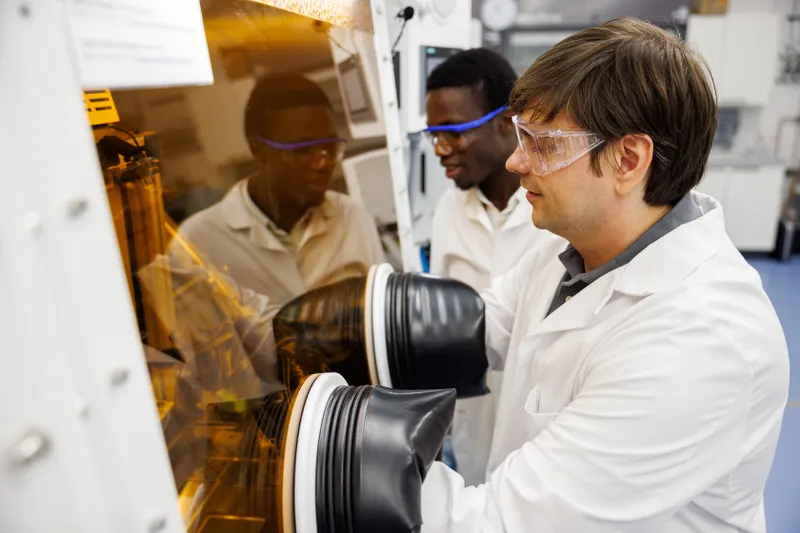
The team led by Professor Maria Antonietta Loi experimentally observed a very different picture in a material based on tin perovskite. The loss of excess energy slowed to the nanosecond scale, roughly a thousand times longer than expected for hot electrons.
At first, the researchers themselves could not explain the result. According to Professor Jan Anton Koster, the measurements were so unusual that the team began to doubt their own data. To understand the mechanism, Koster and his PhD student Tim Faber created computer models of the processes taking place inside the material.
They found that two physical mechanisms work simultaneously.
The first is the so-called hot phonon bottleneck. When electrons release energy to their surroundings as heat, the surroundings warm up. Some of this energy can later be absorbed again by electrons, slowing their cooling.
The second mechanism is linked to the Burstein–Moss effect. In simple terms, it can be imagined as a situation in which it becomes harder for an electron to drop to a lower energy level because the available states are already occupied by other electrons. As a result, the energy loss slows down even further. The combination of the two effects allowed the computer model to reproduce the nanosecond cooling time the scientists observed in the experiment.
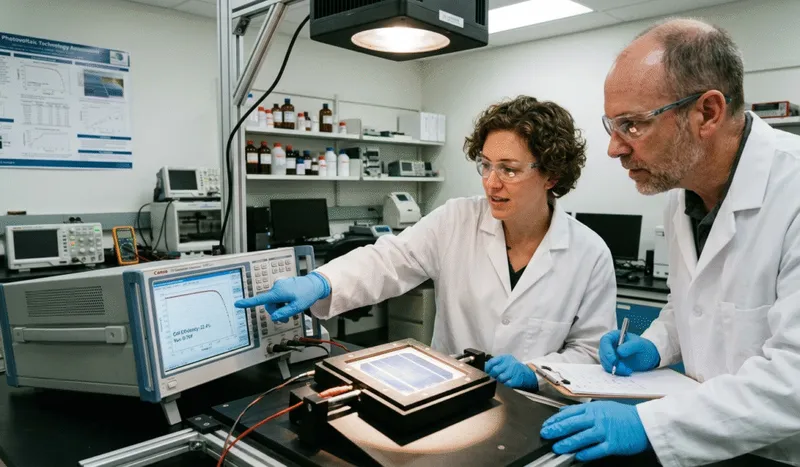
Why does this matter for solar energy? Modern single-junction solar cells face a fundamental limit: under the classical physical model, they cannot convert more than about 33% of solar radiation energy into electricity. Part of the energy is inevitably lost due to the properties of the material and processes inside the cell.
The concept of hot-carrier solar cells aims to solve precisely this problem: prevent excess energy from turning into heat too quickly and instead use it to generate electricity.
If hot electrons remain energetically active long enough, in theory they could be “collected” before the energy is lost. That is why the University of Groningen’s result is interesting for the future of solar energy.
However, such panels are still a long way from appearing on rooftops. The researchers have not yet created a commercial solar cell with ultra-high efficiency. They have explained the physical mechanism that allows hot-electron energy to be stored much longer and have shown that this effect could be used in future designs. The university itself stresses that many questions still need answers.
Of particular interest are tin perovskites. They belong to a class of materials that have long been considered a promising alternative to traditional photovoltaic cells. Earlier, Groningen researchers had already worked to make tin perovskites more stable and better suited for scalable production.
Now another advantage may be added to their strengths: the ability to hold on to hot-electron energy much longer than expected.
For solar energy, this could become an important direction for the next stage of development: not simply creating new materials that absorb more light, but learning not to lose the energy a solar cell has already captured.
And if this principle can be turned into a workable technology, future solar cells could operate not only through better light absorption, but also through far more efficient use of every photon.
Also read: Jeff Bezos Is Not Backing Down: Blue Origin Gears Up to Return to the Big Space Race
Text: Arina Blyzniuk
Comments
No comments yet — be the first.
Discuss on Telegram