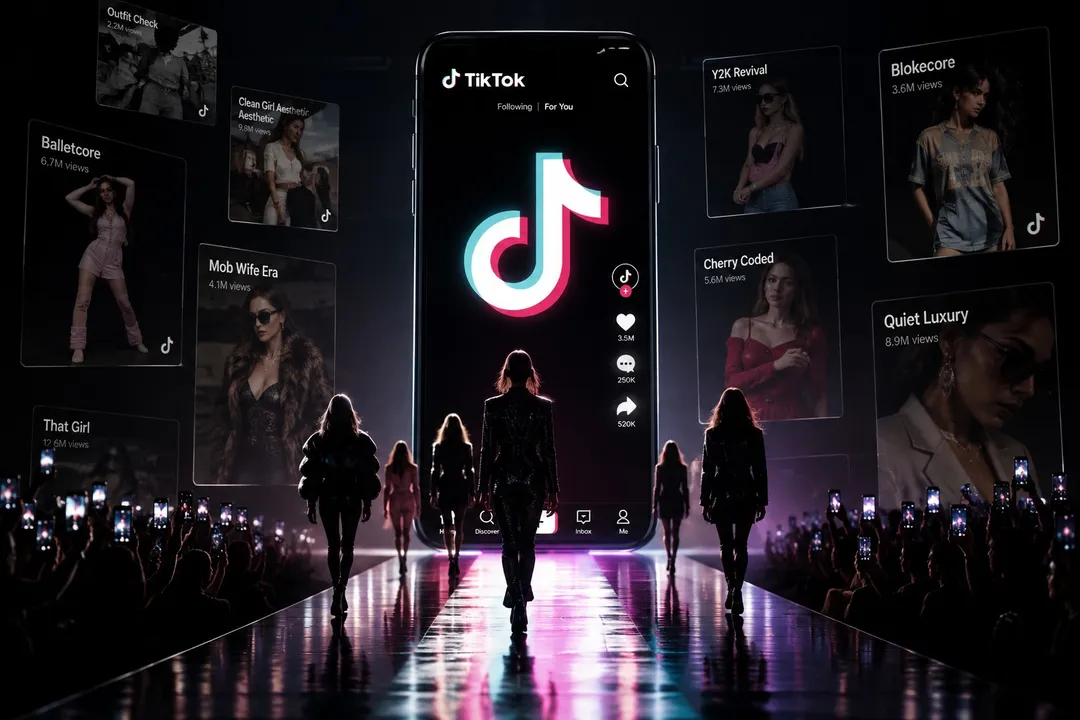
TikTok Instead of the Runway: How Social Media Started Deciding What We'll Wear Tomorrow
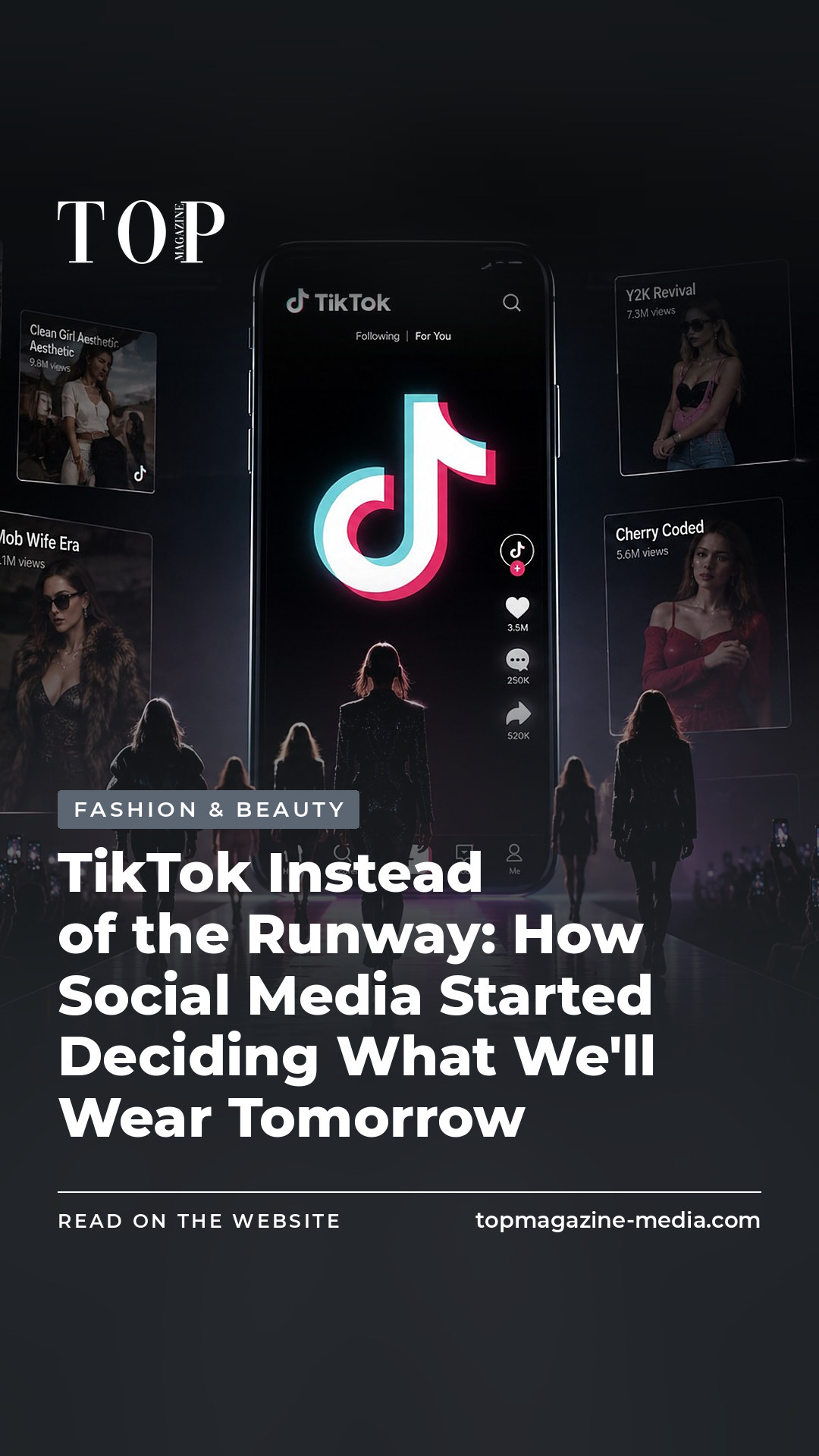
TikTok no longer just repeats trends from the runway. Viral items, micro-aesthetics and beauty products are becoming global phenomena and million-dollar businesses within weeks.
Translated with AI. Original: Українська
A few years ago, the path of a fashion trend was almost predictable: a designer created a collection, editors wrote about it, celebrities appeared in new pieces — and only then did the trend reach the mass consumer. In 2026, this chain has effectively been reversed. An item can become popular on TikTok before fashion editors notice it. Vogue Business is already tracking this process separately, recording weekly shifts in Gen Z behavior.
A telling example is sports shorts, including Adidas football shorts, which TikTok pulled far beyond the sportswear wardrobe. People began wearing them with blazers, kitten heels and shirts. The essence of the trend lies in the contrast: masculine with feminine, sporty with luxurious, casual with deliberate. In this way, an ordinary item gets a new life not through a change in design, but through the way it is styled.
Another phenomenon is the return of skinny jeans. After years of wide jeans dominating, the narrow silhouette has once again become a subject of debate. TikTok turned what until recently was considered "outdated" into a nostalgic symbol of the mid-2010s. Pointed-toe boots, kitten heels and voluminous shirts were added to it — and the old silhouette got a new context.
A third example is oversized belts, which no longer just complement an outfit but literally change its proportions. TikTok favors things that read well in vertical video: a big belt, a micro skirt, cat-eye glasses or a bright accessory have an instant visual effect. That is why social networks increasingly influence not only what people buy, but also which shapes and details designers consider commercially promising.
But the most interesting things happen in beauty. Wonderskin turned a viral TikTok product into a business with projected revenue of over $200 million in 2026. Its blue peel-off lip product became so recognizable that the application process itself turned into content: first a strange blue mask on the lips, then it is peeled off — and a long-lasting color appears. The brand gained billions of views, $50 million in investment and another 1,500 points of sale in the US through Sephora.
And here the very logic of the fashion and beauty business changes. Previously, a brand first created a product and then looked for an audience for it. Now sometimes the audience itself shows the brand which product it wants to see. If a video gets millions of views, other users copy it, the product appears in recommendations, and then people start looking for it in stores.
TikTok also creates another paradox. The algorithm rewards not necessarily the most original content, but what is easy to repeat. That is why this summer the "kinda chic" format spread alongside fashion aesthetics — the same video or carousel structure, into which each user inserts their own version of "chic" behavior. According to Google Trends, search interest in the phrase rose by 5000%, and tens of thousands of posts appeared on Instagram. Celebrities and brands have already joined the trend.
In other words, social networks simultaneously create trends and make them uniform. Today millions of people can see the same item, repeat the same look and even use the same caption format. What began as personal creativity turns into a mass aesthetic within a few days.
That is why TikTok is already hard to see simply as an entertainment platform. It has become a new layer of the fashion industry — faster than magazines, more democratic than the runway and much closer to the real buyer. The runway still defines what designers create. But TikTok increasingly determines what of this will become desirable tomorrow.
Read also: Vona ne isnuie, ale yii platiat: yak AI-influenseri vkhodiat u velykyi biznes
Text: Arina Blyzniuk
Comments
No comments yet — be the first.
Discuss on Telegram