Yosyp Marshak: the Ukrainian Jeweler Called Kyiv's Cartier and Compared to Fabergé
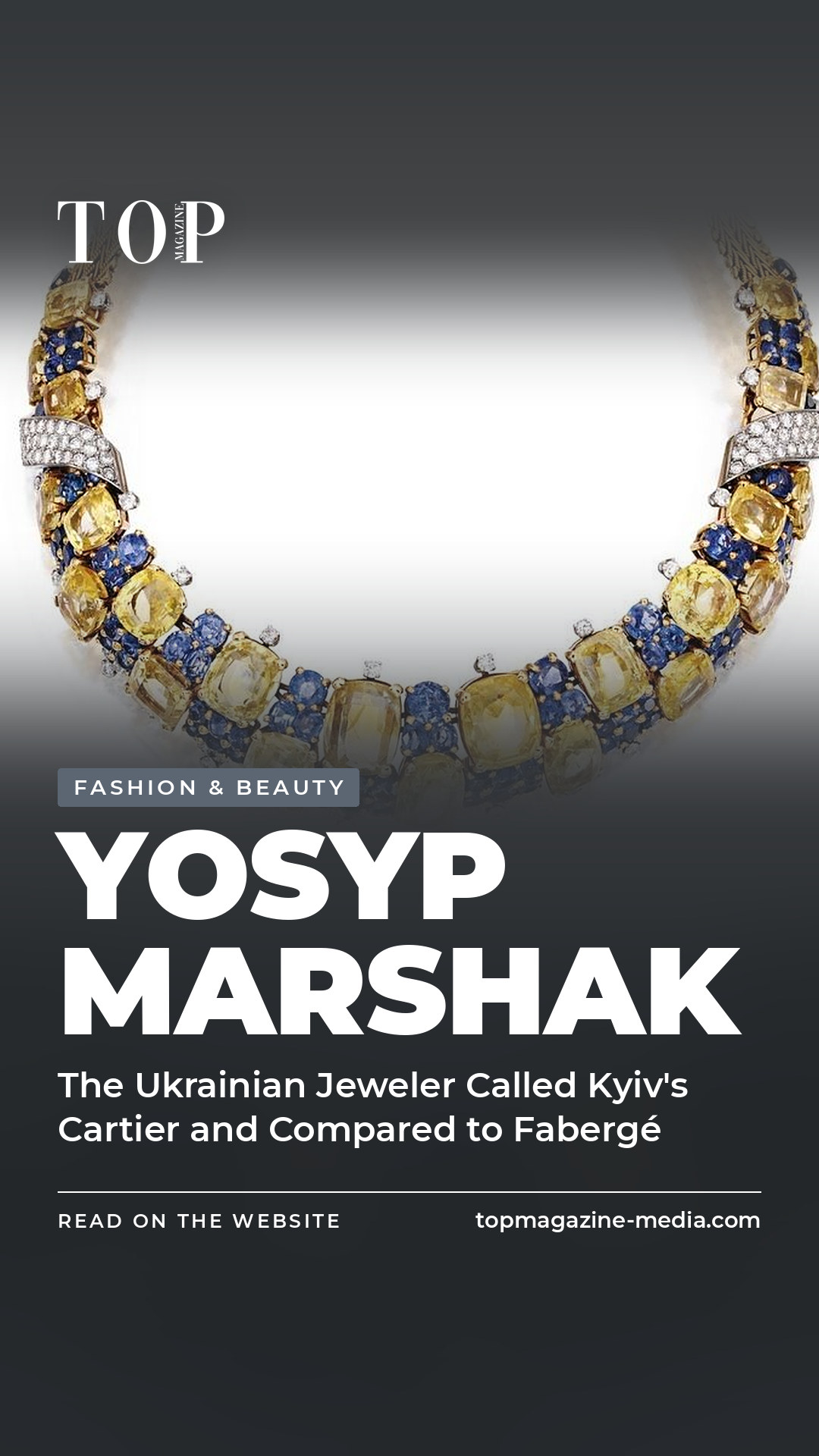
Yosyp Marshak was a Kyiv jeweler who was called the "Cartier of Kyiv" and compared to Fabergé. How he built a jewelry empire on Khreshchatyk, worked for the imperial court and launched the history of the Marchak brand in Paris.
Translated with AI. Original: Українська
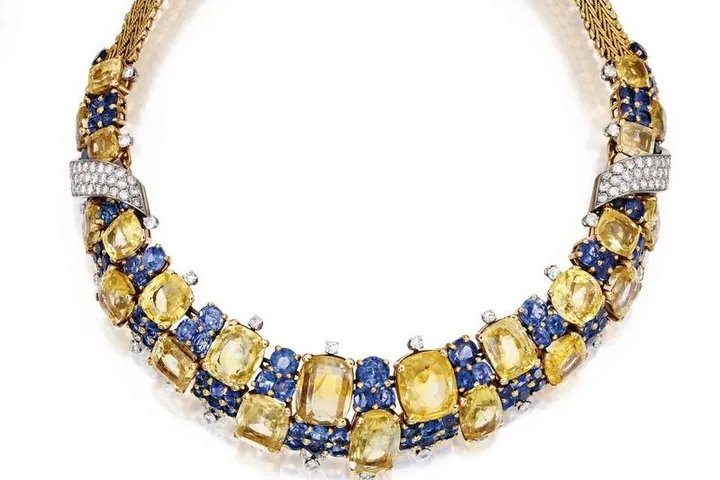
Today the name Cartier is associated with French jewelry luxury, and Fabergé with the treasures of the imperial court. However, at the end of the 19th and beginning of the 20th century, one of Europe's most famous jewelry names was Ukrainian. Yosyp Marshak built a jewelry empire in Kyiv, his workshops fulfilled orders for the Romanov family, and his products were awarded at international exhibitions in Chicago, Antwerp and Paris. Contemporaries called him the "Cartier of Kyiv," and his works were placed on a par with those of Fabergé.
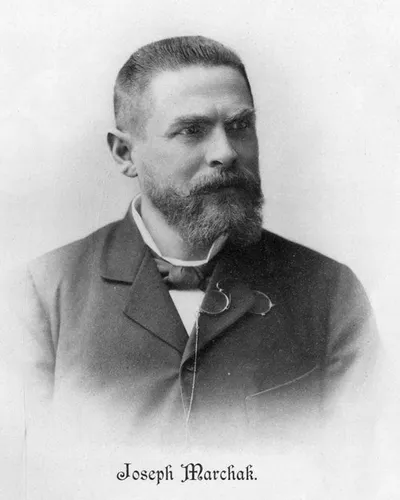
The story began in 1878, when 24-year-old Yosyp Marshak opened a small workshop in Kyiv's Podil district. He came from a poor, large family from Hnativka near Kyiv and moved to the city as a teenager to master the jewelry trade. His starting capital was only 100 rubles from his wife's dowry, and Marshak pawned his own wedding suit to buy the necessary tools and materials. At first he worked alone, later his wife joined the business, and the growing number of orders gradually turned the small workshop into a full-scale production.
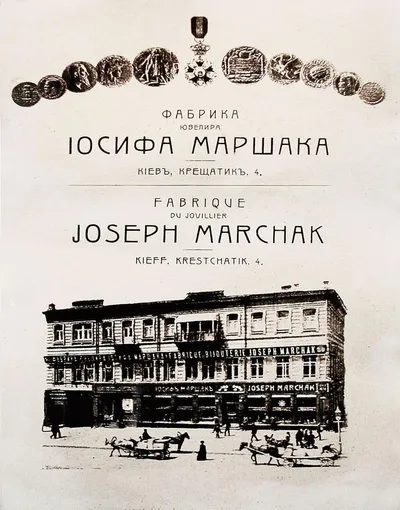
Marshak's success was the result not only of skill but also of a well-considered business strategy. He traveled to Europe, studied production organization, upgraded equipment, brought artists in to develop designs and trained workers in new techniques. In 1891, a factory of gold and diamond jewelry and a flagship store were opened at Khreshchatyk, 8. The enterprise later expanded: in addition to jewelry, it produced watches, silverware, tableware, stationery and decorative items. By 1913, the factory, shops and office occupied several buildings on Khreshchatyk – Nos. 2, 3, 4, 5 and 8, and the staff numbered 126 workers.
International recognition came through exhibitions. Marshak's products won awards in Chicago in 1893, Antwerp in 1894, Paris in 1900 and Liège in 1905. A special place in the factory's history belongs to 1913 – during the celebration of the 300th anniversary of the Romanov dynasty in Kyiv, Marshak's workshop fulfilled orders for gifts to the imperial family. Among the most famous works was a silver model of Kyiv's Pedagogical Museum, created with extraordinary precision in architectural details. It was made in 1911 as a gift for the Tsarevich, and today it is kept in the National Museum of the History of Ukraine. In 1913, Marshak also became one of the suppliers to the imperial court of Nicholas II.
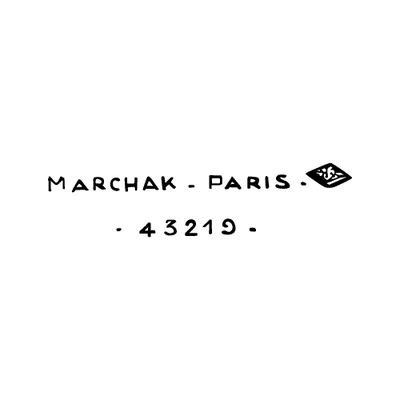
After Yosyp Marshak's death in 1918 and the revolutionary events, the family emigrated to France. In 1920, his son Oleksandr opened the Marchak jewelry salon in Paris, first on Rue Cambon, and later the brand moved to the prestigious Rue de la Paix – the street where leading jewelry houses historically concentrated. Oleksandr continued to develop the family business, but in a different cultural environment. The collections acquired a distinctive Art Deco character, and the brand became known for colored gemstones, complex compositions and cocktail rings. Marchak gradually gained a clientele among the international elite.
In the following decades, clients of the Paris house included Jacqueline Kennedy Onassis, the Vanderbilt family, Nina Ricci and Madeleine Renaud. In the 1960s, the brand established another special connection with a royal family: Marchak's head Jacques Verger became friends with King Hassan II of Morocco, and the jewelry house became one of the suppliers of his official and private gifts. In particular, among the notable commissions was a jewelry piece that the king gave to Madame de Gaulle. Thus, the international history of Marchak continued far beyond Kyiv, where it all began.
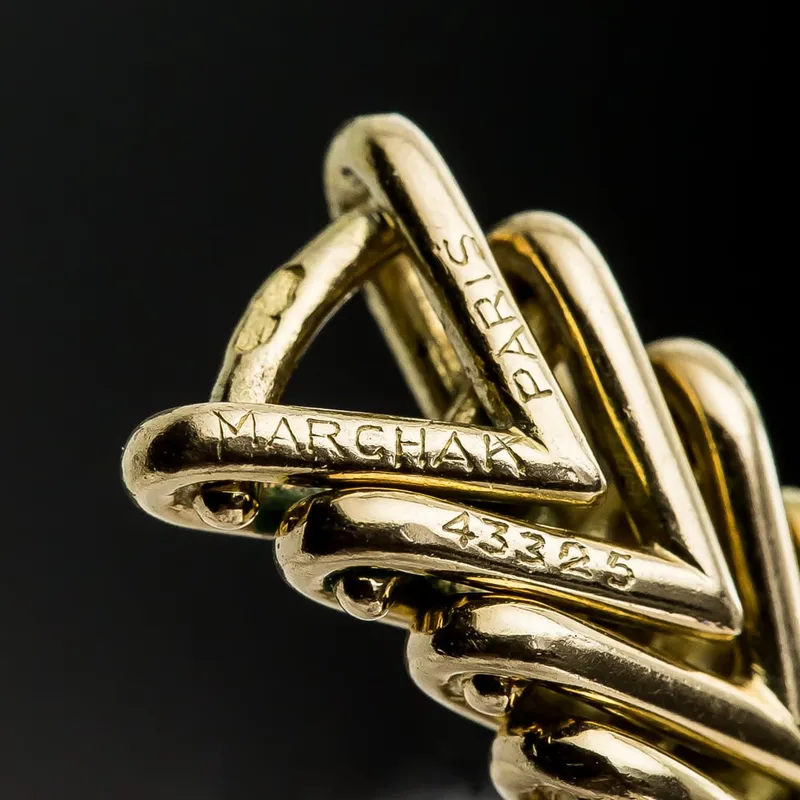
In 1988, the Paris store was closed, and part of the historical archive was lost. However, the name did not disappear completely: in 2005, a descendant of the family, Daniel Marshak, revived the brand. Today Marchak continues to exist as a jewelry brand that draws on the legacy of its Kyiv founder and the traditions of French high jewelry craftsmanship.
The story of Yosyp Marshak is more than a biography of a talented master. It is the story of a Ukrainian entrepreneur who created an internationally recognized production long before the appearance of today's global brands. His name could have been far better known around the world if the revolution, emigration and the loss of part of the legacy had not interrupted the Kyiv history of the house. But the addresses on Khreshchatyk, the awards from international exhibitions and the works kept in museum and private collections remind us that there is also a place for a Ukrainian name in the world history of jewelry art.
Read also: MYKOLA LEONTOVYCH: HOW "SHCHEDRYK" BECAME CAROL OF THE BELLS AND A WORLD HIT
Text: Arina Blyzniuk
Comments
No comments yet — be the first.
Discuss on Telegram