Mykola Leontovych: How “Shchedryk” Became Carol of the Bells and a Global Hit
How Mykola Leontovych's Ukrainian carol reached the United States, got new lyrics and became one of the most famous melodies in the world.
Translated with AI. Original: Українська
THE MELODY THE WORLD KNOWS UNDER A DIFFERENT NAME
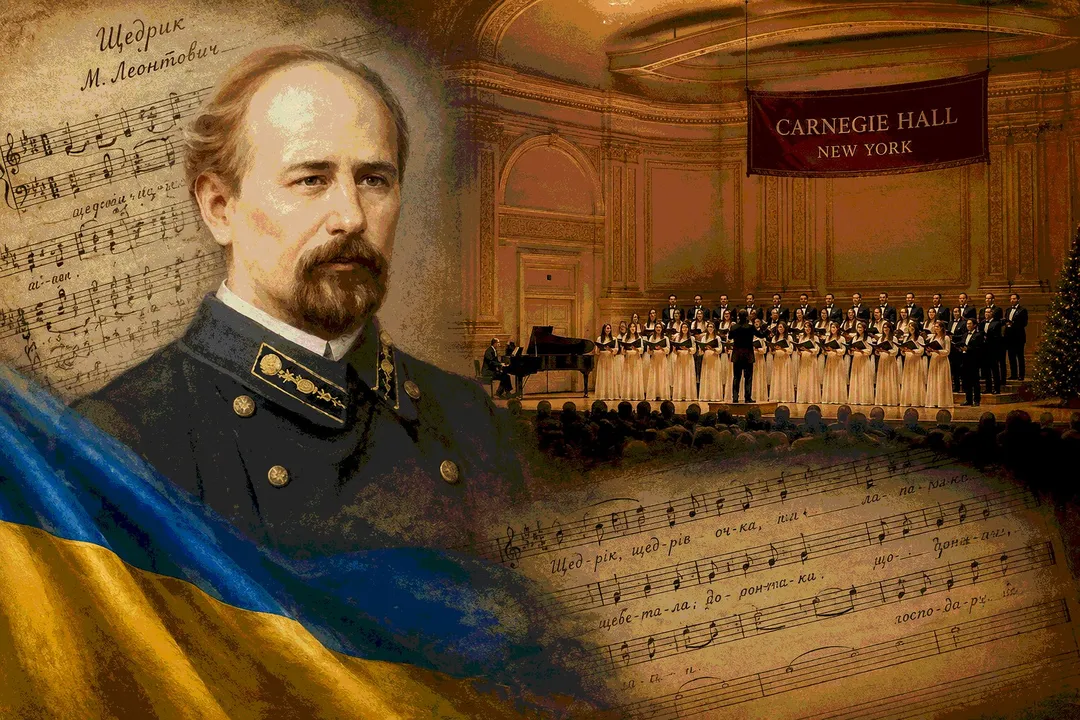
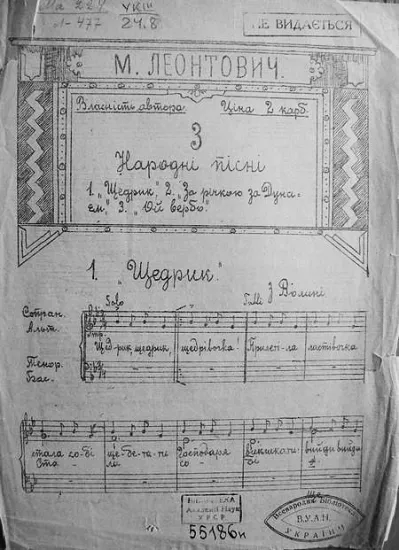
Carol of the Bells is one of the most recognizable melodies in global popular culture. Its basis is the Ukrainian “Shchedryk” by Mykola Leontovych. The composer created a choral arrangement of a folk carol, and his version was first performed in Kyiv in 1916.
The original “Shchedryk” was not a song about bells at all. In the traditional Ukrainian carol a swallow flies to the master of the house and foretells prosperity, abundance and a good harvest. That is why the English-language version that the whole world knows today has a completely different storyline.
HOW A UKRAINIAN MELODY REACHED AMERICA
The international history of “Shchedryk” began after the founding of the Ukrainian People's Republic. The Ukrainian Republican Capella under the direction of Oleksandr Koshyts set out on a foreign tour to present Ukrainian culture abroad.
The choir performed in European countries, and in 1922 it reached the United States. On October 5 of that year, the Ukrainian singers performed “Shchedryk” at the famous Carnegie Hall in New York. For American audiences it was new music, but the melody quickly became memorable for its unusual structure and the constant repetition of a short musical phrase.
The American stage was a turning point: the Ukrainian carol began to move beyond concert halls.
HOW CAROL OF THE BELLS EMERGED
The next major step came in 1936. Ukrainian-born American composer Piter Vilhovskyi heard “Shchedryk” performed by a choir and wrote a new English text for it.
This is how the Ukrainian melody received the title Carol of the Bells.
Vilhovskyi completely changed the content of the composition: instead of a Ukrainian carol about a swallow, there was a song about bells. But the musical basis itself remained the work of Leontovych.
This was, in effect, a rebranding of the composition long before the word “rebranding” became part of mass culture.
FROM A UKRAINIAN CHOIR TO HOLLYWOOD
Carol of the Bells gradually became part of American mass culture. It began to be recorded by various performers, from academic choirs and orchestras to rock and pop musicians.
The melody has appeared in dozens of films, TV series, advertising campaigns and television shows. It can be heard, among other things, in the popular Christmas classic “Home Alone”, as well as in films of the “Harry Potter” franchise.
At the same time, the melody is so recognizable that it is often enough to hear just a few seconds of it, and the listener already understands that Carol of the Bells is playing.
Leontovych did not live to see worldwide fame
There is also a tragic detail in this story. Mykola Leontovych was murdered in 1921, when the composer was only 43 years old. He did not see the performance of “Shchedryk” at Carnegie Hall, nor the emergence of the English-language version that brought his music worldwide popularity.
Yet his composition outlived its author by more than a century.
Today “Shchedryk” exists in two cultural dimensions at once. For Ukraine, it is one of the most famous arrangements of a folk song. For millions of people abroad, it is Carol of the Bells, a melody they know from films, concerts and popular culture.
One Ukrainian carol has traveled from folk tradition and the Kyiv stage to Carnegie Hall, Hollywood and world musical culture. And even if the world knows it under the name Carol of the Bells, its musical roots remain Ukrainian.
Read also: Jan Koum: the Ukrainian who created WhatsApp and sold it for $19 billion
Text: Arina Blyzniuk
Comments
No comments yet — be the first.
Discuss on Telegram