An Island for Millions, a Personal Chef and No Unnecessary People: What Luxury Looks Like When Nobody Posts About It
Private islands, personal service and complete isolation from the crowds. How luxury travel is changing and why privacy has become the new symbol of status.
Translated with AI. Original: Українська
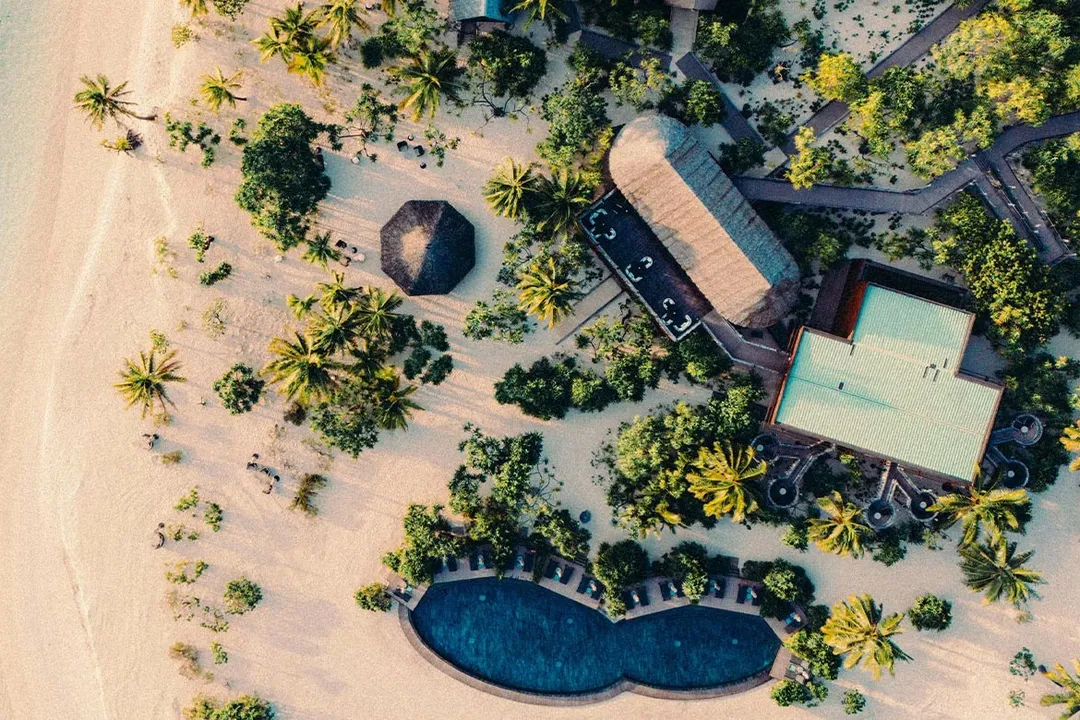
Not long ago, the symbol of a luxurious holiday was a room in a five-star hotel with an ocean view. Now, for the very wealthy, this may no longer be enough. When even the most exclusive resorts are filled with tourists, true luxury becomes the ability not to cross paths with anyone at all. That is why private islands, villas with staff and fully closed residences are turning into a separate category of leisure for those who can afford to buy not just a service, but an entire space around themselves.
Wealthy clients increasingly choose private homes, dedicated cooks, personal flights and the rental of entire islands. In this world, even popularity can become an inconvenience: a famous hotel means other guests, photos on strangers' phones and the constant presence of people around. A private residence allows you to remove all of this from the equation.
One of the best-known examples of this format is The Brando in French Polynesia, a resort on the Tetiaroa atoll that once belonged to Marlon Brando. Here, privacy is combined with nature, separate villas, personal service and attention to environmental projects. It is not simply a beach hotel, but a place where remoteness itself becomes part of the experience.
Musha Cay in the Bahamas offers an even higher level of exclusivity. This private island complex is associated with illusionist David Copperfield. Its distinctive feature is the option to rent the entire territory for a single group. This format suits family trips, weddings and private celebrations, when guests do not have to share space with strangers. Instead of booking several rooms, the client effectively gets their own small world, with a team that organizes the leisure according to the guests' wishes.
Importantly, a private island does not necessarily mean giving up the comforts of civilization. In the most luxurious projects, seclusion does not contradict personalized service: on site there may be cooks, wellness staff, boat captains and organizers of individual excursions. Menus are created for specific guests, routes are planned without tourist groups, and the schedule does not depend on the general rules of a hotel. The idea is not to get more things, but to not adapt to anyone.
At the same time, privacy has its price, and it is measured not only by the cost of accommodation. Remote islands require complex logistics: delivery of food, energy supply, water supply, and the maintenance of staff and transport. The more autonomous a property must be, the more resources are needed to run it. Added to this are questions of impact on ecosystems, coastal protection and the responsible use of natural areas.
Private islands also change the very idea of status. Logos on clothing, recognizable cars and photos from popular resorts are easy to show to the public. Seclusion, on the contrary, cannot always be turned into content. This is a luxury that is hard to prove to others, and that is precisely where its appeal lies.
However, not every private island residence belongs to a single person, and not every resort on a separate island can be rented in full. It is important to distinguish these formats: in some places guests share restaurants and beaches with other vacationers, while in others the territory is reserved exclusively for one group. The price depends on the season, the number of guests, the level of service and the booking terms, so there is no universal price for such an experience.
Perhaps the main change in modern luxury lies precisely in this. In the past, wealth was displayed through what could be bought. Now it is increasingly displayed through what one can give up: queues, outside stares, other people's schedules and the need to be available to everyone. A private island sells not just a holiday, but the chance to disappear from the familiar world for a while.
Also read: Silence, Pause, Rest: New Values of the Modern World
Text: Arina Blyzniuk
Comments
No comments yet — be the first.
Discuss on Telegram