Before Earth Existed: What NASA Wants to See in the Birthplaces of Planets
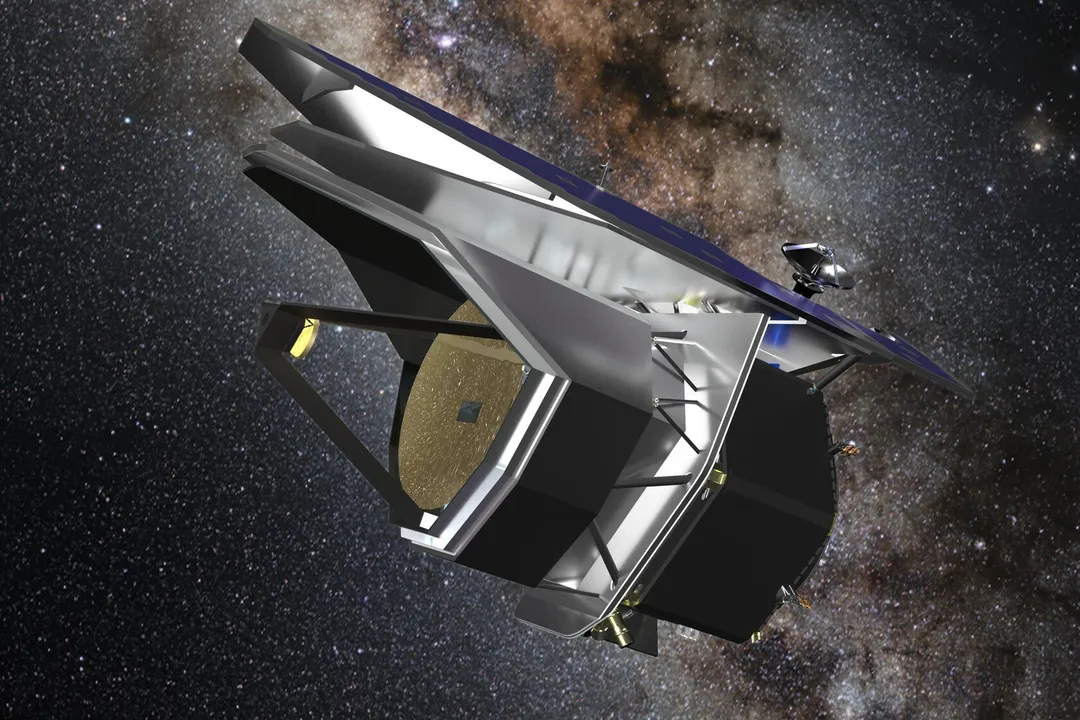
NASA has selected the PRIMA space mission to study the cold Universe. The new infrared observatory will explore protoplanetary disks and the material from which planets are born.
Translated with AI. Original: Українська
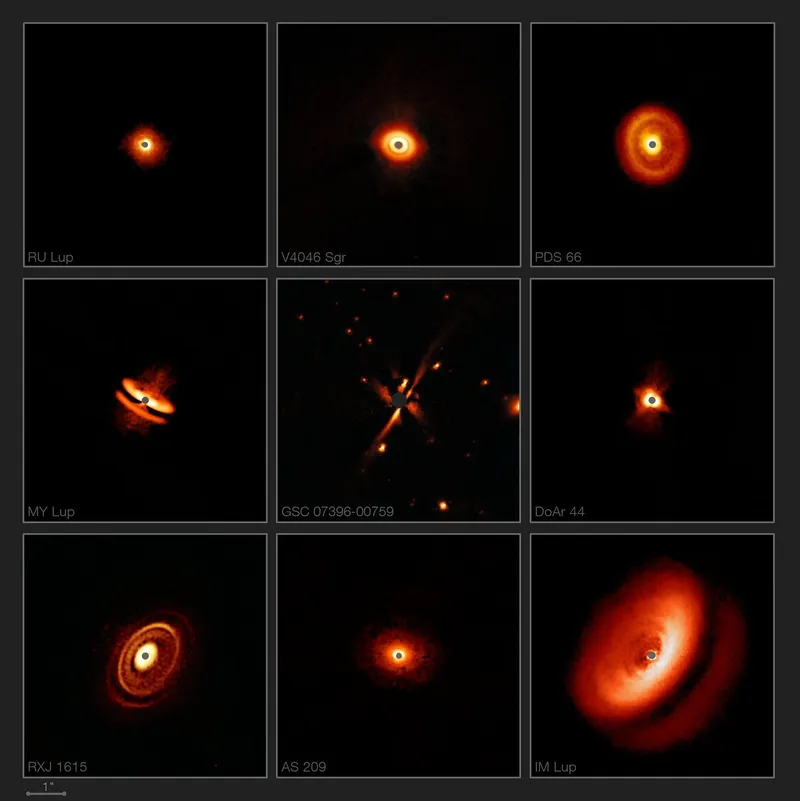
Planets do not appear as ready-made balls of rock and gas. First, a huge disk of dust, gas and molecules forms around a young star, and within it material for future worlds gradually accumulates. NASA wants to look at these cosmic "construction sites" through the new infrared observatory PRIMA, which the agency selected in September 2026 for the next stage of development.
The name PRIMA stands for Probe far-Infrared Mission for Astrophysics, and the mission will become the first in NASA's new class of astrophysics missions, the Probe Explorers. Its main feature is operating in the far-infrared range, which opens up a part of the Universe that is inaccessible to conventional optical observation. If the project passes further review, the observatory is planned to launch in 2033, and its estimated operating life will be five years.
Why is it not enough to simply look at these systems through James Webb? JWST already makes it possible to obtain extremely detailed images of protoplanetary disks, but PRIMA is meant to work in a different part of the spectrum. Its 1.8-meter diameter telescope will observe radiation that passes especially well through cold and dusty regions. In effect, it is another window into those areas of space where ordinary light is easily lost in dust.
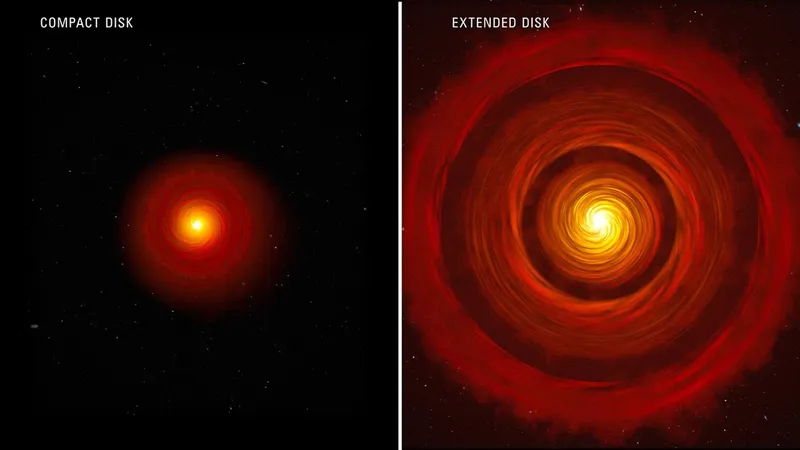
For astronomers this is fundamentally important, because part of the story of a future planet is hidden in such disks. Dust particles collide, merge and form larger bodies, and later planetesimals and planets can emerge from them. PRIMA will be able to study chemical traces of water, oxygen, carbon and other molecules, helping to establish what material young planetary systems receive before well-formed worlds appear in them.
What is especially interesting is that the task is not only to search for the planets themselves. Scientists are interested in what they are made of before they are born, how their environment changes and where the substances come from that may later end up in atmospheres. According to the mission's design, PRIMA will study protoplanetary disks and the spectral signatures of molecules, including H₂O, OH and HD, which can reveal the composition and mass of the material around young stars.
At the same time, planets are only one part of the larger picture. Far-infrared radiation also makes it possible to study the formation of stars and galaxies, the growth of supermassive black holes, and the accumulation of cosmic dust and heavy elements. PRIMA is in effect meant to fill the gap between the capabilities of James Webb and radio telescopes, allowing scientists to examine processes that today can be seen only partially.
Technologically, the mission is also unusual. The PRIMA telescope is planned to be cooled to about 4.5 kelvin, that is, almost to absolute zero. This is necessary so that the spacecraft's own heat does not overwhelm the extremely faint infrared radiation from distant cosmic objects. The spacecraft will carry two main scientific instruments: the FIRS spectrometer and the PRIMA Imager, which will combine spectral information with imaging and polarimetry capabilities.
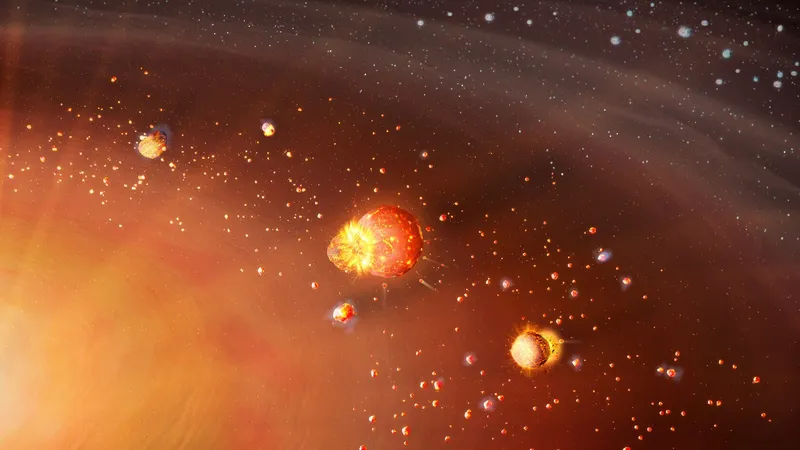
As a result, NASA wants to obtain not just another space camera, but an instrument for reconstructing the earliest stages of planetary systems' existence. Earth was once part of exactly such a disk, an environment where dust turned into larger bodies, and chemistry gradually became geology. PRIMA will not be able to return us to the past literally, but it will be able to observe dozens and hundreds of young systems at different stages of their evolution. And it is from this cosmic statistics that scientists can build a more detailed answer to a question that begins long before Earth appeared: how a planet arises at all from cold dust.
Read also: Jeff Bezos Is Not Backing Down: Blue Origin Prepares to Return to the Big Space Race
Text: Arina Blyzniuk
Comments
No comments yet — be the first.
Discuss on Telegram