
Clothes Without Logos, Sweaters That Cost Thousands of Euros and Bags Not Everyone Will Recognize: Why True Luxury No Longer Shouts About Itself
What is quiet luxury, and why have Loro Piana, Brunello Cucinelli and The Row become symbols of understated luxury? We examine the logo-free fashion phenomenon in 2026.
Translated with AI. Original: Українська
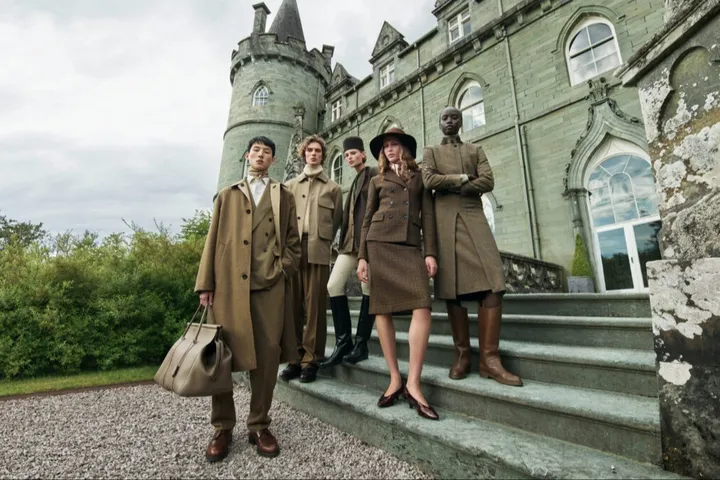
In a world where logos once were the simplest way to show status, a different aesthetic is becoming increasingly noticeable. The most expensive items can look so restrained that a person without experience in luxury fashion would not even guess their value. No huge monograms, shiny inscriptions or obvious brand symbols. Only perfect fit, sophisticated work with materials and details that are noticed by those who truly understand clothing.
This approach is called quiet luxury. It became especially popular after series such as "Succession" drew attention to the style of ultra-wealthy families who do not need showy logos to emphasize their position. In such a wardrobe, what matters more is not how recognizable an item is, but what it is made of, how it fits and whether it will stay relevant for years. At the same time, in 2026 this aesthetic is no longer a discovery for the fashion industry: it has become part of a broader debate about what modern luxury should be.
One of the main symbols of this trend is Loro Piana, an Italian brand known for its work with cashmere, wool and rare fibers. Its pieces do not need large inscriptions to justify the high price for its audience. For example, a coat or a sweater may look completely simple, yet this simplicity rests on the choice of raw materials, processing technology, construction and quality of execution. The material itself, rather than external decoration, becomes the main argument for buying.
Another representative of this aesthetic is Brunello Cucinelli, a fashion house that built its reputation on cashmere, a restrained palette and relaxed Italian tailoring. Its pieces often look effortless: soft jackets, knitwear, trousers without unnecessary formality. Yet behind this outward simplicity stands premium positioning. Notably, in October 2026 the brand raised its annual sales forecast, even as a significant part of the luxury market is going through a difficult period. This points to steady demand for a certain type of luxury, although it does not mean that the entire segment is growing equally.
The Row represents another side of quiet luxury. The brand, founded by Mary-Kate and Ashley Olsen, works with minimalist silhouettes, understated accessories and an almost architectural approach to clothing. Its aesthetic is not limited to a beige coat or a white shirt. Proportions, volume, texture and how a piece interacts with the body are what matter. In this case, minimalism does not mean the absence of design: on the contrary, when decorative elements are few, any error in the cut becomes more noticeable.
However, quiet luxury does not mean that any item without a logo is automatically luxurious. A minimalist sweater may cost little, while an expensive item with a large brand inscription can still remain a luxury product. The difference lies in brand positioning, material quality, production, design and service. Neutral colors and simple silhouettes merely create an outward resemblance, but on their own they do not prove either high quality or durability.
Also interesting is that the popularity of this restrained aesthetic has produced its own paradox. When the absence of logos becomes fashionable, it too turns into a status symbol. Brands that previously remained recognizable mainly to a narrow circle of clients receive more attention, and their signature items begin to be copied by mass-market manufacturers. Quiet luxury is no longer so quiet when its name is used in every second advertising campaign, and a beige set becomes a universal symbol of expensive style on social media.
This does not mean that visible logos will disappear. Fashion will always have room for maximalism, bright accessories and conspicuous branding. It is simply that modern luxury offers several ways of speaking about status: some choose a recognizable symbol, while others choose an item whose value does not need to be explained to those around them. And none of these approaches on its own makes a person more stylish than another.
Perhaps the most interesting feature of quiet luxury is not that wealthy people have stopped buying visible brands. They have gained another way to demonstrate taste without turning their clothes into a billboard. For everyone else, there remains a simple reminder: a truly successful look does not necessarily have to cost thousands of euros. What matters more is understanding proportions, choosing clothes that fit well, and not confusing a high price with personal style.
Also read: Luxury No Longer Sells Just the Logo: Why Loro Piana Is Building Its Own Factory for Exclusivity
Text: Arina Blyzniuk
Comments
No comments yet — be the first.
Discuss on TelegramRead also
 The Kharkiv-Born Designer Behind the Saint Laurent Logo: The Story of Three Letters That Became a Symbol of World Fashion
 From Pinterest to TikTok: How the Aesthetic of Elegance Became the Biggest Trend of 2026
 Why Sequins Have Returned to Everyday Wardrobes – and What It Says About Fashion After Quiet Luxury