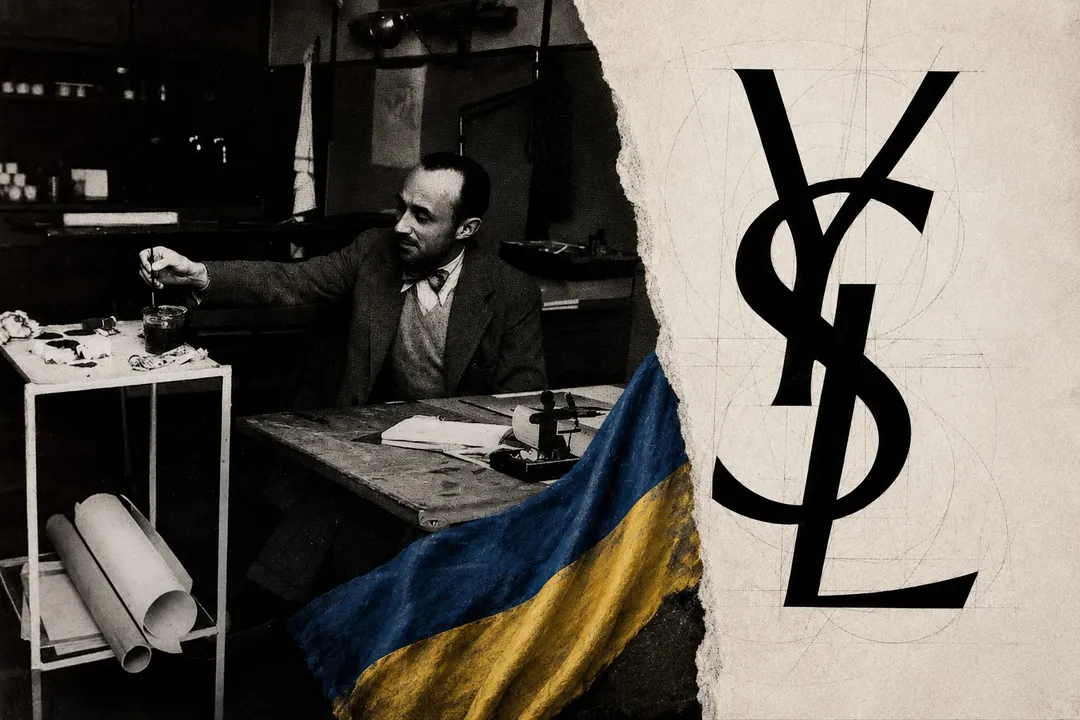
The Kharkiv-Born Designer Behind the Saint Laurent Logo: The Story of Three Letters That Became a Symbol of World Fashion
The story of Cassandre, a Kharkiv-born artist who created the iconic YSL monogram in 1961. How did three letters become one of the most recognizable symbols in world fashion?
Translated with AI. Original: Українська
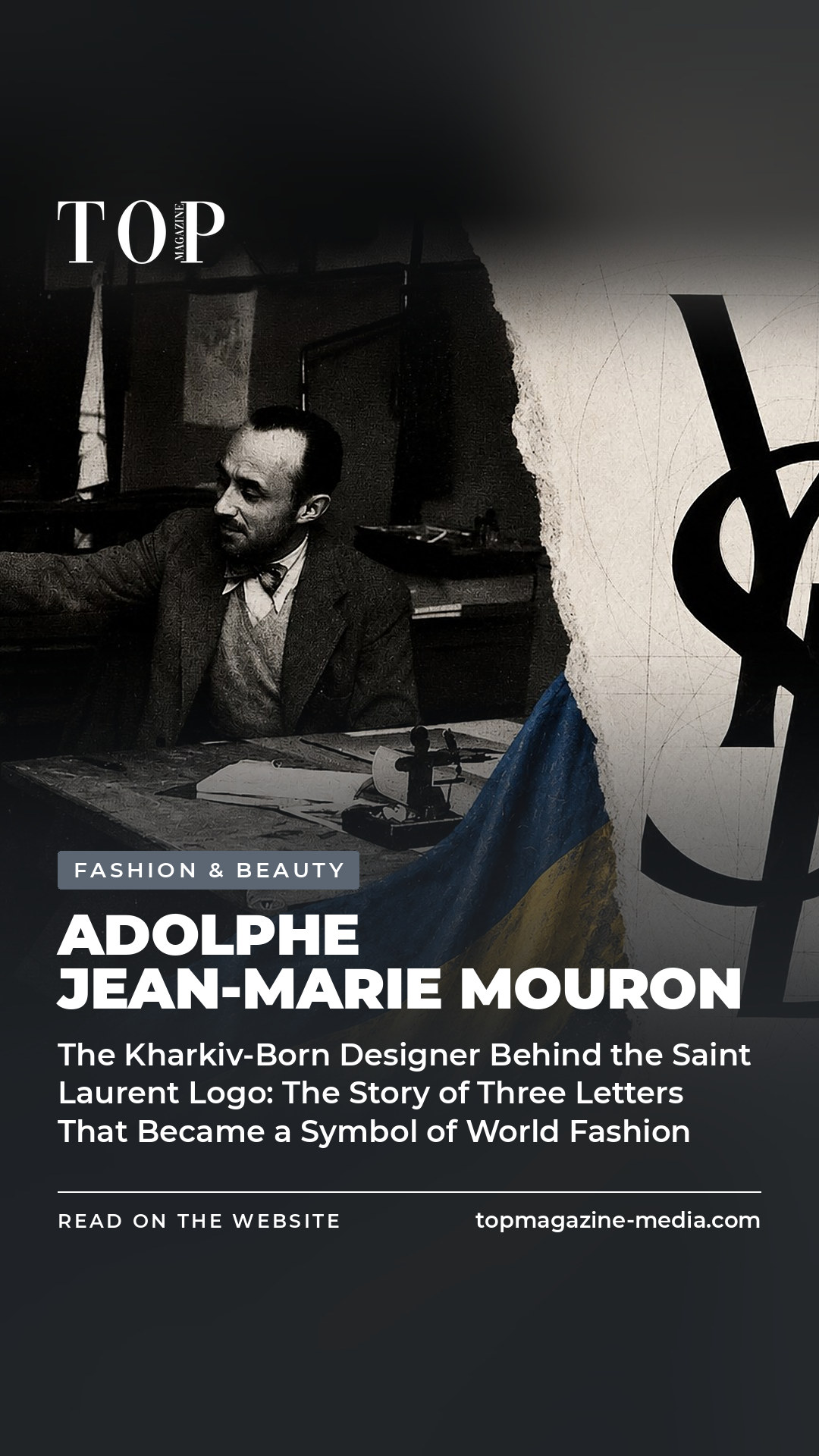
YSL is one of those logos that people recognize without the brand name. The three interlocked letters can be seen on bags, perfumes, belts, sunglasses and clothing from Saint Laurent around the world. But behind this symbol is an unexpected story: its creator Adolf Zhan-Mari Muron, known as Cassandre, was born in Kharkiv in 1901 to a French family. In 1961, he created the monogram for the new fashion house Yves Saint Laurent.
1961: SAINT LAURENT NEEDED ITS OWN SIGN
In December 1961, Yves Saint Laurent and Pierre Bergé opened their own haute couture house in Paris. For the designer, this was a new stage after his work at Dior: now it was necessary not just to create clothing, but to build a brand with its own character. One of the first tasks was creating a signature logo.
For this, they hired Cassandre, one of the most renowned graphic designers of his generation. His name was already well known in France: Cassandre created advertising posters, worked with typography and developed visual images for major brands. His style was easily recognized for its geometry, clear forms and ability to turn an ordinary inscription into a strong graphic image. Musée Yves Saint Laurent Paris explicitly calls him one of the great graphic artists of advertising art between the wars.

The task for the new Saint Laurent was very specific: it was necessary to combine three initials, Y, S and L.
Cassandre did not simply write them one after another. He interlaced the letters so that they formed a single vertical sign. The result was a monogram that could be read both as Yves Saint Laurent and function as an independent symbol.
This became the main success.
The logo did not need explanation. It could be seen on a small label or a huge billboard, and one could immediately understand which fashion house stood behind it.
WHO WAS CASSANDRE AND WHY WAS HE CHOSEN?
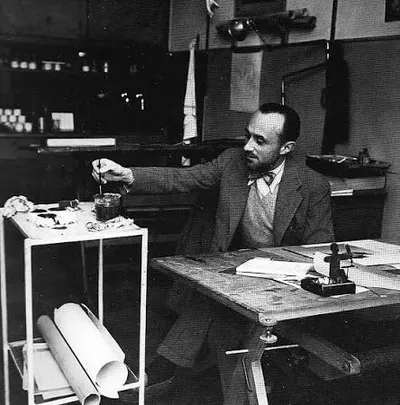
Before working with Saint Laurent, Cassandre already had a career that today's art directors could envy.
He began working in advertising in the 1920s, and his posters became part of French visual culture. Cassandre created large-scale advertising images for transport, alcohol, publishers and other companies. His posters were so well known that in 1936 the Museum of Modern Art in New York dedicated a separate exhibition to him.
His style was as far as possible from random decoration. Cassandre built his compositions so that a viewer could grasp the main image within seconds. Geometry, large planes, contrast and strong typography made his works recognizable even from a distance.
Therefore, the commission from Saint Laurent was logical: the new fashion house needed not just a beautiful inscription, but a sign that could become its visual signature. And Cassandre created such a sign.
WHY THREE LETTERS BECAME STRONGER THAN A NAME
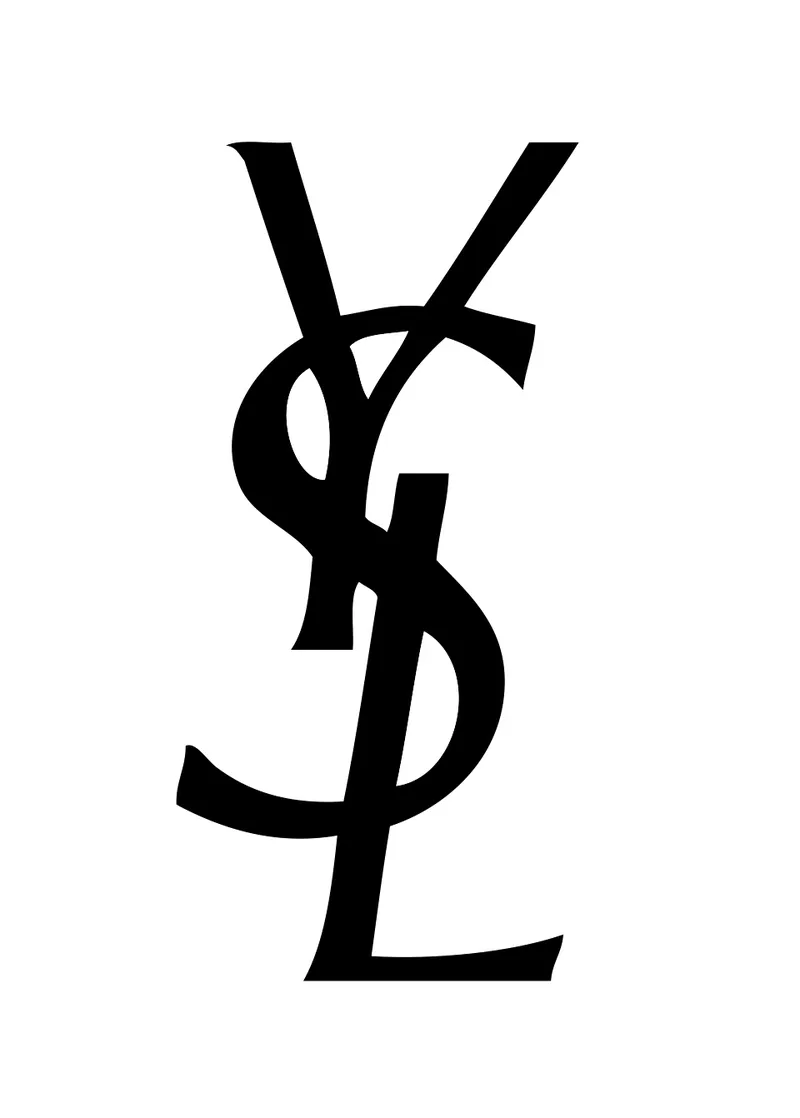
The power of the YSL monogram lies in the fact that it is not tied to a specific object.
It works equally well on bag leather, a metal clasp, a perfume bottle, sunglasses or fabric. It can be enlarged, reduced, made metallic, black, gold or silver, and it does not lose its character.
This is the hallmark of a strong luxury identity: the symbol begins to live separately from the company name.
Saint Laurent itself continues to use the original form of the monogram. On the brand's official website, it is described as an iconic logo in which the initials YSL are interwoven, and its original form still remains part of the house's visual heritage.
Moreover, today the brand even uses the name Cassandre for entire categories of accessories. For example, the official Saint Laurent store sells bags, belts and other products with the Cassandre logo.
In other words, the surname of the artist who created the sign more than six decades ago has become part of the brand's own contemporary vocabulary.
WHAT DOES KHARKIV HAVE TO DO WITH IT?
The most interesting part of this story is the biography of Cassandre himself. He was born in Kharkiv.
In documents and historical sources he is often called a French graphic designer, because he came from a French family, lived and worked in Paris and was a French citizen. But his birthplace was indeed Kharkiv. This is confirmed by both the Musée Yves Saint Laurent Paris and archival materials of the Museum of Modern Art.
His real name is Adolf Zhan-Mari Muron. Cassandre is the creative pseudonym under which he became known in the world of design.
So the phrase “the Saint Laurent logo was created by a Kharkiv native” is not a beautiful marketing ploy, but a concrete fact from the biography of the monogram's author.
A UKRAINIAN TRACE IN WORLD FASHION
The story of Cassandre is interesting not only because he created a famous logo. It shows how unexpectedly Ukrainian names can be woven into world culture.
A Kharkiv native created the symbol of one of the most famous French fashion houses.
Not “somewhere nearby” Saint Laurent at some point, not as a minor participant in the process, but the author of the sign that the brand itself still uses today.
In Paris, this logo became part of the history of French fashion. In world culture, it is a recognizable symbol of luxury. And in the Ukrainian context, it is another story about how a person born on Ukrainian soil left a mark far beyond its borders.
So the next time you see the three interlocked letters YSL, it is worth remembering not only Yves Saint Laurent.
Behind them stands Cassandre — Adolf Zhan-Mari Muron, a native of Kharkiv, who in 1961 created one of the most famous logos in world fashion.
Read also: Ukrainian Symbols in World Fashion: How Our Culture Appears in the Collections of Global Brands
Text: Arina Blyzniuk
Comments
No comments yet — be the first.
Discuss on Telegram