How They Are Completing Sagrada Família 140 Years On: The Secret Is Not Just Haudi
How modern engineers are completing Sagrada Família more than a century after Haudi: modular structures, stone, steel and 24 tonnes of special adhesive.
Translated with AI. Original: Українська
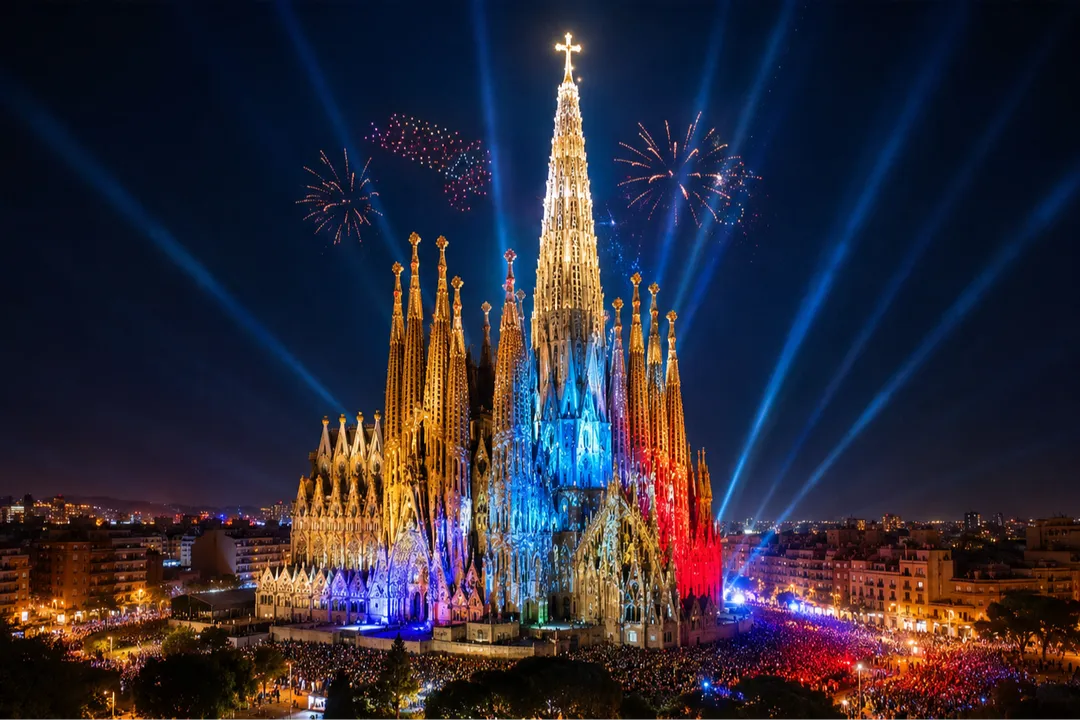
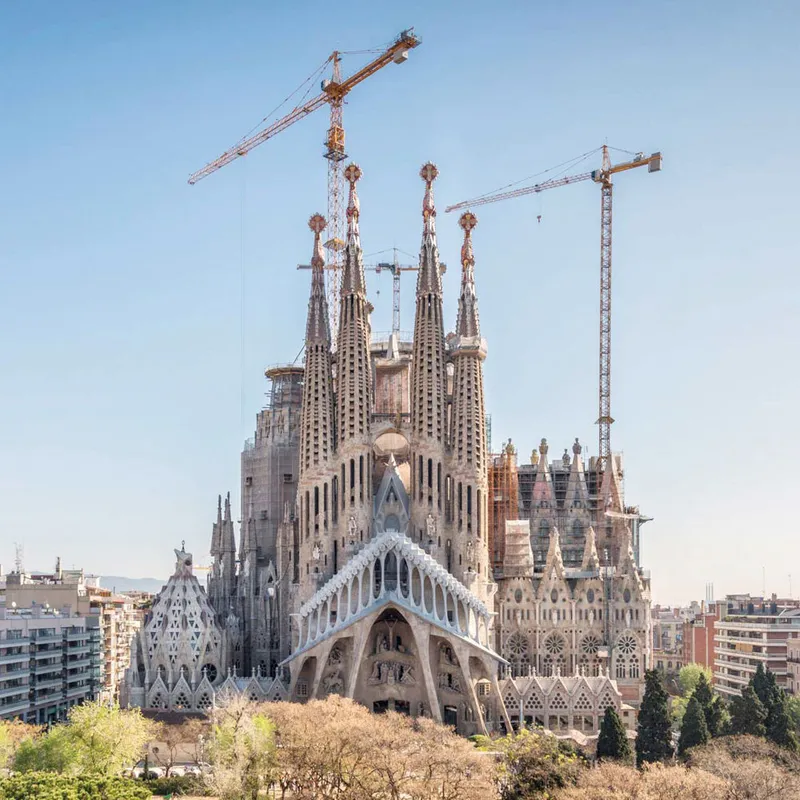
In February 2026, the exterior of the central Tower of Jesus Christ, the tallest in the complex, was completed, and with it one of the most difficult stages in the construction of the basilica came to an end. The project, launched by Antonio Haudi more than a century ago, still remains not a museum exhibit but a fully active construction site. Its architectural logic was born at the turn of the 19th and 20th centuries, while its final appearance is now being shaped with the help of 21st-century technologies.
Haudi understood that he would not live to see Sagrada Família completed, and in effect he created not just a building but a project for future generations. The architect left drawings, models and principles that his successors could use to continue the work. The problem was that part of his design went well beyond the capabilities of engineering at the time. What was for Haudi a mathematical, geometric and architectural concept can today be translated by engineers into digital models, precise calculations and modern structural systems.
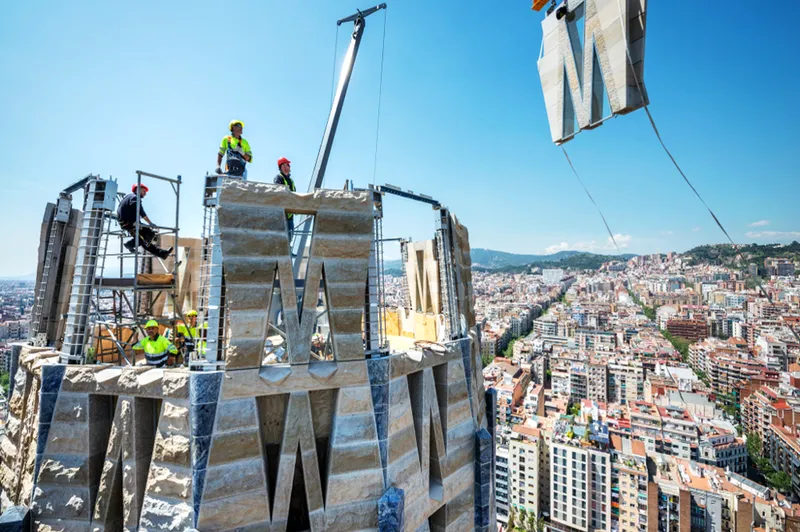
One of the most interesting examples of this meeting of eras is literally hidden inside the towers. For the central towers, 826 stone panels and more than 2100 stone elements were used, joined with metal structures. To make the stone and steel work as a single structural system, engineers applied a special two-component epoxy adhesive, Loctite EA 9497. It sounds almost ordinary for the 21st century, but this very technology became one of the inconspicuous elements that made it possible to realise an extremely complex form.
The scale of this solution is well illustrated by one figure: for the six central towers, about 24 tonnes of adhesive were used. On average, roughly 30 kilograms of material went into each panel. The adhesive is applied in liquid form, fills the gaps between surfaces, and then undergoes controlled hardening for about 24 hours. As a result, the joint does not simply hold individual parts together, but helps stone and metal work as a single structural element.
An even more important change was the very shift in approach to construction. Instead of creating complex elements directly at height, some structures are made using a modular system and then installed on site. According to the project team and the technology's manufacturer, this approach made it possible to speed up certain processes by up to ten times compared with traditional methods. This is where it becomes clear that the modern Sagrada Família is not a literal recreation of old-style construction, but a combination of historical architecture with industrial precision.
At the same time, the structures must withstand more than their own weight. Sagrada Família is located roughly 2.5 kilometres from the Mediterranean Sea, so the metal is constantly exposed to a humid, salty environment. In Barcelona, relative humidity often reaches 65–75%, and the temperature over the year can range from about 5 to more than 30 degrees. The stone and metal expand and contract as a result, so the materials and joints must perform not only at the moment of installation, but for decades afterwards.
This is the main paradox of Sagrada Família: its modern part does not try to hide that it was created in a different technological world. On the contrary, the 21st century is literally giving Haudi a helping hand. Architects and engineers work with digital tools, modern materials, modular structures and new testing methods, but the final point remains a design formed more than a hundred years ago.
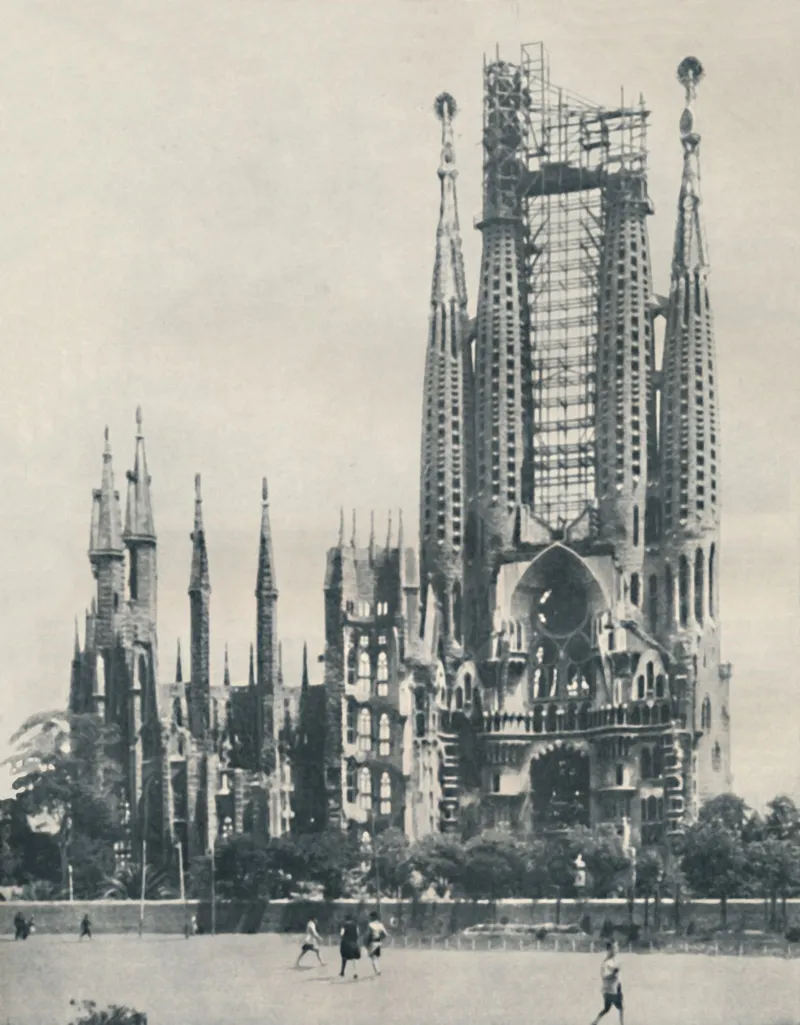
In 2026, as the world marks the centenary of Antonio Haudi's death, the completion of the central towers became more than just another date on the construction calendar. It is a moment when it is particularly clear how architecture can outlive its author not only physically but also technologically. Haudi left a form, a system of thinking and a vast space for interpretation, and later generations found ways to translate his ideas into the language of their own time. That is why Sagrada Família remains unique: it is a building that for more than a century has not simply been completed, but is literally being taught how to be completed anew in every technological era.
Also read: The six-tonne Stonehenge altar stone could have reached England thanks to glaciers
Text: Arina Blyzniuk
Comments
No comments yet — be the first.
Discuss on Telegram