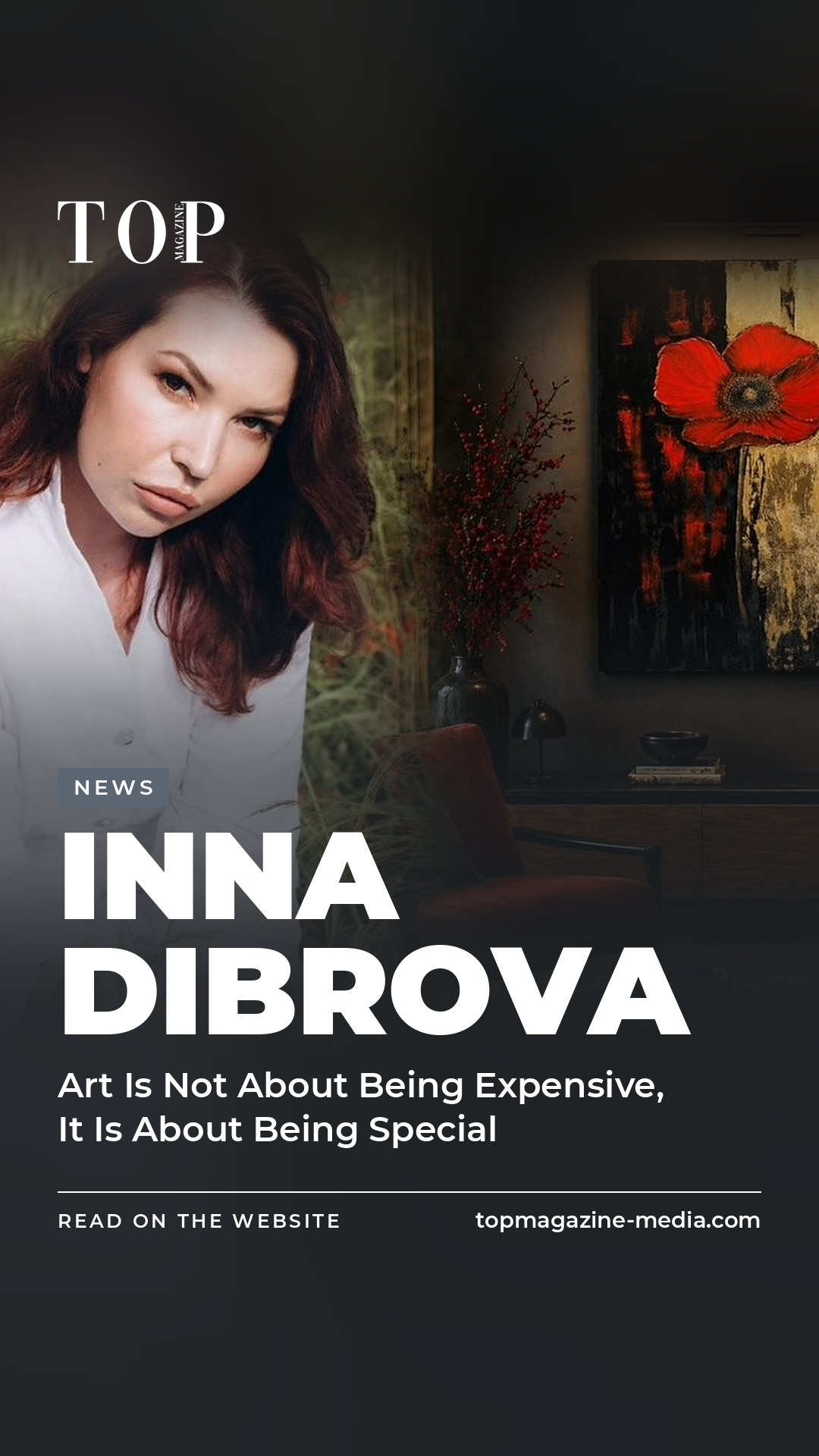
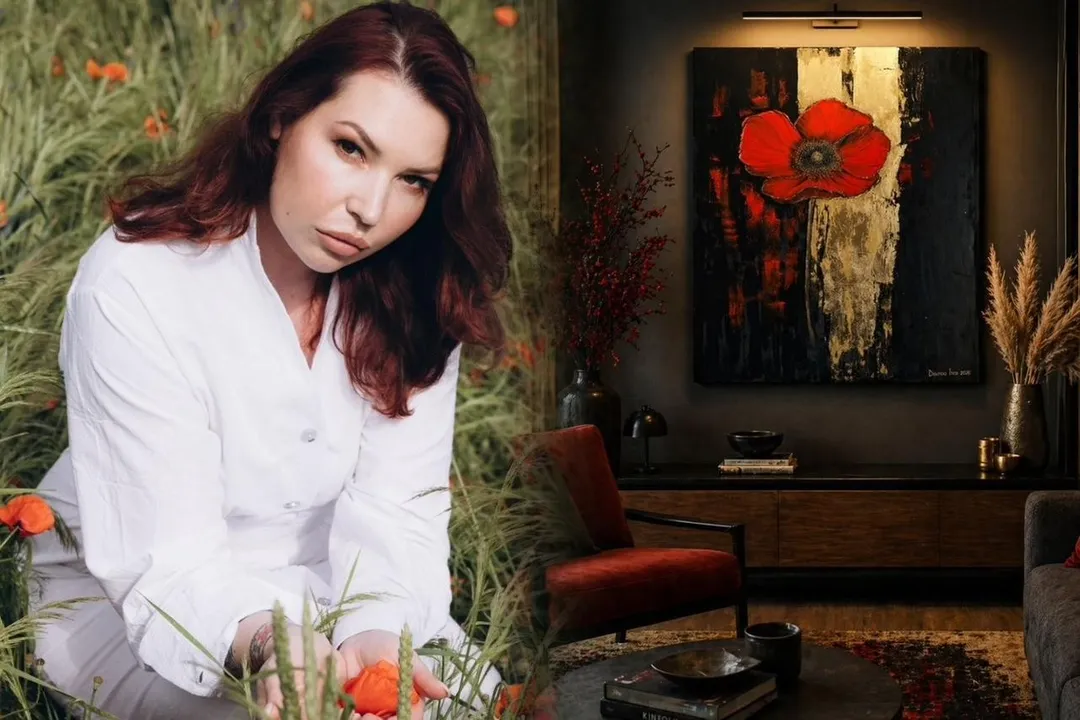
Inna Dibrova: Art Is Not About Being Expensive, It Is About Being Special
From journalism through the beauty industry to author's paintings and epoxy resin objects: how a woman chooses herself and creates pieces with character.
Translated with AI. Original: Українська
Some people's path to their true calling looks like a series of coincidences, but only when viewed from the outside. From the inside, it has always been one line. It simply ran through many different points before becoming visible to others.
Inna Dibrova is an author of painting and epoxy resin objects. But before that came journalism, the beauty industry, an early marriage, a first son born in her second year of university, a part-time job at a Kyiv publishing house, and a constant search for balance between family, studies and herself. Each of these stages was not a detour from the path but part of it. She just did not know it yet.
"Since childhood, I have prioritized self-development. I have always felt there is not enough knowledge or awareness."
This trait is not a rhetorical figure from an interview. It runs like a red thread through her whole life. She gave birth to her first child in her second year of university, right after the winter exams, and within a few weeks she was back in lectures. At the same time, she worked part-time at one of Kyiv's popular publishing houses. At the same time, she was trying to understand who she was beyond the roles of mother and student. Juggling family, studies and work, which most would call exhaustion, was simply a rhythm for her.
She left journalism deliberately and without nostalgia. She refused to write commercial materials. She saw no personal growth in mediocre projects. She understood a simple thing: working a lot is not yet about earning and not about growth. What is needed is meaning, or it is not worth it.
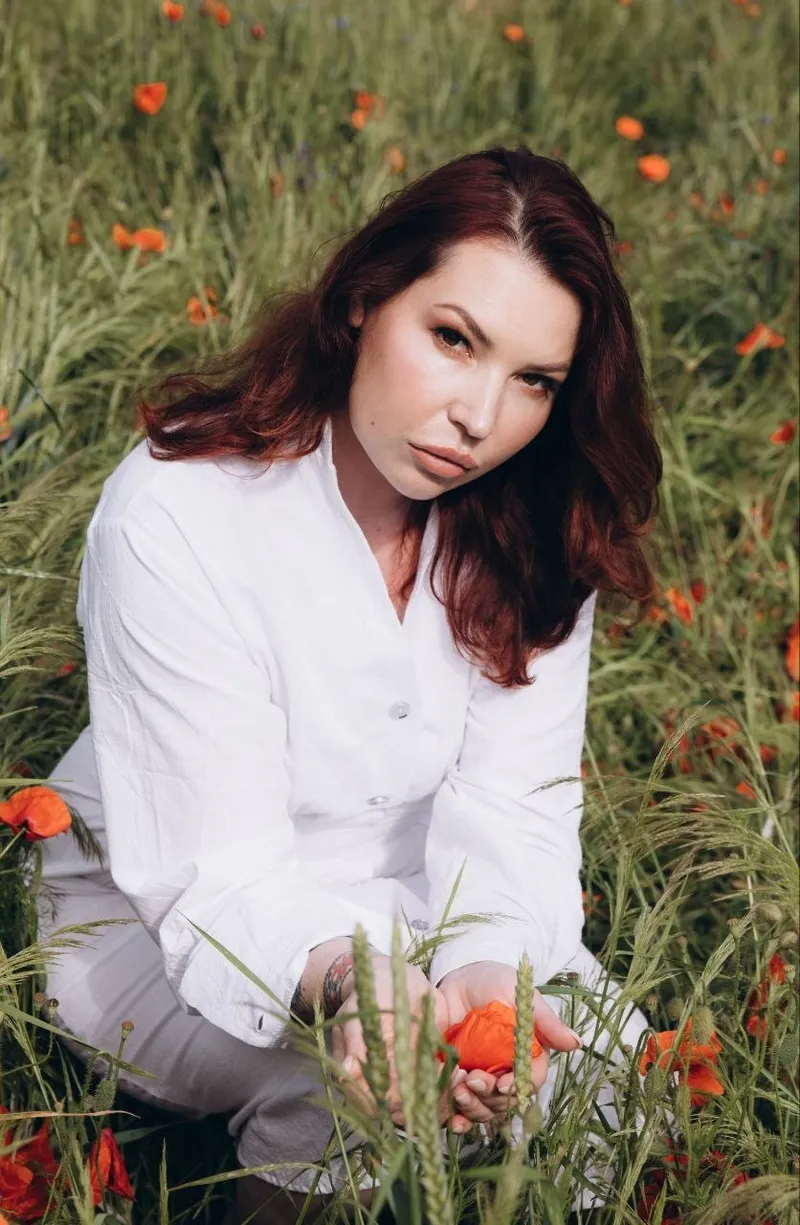
The beauty industry, which at that time was only gaining momentum, became an unexpected but precise school. There she learned to work for herself. She received her first lessons in financial literacy. She understood what delegation means and why, without reputation and recommendations, you simply do not exist in the market. But the most valuable thing turned out to be something else: the people around her. An incredible number of strong, interesting, vibrant women, each of whom was a story of her own.
Painting came when the mechanism had finally settled: the children had grown up, the immature early marriage was over, and bookings in beauty came on their own. A space appeared, and in it, art appeared. Not as a decision, not as a strategy. It simply appeared.
"A drawing is like words, only non-verbal. From words to symbols."
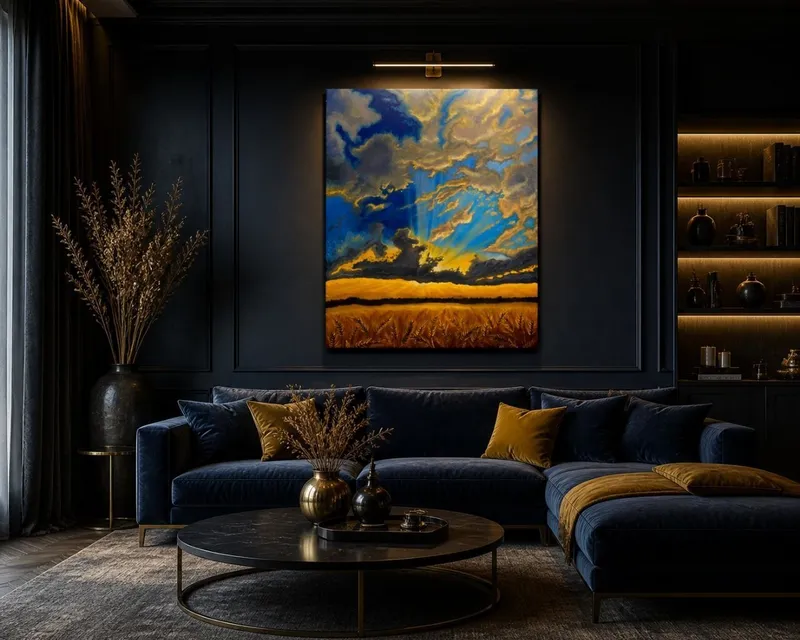
She did not consider herself an artist and did not claim that status. She painted from the soul, and when people began asking for something as a gift, she always started not with a brush but with questions. Which photo of the interior? Tell me about the person: what they love, what they are passionate about, what their character is like? Only after understanding the person and the space did she get to work. The result had to be not just beautiful but her own. Recognizable, something impossible to imagine in any other place.
With the start of the full-scale invasion, the first paintings with a national character appeared. They were for those who remain with Ukraine in their hearts, whether at home or abroad, so that their home would hold a piece of unbroken spirit. This was also an answer to the question every creator faces in such times: how does what I do intersect with what is happening now?
Then came epoxy resin. The material is capricious and demanding: power outages stop the work, the studio requires special conditions, and finding synergy took time. But Inna did not stop. Because resin gave her what painting did not: the ability to preserve a moment. To immortalize an object. To create something that exists between a painting and a sculpture, and is both at once.
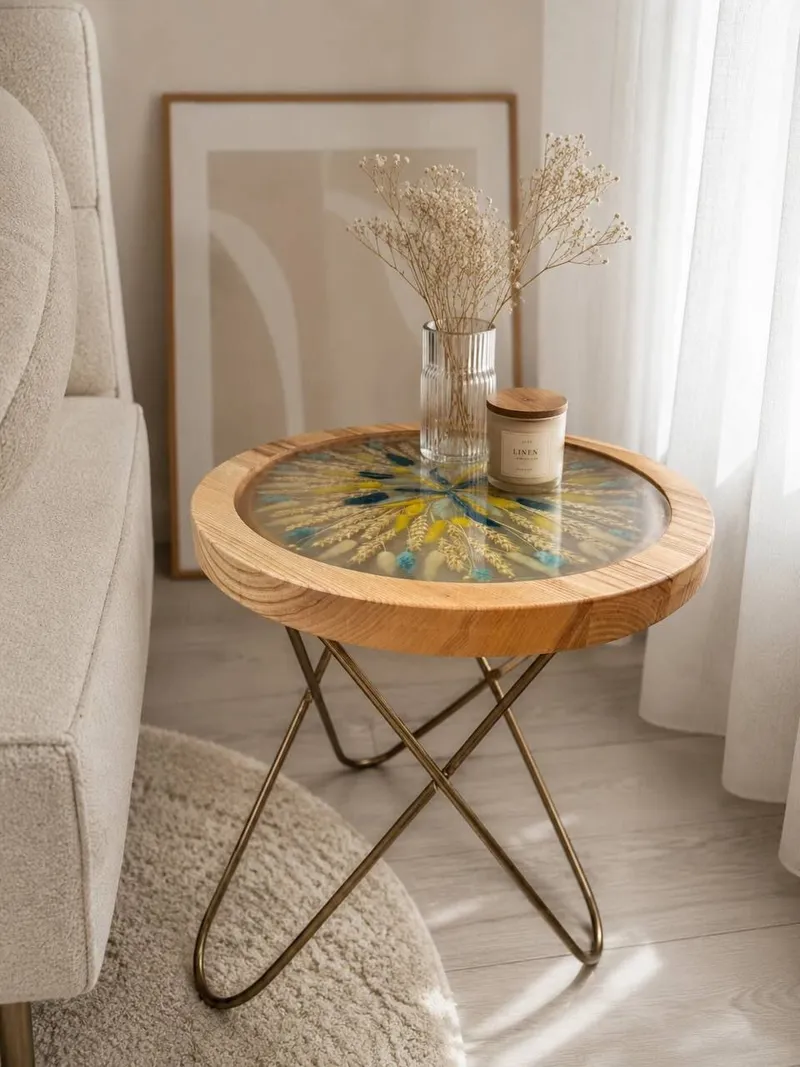
"The gloss of resin harmonizes incredibly well with painting, so why not combine them?"
That is how painted clocks appeared. Tables where painting and resin exist as one whole. Author's decorative objects for homes, restaurants, salons and business spaces. Each one is a single copy. Each one has a concept.
She speaks frankly and without embellishment about working with clients: most people do not actually know what they want. "Something pretty" and "something that fits the interior" are not technical tasks but the starting point of a conversation. Inna's task is to hear what a person has not yet formulated. To understand the character of the space. To sense the character of the person. And only then to create something that will suit both.
"This piece belongs to a person, so it should be associated with them. It is like your perfume: someone may have the same one, but on you it smells special. It is the same with exclusive objects: it is yours alone."
Her first clients came from her beauty practice: women who had known her for years. They watched her change, supported every new step, and became the first circle of admirers. Women who develop themselves despite everything, for whom becoming the owner of an author's object is not a question of status but of value and personal identity. For those who had moved abroad, her works became a piece of home in a new home. For Inna, she says, this was an honor.
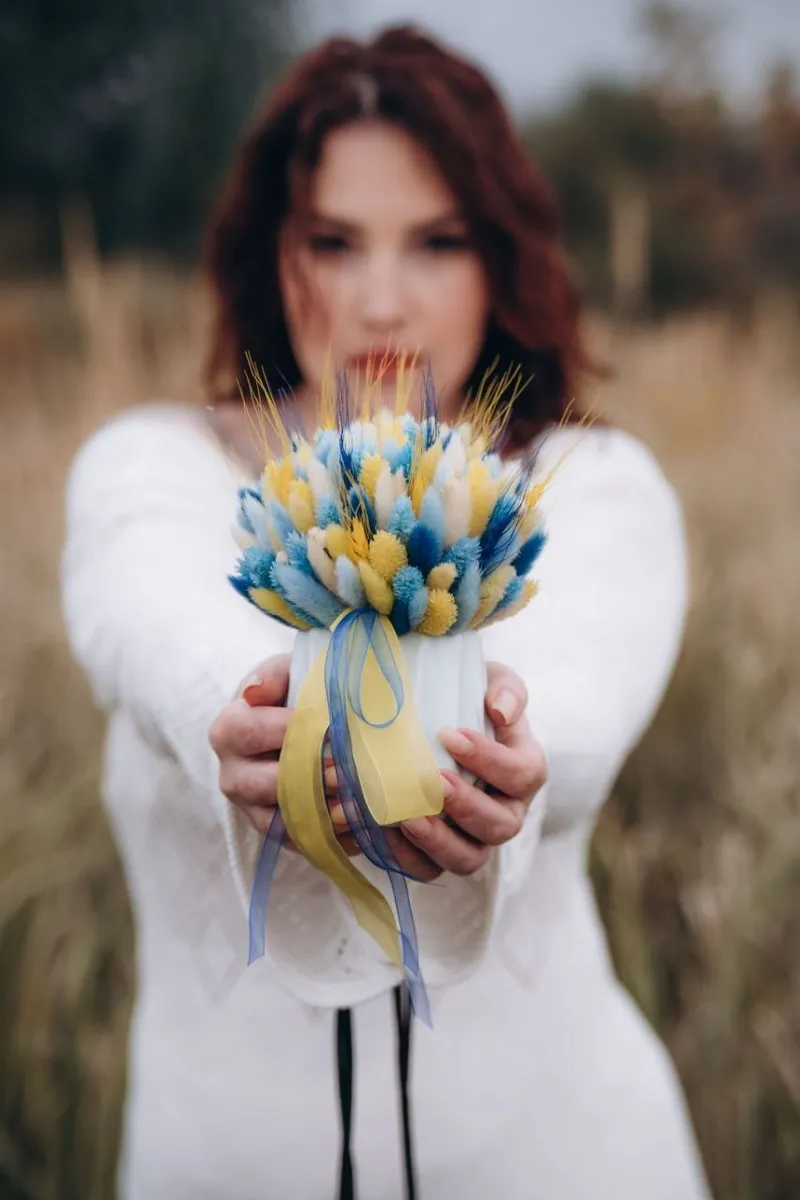
"Art is not about being expensive, it is about being special. I want to be accessible to people who value my work."
Inna Dibrova speaks about the future without loud ambitions, but with a very clear and mature position. She does not want to be the best. She does not strive to be the first. She wants to occupy a special place, and this word is not accidental for her. Behind it stands an understanding that comes only with experience: you do not have to be the loudest, it is enough that those who truly need you know about you.
She came to art with the baggage of an entrepreneur: an understanding of the market, of reputation, of the value of recommendation. And she says this is only one of the conclusions she carries forward. The rest is for future interviews.
This is Inna Dibrova. A person who did not search for her place but built it, step by step, material by material, person by person. And every piece she creates is one of a kind. Just like she is herself.
Read also: 5 films about art that can inspire new ideas
Text: Arina Blyzniuk
Comments
No comments yet — be the first.
Discuss on Telegram