Parade of Six Planets and New Moon: What We Will See in the Sky on August 12, 2026
On August 12, 2026, the sky will offer a rare combination of events: six planets will line up along the morning sky, and the Moon will enter the new moon phase. What it means and how to see it.
Translated with AI. Original: Українська
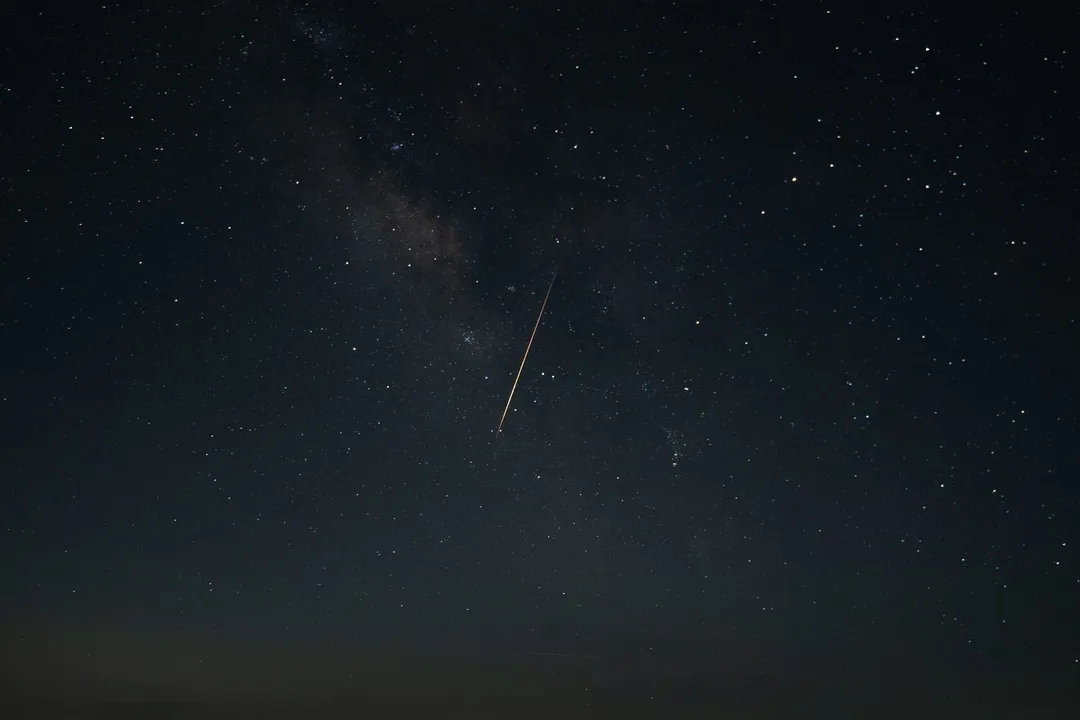
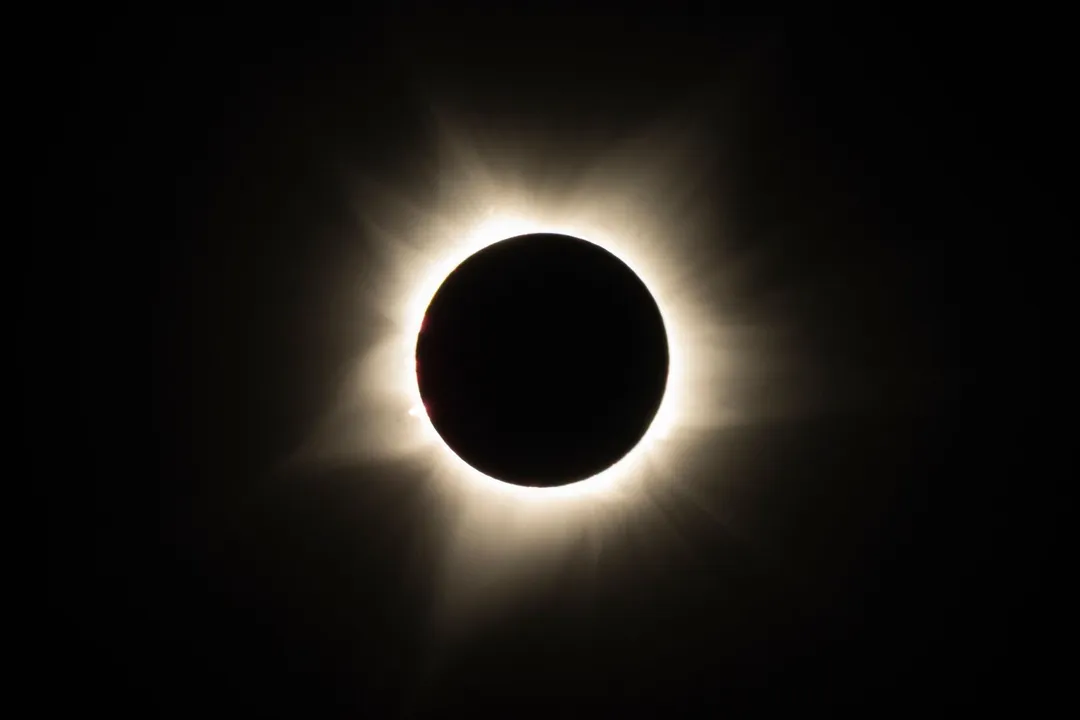
August 12, 2026, will be one of the most eventful days of the astronomical calendar this year. While part of the world watches a solar eclipse during the day, just before dawn six planets will be visible in the sky at once, and the Moon will be entering the new moon phase. At night, the Perseids will add to this celestial "parade," with their peak falling on the night of August 12 to 13.
The "parade of planets" does not mean the planets are physically lined up in a perfectly straight line. From Earth, they will appear to be arranged along one section of the sky, because the orbits of the planets in the Solar System lie roughly in the same plane. This imaginary line is called the ecliptic — it is along it that we usually see the Sun, the Moon and the planets.
That morning, Mercury, Mars, Jupiter, Saturn, Uranus and Neptune will be in one part of the sky. Four of them — Mercury, Mars, Jupiter and Saturn — will be visible to the naked eye under favorable conditions. Uranus and Neptune are much dimmer, so binoculars or a telescope will be needed to see them.
The best time to observe is about an hour before sunrise. The planets will stretch across the morning sky from the eastern to the southwestern part of the horizon. The hardest will be finding Mercury and Jupiter: they will be low above the horizon and will quickly get lost in the pre-dawn light. Saturn and Mars will be higher, so they will be easier to find.
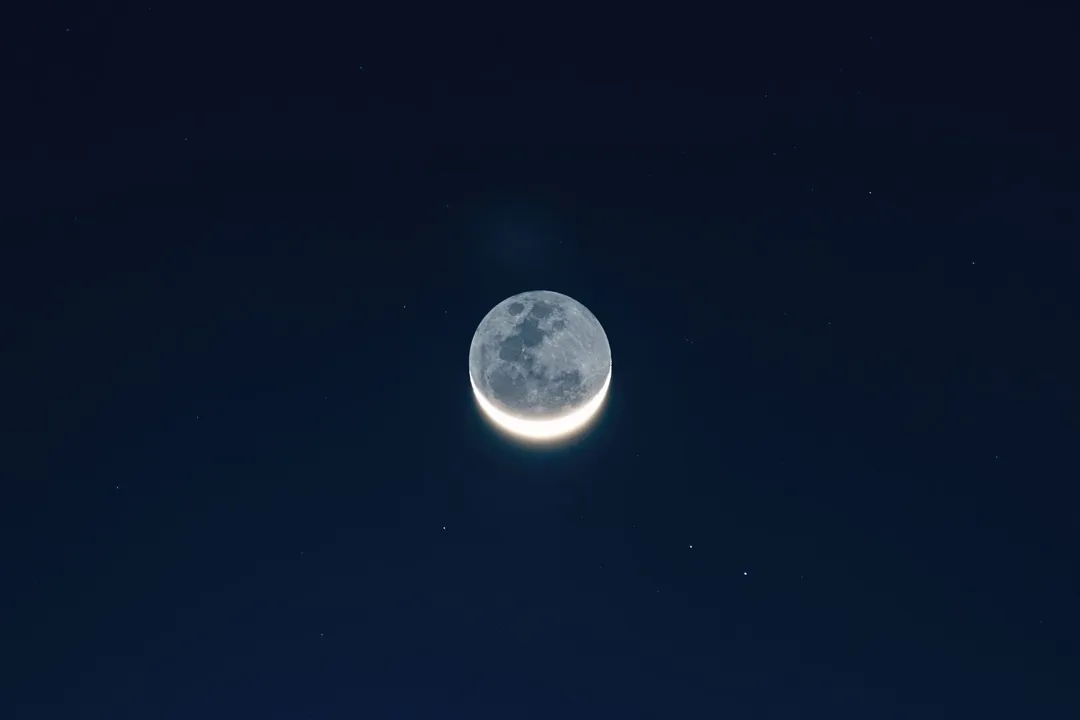
But the main feature of this day is that the Moon will practically disappear from the night sky. On August 12, the new moon will occur: the exact phase falls at 17:37 UTC. At that moment, the side of the Moon illuminated by the Sun will be turned away from Earth, so it is practically impossible to see it at night.
The new moon is exactly what explains another event of this day — the solar eclipse. When the Moon ends up between Earth and the Sun and passes precisely enough along the line between them, its shadow falls on Earth. So the August 12 eclipse is not an event separate from the new moon, but a direct consequence of this position of the Moon.
For stargazers, this is an almost ideal combination. The absence of a bright Moon means a darker sky, and therefore faint objects are easier to see. That is why the night of August 12–13 will be especially favorable for the Perseids: besides bright meteors, the dark sky will allow more faint stars and objects to be seen.
It is also important what will not happen on this day. The planets will not create any unusual gravitational effect on Earth, will not change the force of gravity, and will not cause earthquakes or other catastrophes. Their "alignment" is primarily an effect of perspective, which looks spectacular precisely from our point of observation. There is no scientific basis for linking such a planetary arrangement with dangerous events on Earth.
And if you look at this day symbolically, it indeed looks almost cinematic: six planets before dawn, a new moon and solar eclipse during the day, and the Perseids peak at night. Three completely different astronomical phenomena will fall within one 24-hour period.
And that is precisely why August 12, 2026, may become one of those dates when it is worth simply going outside and looking at the sky. Without a telescope, you can see at least part of the planetary parade, and at night, watch meteors. This time, space does not require complex equipment: you only need a clear horizon, a dark place and a bit of patience.
Read also: Perseids 2026: up to 100 meteors per hour — how to see August's main meteor shower
Text: Arina Blyzniuk
Comments
No comments yet — be the first.
Discuss on Telegram