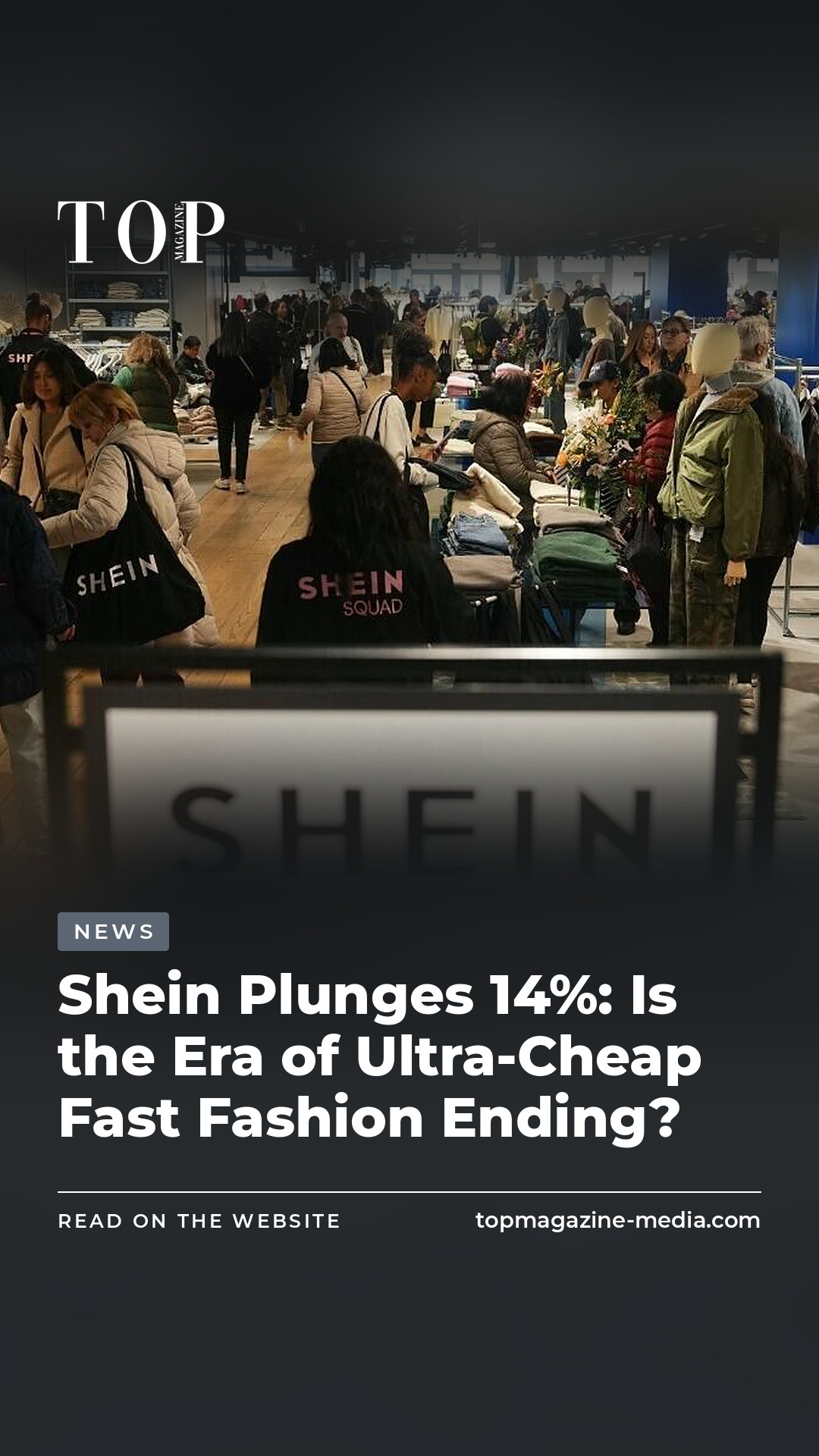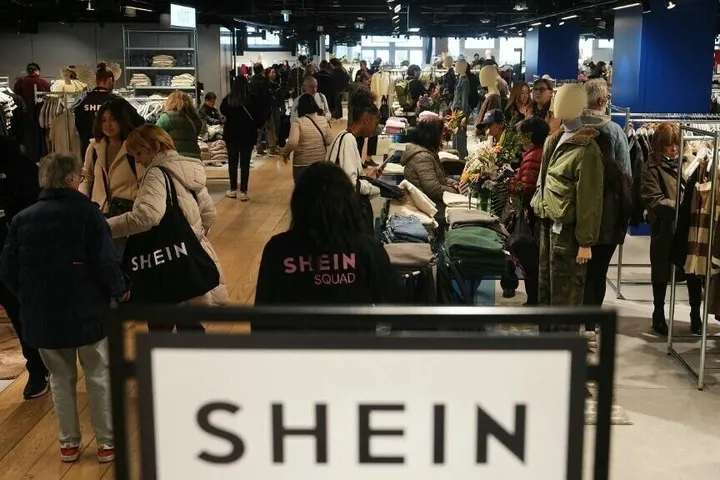
Shein Plunges 14%: Is the Era of Ultra-Cheap Fast Fashion Ending?
Shein shares fell 14% after quarterly profit dropped 67%. What is happening to the ultra-cheap fast fashion model, and why has Europe become a problem market?
Translated with AI. Original: Українська
On September 29, Shein shares in Hong Kong fell 14%, reaching a record low since the company's stock market debut. The cause was the first financial report since the IPO: adjusted quarterly profit declined 67%, to $228 million. For a brand that built a global empire on $10 dresses, tops for a few dollars and fast delivery, this is no longer just a bad day on the stock market. It is a moment when the economics of ultra-cheap fashion face a new reality.
For the second quarter, Shein earned $11.08 billion in revenue, but it grew only 0.9% compared with the same period last year. Meanwhile, the profit margin fell from 6.2% to 2.1%. In other words, the problem is not that people have suddenly stopped buying clothes online. Shein still sells huge volumes, but earning money on each order has become much harder.
The European market proved the most painful. In the second quarter, Shein's sales in Europe fell 13.9%, to $3.77 billion. The company raised prices and cut online advertising while preparing for new rules on cheap international parcels. At the same time, logistics and air freight costs rose. For a business that for years built its advantage on the ability to ship very cheap goods directly from manufacturer to buyer, every additional dollar of cost matters.
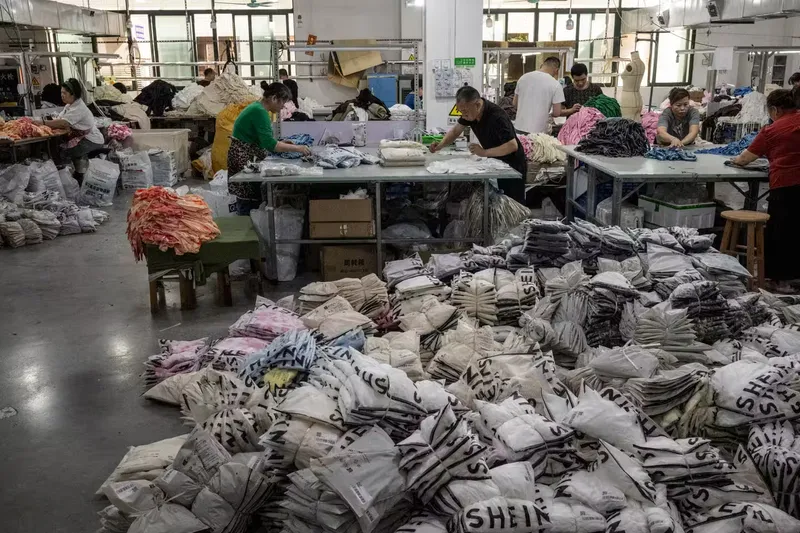
This is where the story becomes more interesting than a simple drop in shares. Shein's model worked thanks to a combination of low prices, a huge assortment, fast production and global delivery. The company tested small batches of items, saw which ones attracted demand, and quickly scaled up production. This system allowed it to respond to trends faster than traditional retailers. But it also depends on how cheaply millions of small orders can be moved across borders.
Now this very advantage is becoming more expensive. In the US, the rules for low-value imported parcels have changed, while in Europe new fees for cheap e-commerce shipments have appeared. Additional pressure comes from fuel, air freight and warehouse logistics costs. As a result, Shein is already forced to raise prices on some products. This changes the psychology of the purchase: if a dress costs not a nominal $8 but $15–20, the shopper begins comparing it not only with other Shein items but with Zara, H&M and local brands.
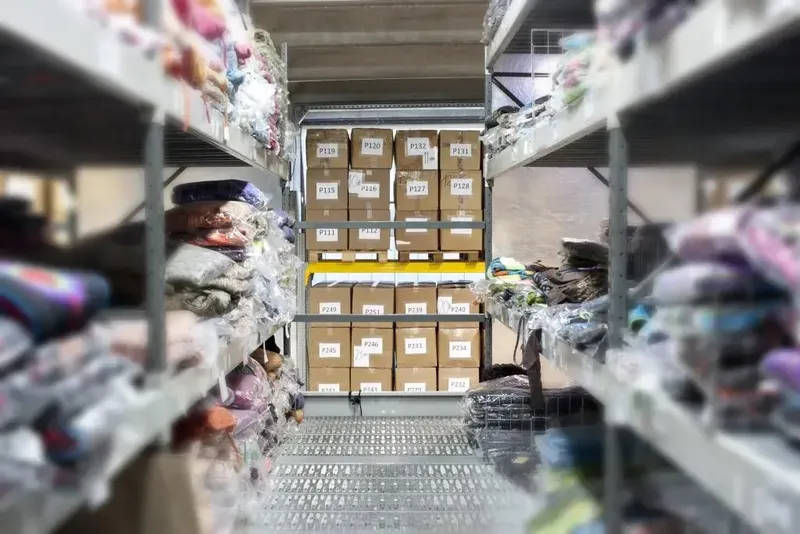
Interestingly, the company itself is already preparing for this scenario. Shein's management has said it intends to increase inventory in Europe and more actively develop higher-priced clothing categories. This signals a gradual shift away from the logic of "the cheaper, the better" toward a model in which margin, assortment and average purchase value matter more. The paradox is that the ultra-low price was one of the main arguments that allowed Shein to grow into a global phenomenon.
Shein's decline also shows that fast fashion is gradually entering a new phase. The question is no longer only how many new items can be created in a week. What matters is how much it costs to deliver them to the buyer, what taxes and fees arise along the way, and what price the consumer is willing to pay. When all these costs rise at the same time, the very concept of an endless flow of clothing for a few dollars stops being so simple.

However, it is still too early to talk about the end of fast fashion. Shein remains a company with billion-dollar sales, a vast global audience and the ability to quickly restructure its business. Moreover, weaker results in Europe and the US are partly offset by growth in other regions, particularly Latin America. The drop in profit therefore does not mean an automatic collapse of the model – it shows that a model that once seemed almost infinitely scalable now faces far more economic constraints.
Perhaps the main change is happening not even on the stock exchange, but in the price of the item itself. Over the past decade, fast fashion has taught consumers to believe that a new look can cost less than dinner, and that a trend can appear in stores almost immediately after going viral on TikTok. If logistics, taxes, regulation and production costs continue to pressure this system, ultra-cheap fashion may remain, but stop being quite so ultra-cheap. And then the question will no longer be whether Shein will disappear, but how far buyers are ready to step back from the culture of "buy now, because it costs almost nothing".
Read also: Luxury No Longer Sells Just the Logo: Why Loro Piana Is Building Its Own Factory for Exclusivity
Text: Arina Blyzniuk
Comments
No comments yet — be the first.
Discuss on Telegram