Train Journeys Become a Separate Travel Experience
Why rail travel is gaining popularity again in 2027, how historic stations are turning into hotels, and why a slow journey can be a separate form of leisure.
Translated with AI. Original: Українська
In 2027, American railroads will mark 200 years of their history, and the tourism industry is using this anniversary as an occasion to rethink the very idea of travel. Instead of getting to their destination as quickly as possible, travelers are being offered more time on the road – through mountain landscapes, historic stations and vintage carriages. The train is becoming not just a means of transport, but part of the vacation itself.
Interest in this format is already visible in travel bookings. According to Railbookers, the number of bookings for rail trips to Canada for 2027 has grown by 131% compared with the same period a year earlier. Demand for trips to Spain and Portugal has also risen significantly. These figures do not mean that airplanes are losing popularity, but they show that some tourists are looking not only for a new place, but also for a different pace of travel.
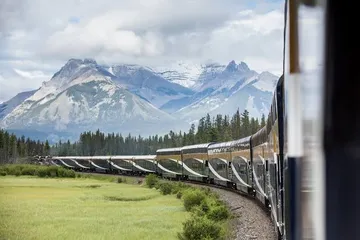
The appeal of the train lies in the route itself. From the window, one can see landscapes that go unnoticed during a flight: canyons, mountain passes, coastlines and small towns. In the US, tourists are offered, among other things, day routes through the Rocky Mountains, where the road becomes the main part of the experience, rather than an interval between two points. In Europe, scenic railway lines and historic trains play a similar role, where not only the views matter, but also the atmosphere of the carriage itself.
Railway romance extends beyond the tracks. Former stations are being converted into hotels, and restored carriages into unusual places to spend the night. In Chattanooga, Tennessee, Hotel Chalet at The Choo Choo offers stays in restored Pullman cars on the grounds of a historic railway complex. In Salt Lake City, a former Union Pacific depot has been given new life as the Asher Adams hotel. Such spaces sell not just a bed for the night, but the chance to literally live inside transport history.
The renewed interest in trains is also linked to a change in the understanding of luxury. In the premium segment, time, space and experiences that cannot be sped up are becoming important. On board tourist trains, operators offer panoramic carriages, private compartments, signature cuisine and routes with carefully planned stops. For example, the Venice Simplon-Orient-Express will add a route from Paris to Monte Carlo in the 2027 season. Here, the journey itself becomes the event, and arrival is only its finale.
A slow journey does not necessarily mean a luxury train or several days on the road. It can be a route with stops in small towns, a night near a station, or a combination of rail travel and walks. Unlike a short flight, which compresses travel into a few hours, a train leaves room for watching, reading, conversation and spontaneous stops. At the same time, this format depends on the availability of routes, schedules and ticket prices, so it is not always a faster or cheaper alternative to flying.
For the tourism industry, this is also an opportunity to expand the product itself: to sell not only a hotel in a popular city, but also a route, history, architecture and the experience of being on the road. The anniversary of American railroads in 2027 reinforces this trend, but its essence is broader than a single date. Journeys are increasingly judged not only by where they lead, but also by what happens along the way.
Read also: Small Trips — Big Effect: Why You Don't Have to Go Far
Text: Arina Blyzniuk
Comments
No comments yet — be the first.
Discuss on Telegram