Photo: ajay_suresh, CC BY 4.0, Wikimedia Commons
Ukrainian New York: Where to Go in East Village and Beyond
Borscht at Veselka, embroidery at a museum, a May festival on Seventh Street: a guide to Ukrainian addresses in New York, checked in 2026.
Translated with AI. Original: Українська
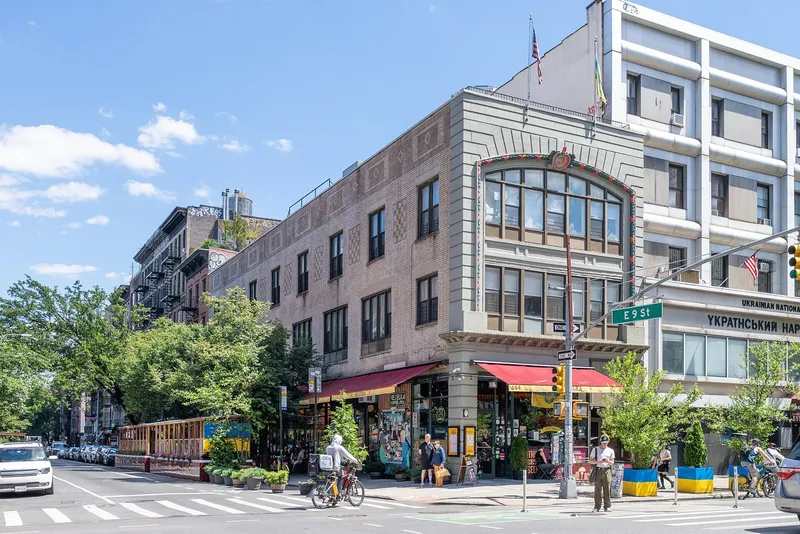
New York knows how to be Ukrainian. Just turn off noisy Second Avenue onto Seventh Street and you will see golden domes, hear Ukrainian spoken outside a café and smell fresh varenyky. New Yorkers still call this corner of the East Village "Little Ukraine". After World War II, tens of thousands of Ukrainians settled here, opening churches, shops, reading rooms and restaurants. Some of those addresses have long since disappeared, but the most important ones are still alive today, and alongside them new projects from a new generation are appearing.
We gathered places that are operating now and checked each one against fresh sources. Opening hours in New York change often, so before your visit, check the venue's official website.
Little Ukraine: Where It Is and How to Explore It
The heart of the Ukrainian community fits into a few blocks between First and Third Avenues, from Sixth to Ninth Street. A short street next to the church bears the name of the Kobzar, Taras Shevchenko Place, and it is the first sign guests photograph. The most convenient way to start a walk is from the Astor Place subway station and on foot: all the addresses in this guide, except the Ukrainian Institute of America, are within a ten-minute walk of one another.
Museums and Cultural Institutions
- The Ukrainian Museum (The Ukrainian Museum) — 222 East 6th Street — one of the largest Ukrainian museums in the US: folk art, embroidery, decorated Easter eggs and contemporary exhibitions under one roof.
- Shevchenko Scientific Society (Shevchenko Scientific Society) — 63 Fourth Avenue — hosts open lectures, book presentations and symposiums on Ukrainian history and culture.
- Ukrainian Institute of America (Ukrainian Institute of America) — 2 East 79th Street — a luxurious mansion opposite Central Park, hosting concerts, exhibitions and an annual autumn gala evening.
In 2026 the Ukrainian Museum turned 50. Important: since November 8, 2026, the building has been temporarily closed for ventilation modernization, and the museum promises a return to its full schedule at the end of January 2027. The next major exhibition, a multimedia project by Roman Khimei and Yarema Malashchuk, opens in January. While the renovation continues, the museum shop with books, embroidery and gifts works online.
The Ukrainian Institute of America is worth visiting at least for the building itself: a late 19th-century mansion on the corner of Fifth Avenue. The institute keeps a dense program: in autumn 2026 alone, works by Berezovsky and Bortniansky were performed here, a meeting with conductor Oksana Lyniv took place, and exhibitions of contemporary Ukrainian artists changed throughout the year. The event schedule is published on the institute's website.
St. George's Church and the May Festival
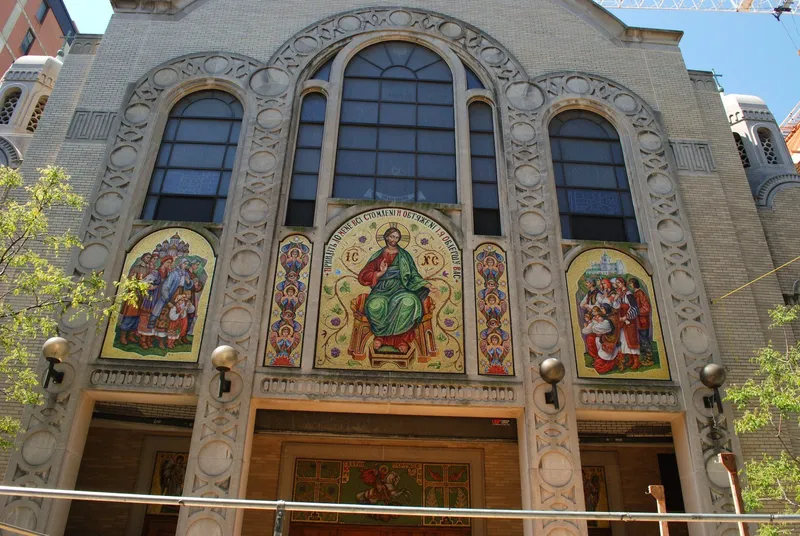
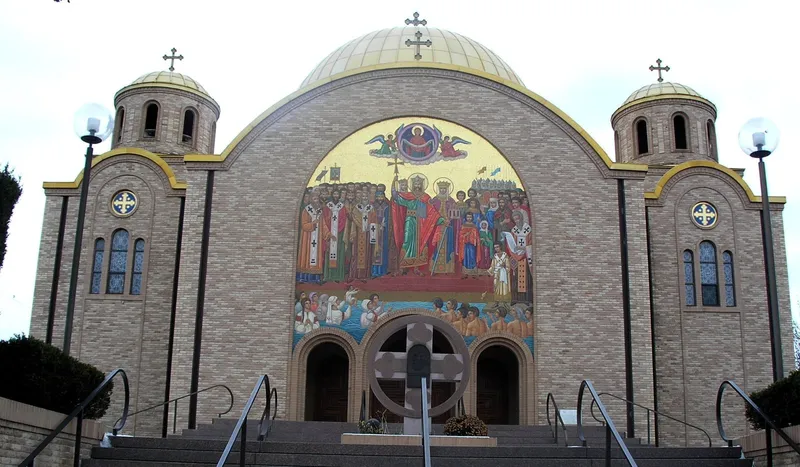
- St. George Ukrainian Catholic Church (St. George Ukrainian Catholic Church) — 30 East 7th Street — the spiritual center of Little Ukraine and host of the largest Ukrainian festival in Manhattan.
Every May the parish closes Seventh Street between Second Avenue and Taras Shevchenko Place and holds the Ukrainian Festival. For three days choirs, bandurist players and dance ensembles perform on stage, tents sell embroidered shirts, ceramics and jewelry, and the lines for varenyky and sausage stretch across the whole block. The first festival took place in 1976, and in May 2026 it celebrated its 50th edition. Look for dates of the next celebration in spring on the parish website and in local news.
Where to Eat Well
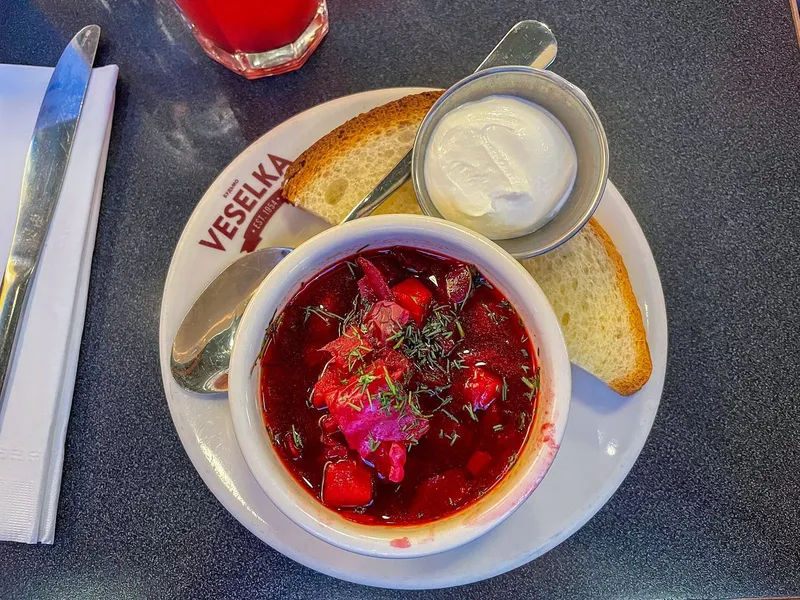
- Veselka — 144 Second Avenue — a legendary family restaurant opened in 1954 by Ukrainian emigrants Volodymyr and Olha Darmokhval; borscht, varenyky and deruny have been served here by the third generation of the family.
- Ukrainian East Village Restaurant — 140 Second Avenue — a cozy dining room in the building of the Ukrainian National Home, where since the 1960s they have served holubtsi, deruny and herring, just like grandma's kitchen.
- Streecha — 33 East 7th Street — a small kitchen in the basement of St. George's parish house, run by community volunteers; it works only a few days a week, usually from Friday to Sunday.
Veselka means "rainbow" in translation, and the name is honest: it is always crowded, bright and noisy here. The restaurant has long become part of the city's culture, and a documentary has even been made about it. Besides the main address in the East Village, New York has branches in Williamsburg (646 Lorimer Street, Brooklyn) and in the food court of Grand Central Terminal. Frozen Veselka varenyky are now sold in supermarkets too, but they are best tasted on Second Avenue.
Streecha, from the Ukrainian "stricha", meaning a meeting, recalls the church canteen of childhood: simple tables, homemade dishes, affordable prices and unhurried conversations. This is the place where Little Ukraine is most like itself.
Sausages, Varenyky and Tastes of Home
- East Village Meat Market — 139 Second Avenue — a family meat shop opened in the early 1970s: its own sausages, ham, salo and varenyky, which even Veselka buys.
This shop literally smells of the childhood of many Ukrainian families in New York. The windows are stacked with smoked meats, the shelves hold mustard, pickles and sweets, and at Easter and Christmas the line spills onto the sidewalk. Every autumn they hold a varenyky day for regular customers as a thank-you, and it is a great reason to stop by. Our advice: take a ring of homemade sausage and a pack of potato varenyky, and have a Ukrainian dinner in the evening.
The New Generation of Ukrainians in New York
Little Ukraine today is not only history. Many young Ukrainians live in the city, opening design studios, beauty salons, IT companies and cultural projects. The new wave more often settles in Brooklyn and Queens, but holidays and gatherings, as half a century ago, still bring everyone together on Seventh Street. If you know a Ukrainian business in New York that deserves attention, write to us: we will gladly tell about it in our future materials.
- Guzema Fine Jewelry — 112 Wooster Street, SoHo — a Kyiv jewelry brand that has grown into its own headquarters in New York and its first American boutique; the interior was created together with designer Viktoriia Yakusha.
- The Beauty — 38 West 28th Street, 5th floor, Midtown — a studio of brows, lashes and nails, founded by a mother and daughter from Kyiv; masters here are trained to Ukrainian beauty service standards.
- Sonya K. — a jewelry brand of Sonya Konstantynivska with bright colored stones; a native of Ukraine, she came to jewelry from insurance and in 2023 debuted with a capsule collection at Bergdorf Goodman department store on Fifth Avenue.
One-Day Itinerary
- Morning — breakfast at Veselka on Second Avenue, deruny or syrnyky with coffee.
- Midday — a walk along Seventh Street to St. George's Church and Taras Shevchenko Place.
- Lunch — varenyky at Streecha if it is Friday, Saturday or Sunday, or holubtsi at Ukrainian East Village Restaurant.
- Afternoon — the Ukrainian Museum on Sixth Street (from late January 2027) or a lecture at the Shevchenko Scientific Society.
- Evening — a concert or exhibition at the Ukrainian Institute of America on the Upper East Side.
- On the way home — sausage and varenyky from East Village Meat Market.
Little Ukraine is small but generous. You can easily spend a whole day here and then remember for a long time the taste of borscht, the sound of the bandura and the people who for half a century have kept the Ukrainian soul alive in the middle of Manhattan.
Read also: FROM A FORMER CHURCH TO A DESIGN HOTEL: NEW PLACES THAT CHANGE THE IDEA OF LUXURY
Text: Editorial team
Comments
No comments yet — be the first.
Discuss on Telegram