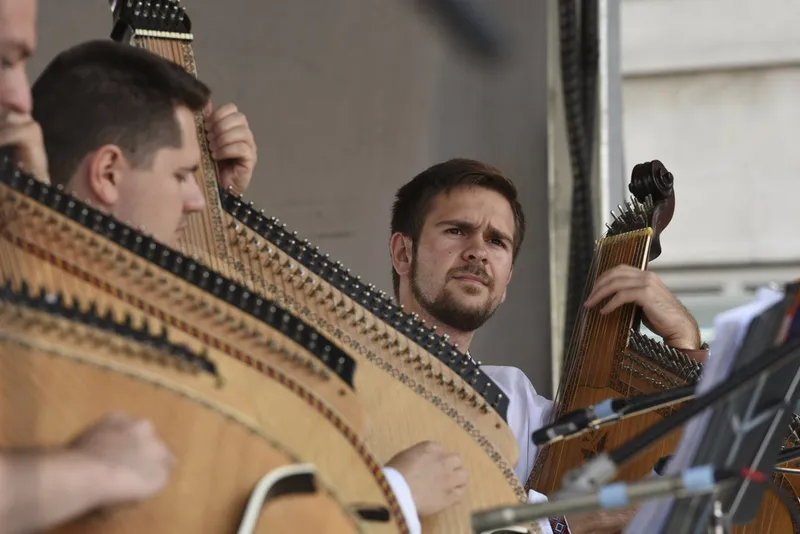
Photo: Mykola Swarnyk, CC BY-SA 4.0, Wikimedia Commons
Ukrainian Toronto: Bloor West Village, Festival and Community Addresses
North America's largest Ukrainian street festival, the Shevchenko Museum, new cuisine and embroidered shirts on Bloor Street: a guide to Ukrainian Toronto.
Translated with AI. Original: Українська
Canada is one of the countries with the largest Ukrainian diaspora in the world, and Toronto is its biggest city. Ukrainians have lived here for more than a hundred years, and over that time the community has built churches, schools, museums, credit unions and dozens of cultural organizations. The best-known Ukrainian address in the city is Bloor West Village, a cozy neighbourhood in west Toronto where thousands of Ukrainian families settled after the Second World War.
We gathered places that are operating now and checked them against fresh sources from 2025–2026. Opening hours change, so check official websites before your visit.
Bloor West Village: a Ukrainian home on Bloor Street
The neighbourhood stretches along Bloor Street West from roughly Jane Street to Runnymede Road, between the stations of the same names on Line 2. Here you will find low-rise houses, cozy cafés, bakeries with European pastries, and High Park just nearby. Ukrainian credit unions, community organizations and shops stand side by side with fashionable boutiques, and Ukrainian can be heard on the street every day.
 Read alsoUkrainian Village in Chicago: What to See, Where to Eat, What to Buy
Toronto Ukrainian Festival: the main event of September
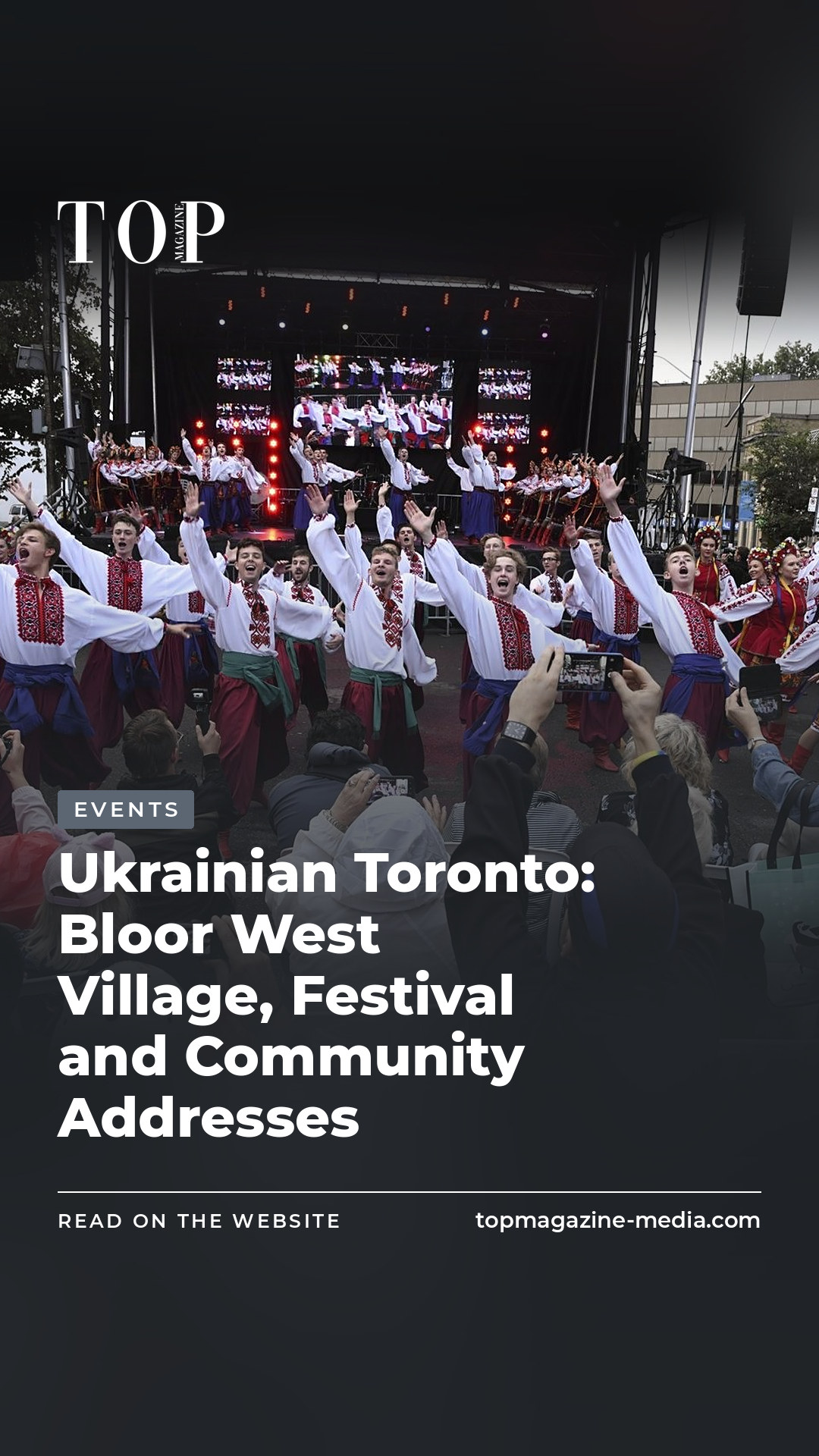
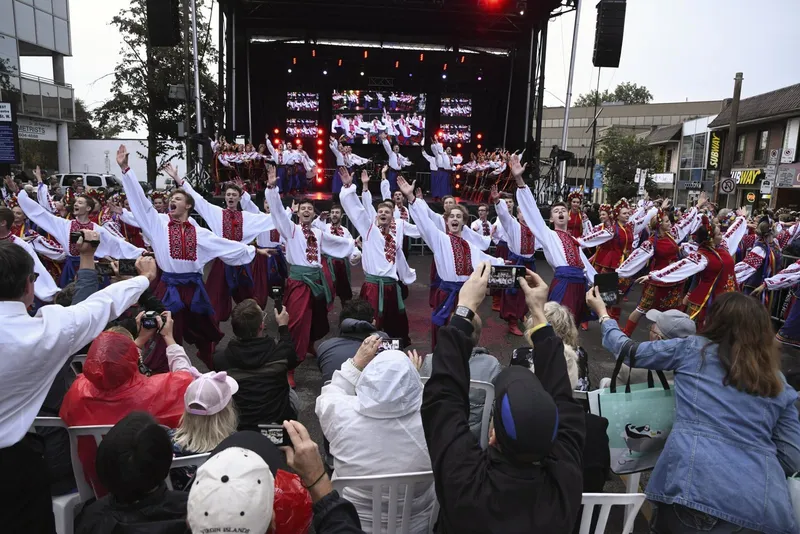
Every year in September, Bloor West Village turns into a huge Ukrainian celebration. The organizers call the Bloor West Village Toronto Ukrainian Festival the largest Ukrainian street festival in North America, and its scale is truly impressive: Bloor Street closed to traffic, several stages, hundreds of food stalls, embroidered shirts and handicrafts. The festival has been held since 1997 and has drawn millions of visitors over the years.
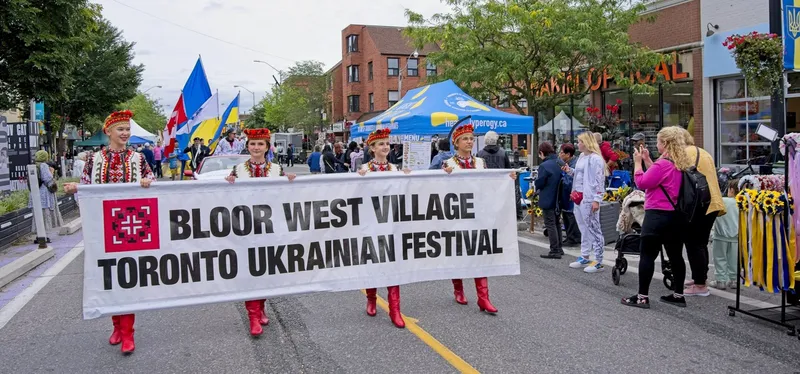
The main event is the Saturday grand parade: participants gather in the morning near High Park and walk west along Bloor Street to Jane Street. Anyone who wishes can join the parade. In 2026 the festival ran from September 18 to 20. The organizers will announce the 2027 dates closer to summer. Our advice: come by subway, because streets in the area are closed and parking is limited.
Museums, galleries and cultural centres
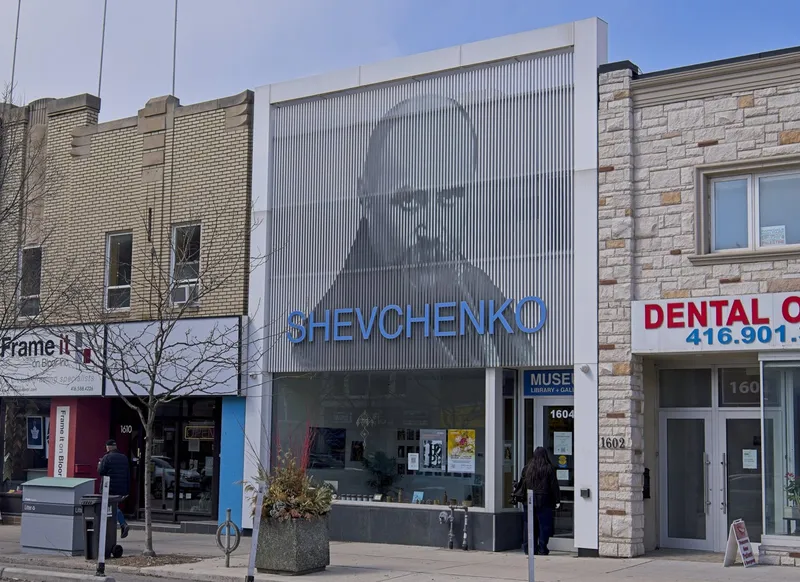
- Taras Shevchenko Museum (Shevchenko Museum) — 1604 Bloor Street West — a museum dedicated to the Kobzar, unique in the Americas, with exhibitions, concerts by bandura players and workshops.
- St. Vladimir Institute (St. Vladimir Institute) — 620 Spadina Avenue — a student residence and cultural centre in downtown Toronto, hosting film screenings, concerts and art evenings.
- Ukrainian Museum of Canada, Ontario Branch (Ukrainian Museum of Canada, Ontario Branch) — 620 Spadina Avenue — a collection of Ukrainian folk art housed in the building of the St. Vladimir Institute.
- KUMF Gallery (Ukrainian Canadian Art Foundation) — 145 Evans Avenue, Unit 101, Etobicoke — a gallery of the Ukrainian Canadian Art Foundation, which has supported Ukrainian artists in Canada for more than half a century.
The Shevchenko Museum first opened back in 1952 and moved to its current address in 2019, and has since become a lively cultural venue: in 2026, among other things, it hosted a solo concert by bandura player Viktor Mishalov and taught weaving of traditional sashes. The museum is located near the Dundas West and Keele subway stations.
The St. Vladimir Institute is worth knowing not only for students. Its halls host film screenings, charity evenings and concerts: in autumn 2026, for example, the sixth concert Bandura on Bloor took place here, with proceeds going to the Ukrainian Museum of Canada. The KUMF Gallery, in turn, opens new exhibitions every season, and in 2025 it celebrated its 50th anniversary with a large gala evening.
Cathedral and spiritual addresses
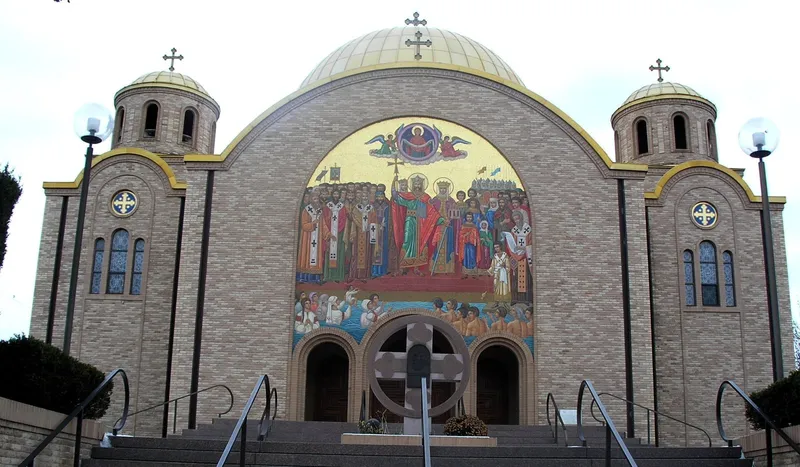
- St. Volodymyr's Ukrainian Orthodox Cathedral (St. Volodymyr's Ukrainian Orthodox Cathedral) — 400 Bathurst Street — a majestic Byzantine-style church near Kensington Market, built in 1946–1948.
In 2026 the St. Volodymyr parish marks its centenary, so festive dinners and solemn events were held here in the autumn. The cathedral is easy to combine with a walk through Kensington Market and downtown.
Where to eat well
- Hoyra — 1566 Bloor Street West — a new Ukrainian gastropub near High Park, which opened in summer 2025 and serves both classic and little-known Ukrainian dishes.
- Janchenko's Bakery — 2394 Bloor Street West — a home-style bakery in the heart of Bloor West Village, selling varenyky, deruny, pampushky and khrustyky.
Hoyra was opened by Tania Matkivska, who previously founded the popular varenyky restaurant in the basement of St. Volodymyr's Cathedral. The new venue seats fifty guests and has a more refined menu than a typical varenyky spot: it offers both borscht with varenyky and dishes that are little known abroad. Vegan options are marked separately, and there is a summer terrace where live music and sports broadcasts are held.
Janchenko's is the place people stop by for pastries on the way from the subway. Pampushky with jam or custard, khrustyky dusted with powdered sugar, and varenyky for dinner are a classic set for local residents. The bakery mostly works for takeaway.
Embroidered shirts and gifts
- KOLOS by Ukrainian Pop-Up Shop — 2445 Bloor Street West — a shop of embroidered shirts and handmade goods from Ukrainian artisans, with delivery across Canada and the United States.
KOLOS offers modern and traditional embroidered shirts for women, men and children, dresses, jewellery, bags and home décor. It is a good choice if you need an embroidered shirt for a celebration or a gift that tells about Ukraine without words. Before your visit, check the opening hours on the shop's website or social media.
If you are heading further: Winnipeg and Edmonton
Ukrainian history in Canada is not limited to Toronto. The community's deepest roots are on the prairies, where the first Ukrainian settlers arrived as early as the late 19th century.
- Oseredok, Ukrainian Cultural and Educational Centre (Oseredok) — 184 Alexander Avenue East, Winnipeg — a museum, gallery, library and archive that has been operating since 1944.
- Ukrainian Cultural Heritage Village (Ukrainian Cultural Heritage Village) — Highway 16, about 25 minutes east of Edmonton — an open-air museum with recreated homesteads of the first settlers, open in the summer season.
The Ukrainian Cultural Heritage Village in Alberta reopened to visitors in 2026 after renovation, and the August Ukrainian Day there traditionally gathers families from across the province. The season and opening hours are announced each year on the museum's website.
A one-day route in Toronto
- Morning: coffee and pampushky at Janchenko's on Bloor West.
- Early afternoon: a walk through Bloor West Village and High Park, embroidered shirts at KOLOS.
- Lunch: borscht and varenyky at Hoyra.
- Mid-afternoon: the Shevchenko Museum at 1604 Bloor Street West.
- Evening: St. Volodymyr's Cathedral on Bathurst and a concert or film screening at the St. Vladimir Institute on Spadina.
Ukrainian Toronto is a large, self-assured world where grandmothers' recipes, the bandura and the embroidered shirt sound as natural as English on the next street. Come in September for the festival, or any other time: the doors here are always open.
Text: Editorial team
Comments
No comments yet — be the first.
Discuss on Telegram