$10 Million Bag: How the Hermès Birkin Became the Most Expensive Accessory in History
The original Hermès Birkin owned by Dzhein Birkin sold for $10.1 million. How the iconic bag emerged, why it became a symbol of status, and what determines its price.
Translated with AI. Original: Українська
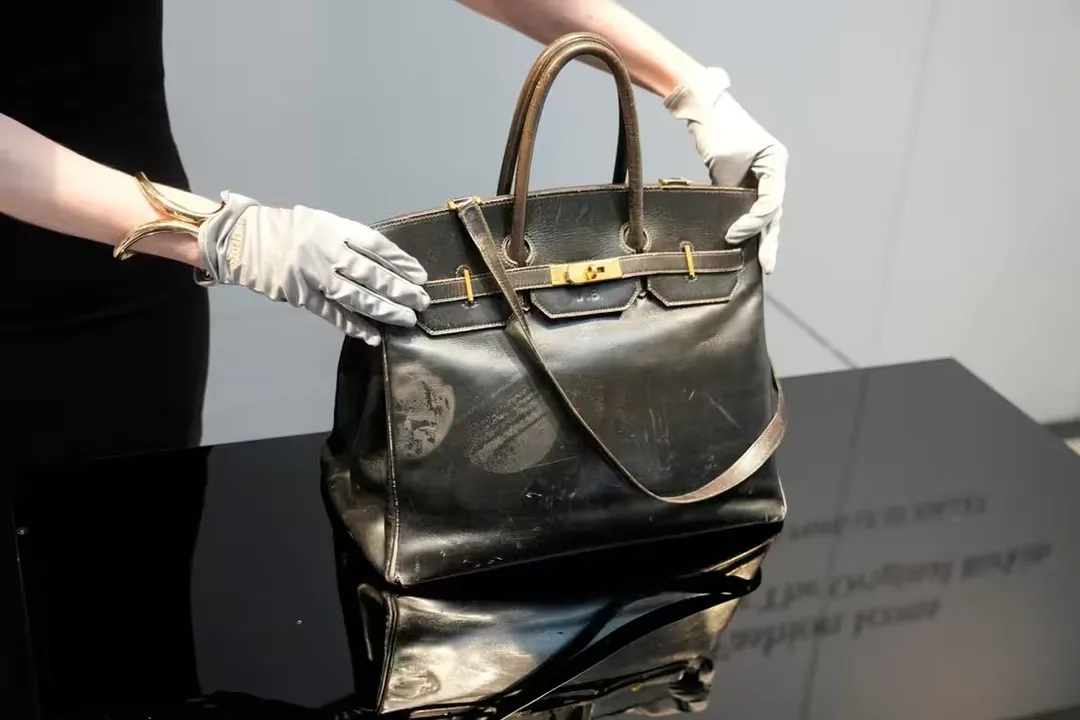
In July 2025, at a Sotheby’s auction in Paris, a seemingly ordinary black bag made fashion history. The original Hermès Birkin, created for actress Dzhein Birkin, sold for €8.58 million, or approximately $10.1 million. The bidding lasted about ten minutes, and nine collectors competed for the unique piece. Thus a bag conceived as a practical item for everyday life became the most expensive accessory ever sold at auction.
The story of the Birkin began not in a design studio but on an airplane. In the early 1980s, Dzhein Birkin was flying from Paris to London and told Hermès chief Jean-Louis Dumas that she found it difficult to find a roomy bag that was also elegant. During the conversation, he offered to create a model specifically for her. Thus a sketch emerged that later became one of the most famous accessories in the world. In 1984, the model was named after Dzhein Birkin, and the first example marked the beginning of a story that has now lasted more than four decades.
However, the record price was determined not only by the brand’s name. The bag sold by Sotheby’s was the original 1985 prototype and belonged to Dzhein herself. It had special construction details, the actress’s initials, and traces of real use. Inside were also personal small items, including manicure scissors that Birkin carried with her. This was not simply a rare Hermès product, but an object with a specific history and a direct connection to the person who gave it its name. Precisely such details can radically change the value of an item at auction.
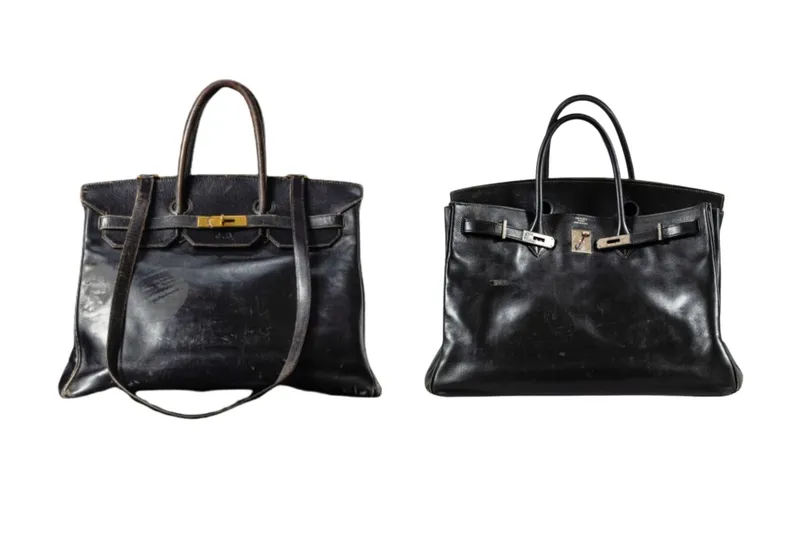
At the same time, far from every Birkin costs millions. Standard models are valued depending on size, leather, color, condition, and year of production. The most expensive examples may be made from rare materials, have unusual finishes, or belong to limited series. A special place is occupied by the Himalaya Birkin models, known for their gradient coloring that resembles the snow-capped peaks of the Himalayas. Versions with diamonds and precious hardware can cost hundreds of thousands of dollars on the secondary market.
The purchasing process is no less important. The Birkin has long been a symbol of the exclusive world of luxury retail, where access to a desired model may depend on relationships with a boutique and purchase history. At the same time, rules and experiences differ depending on the country and the specific store, and no purchase guarantees receiving a particular bag. Limited availability only intensifies the desire to own the item, and the secondary market turns that desire into a separate economy in which rarity sometimes matters more than the original retail price.
For this reason, the Birkin is often called an investment. But here it is worth separating a beautiful story from financial reality. Some models do indeed resell for more than they cost in the boutique, but the result depends on the specific piece, demand, commissions, condition, and timing of the sale. A high price on the secondary market does not guarantee profit in the future. The auction record for the original Dzhein Birkin bag cannot be directly compared with prices for serial models at all: collectors paid for historical uniqueness, not only for materials or craftsmanship.

Hermès itself has built a reputation around producing bags based on handcraftsmanship and attention to detail. Each Birkin is created by a single artisan, and making one requires considerable time and specialized skills. Yet craftsmanship explains only part of the value. The other part is shaped by the brand’s cultural status, controlled supply, the model’s recognizability, and collectors’ desire to own an item that retains its symbolic meaning for decades.
Interestingly, Dzhein Birkin herself regarded the bag’s fame with irony. Her name became a synonym for exceptional luxury, although the original idea was highly practical: to create a convenient accessory for a woman who lacked space for everyday things. Over time, the bag became so recognizable that its story began to live separately from its heroine.
The $10.1 million record showed that at the highest level of luxury, people no longer buy just an item. They buy provenance, history, rarity, and the chance to own an object that cannot be replicated. And that is precisely why the original Dzhein Birkin bag is valued not as a handbag, but as a unique artifact of fashion culture.
Read also: Tokyo Has Become the World's Capital of Vintage Chanel and Hermès
Text: Arina Blyzniuk
Comments
No comments yet — be the first.
Discuss on Telegram