The Ukrainian Without Whom Computers Might Have Stayed Huge: The Story of Liubomyr Romankiv
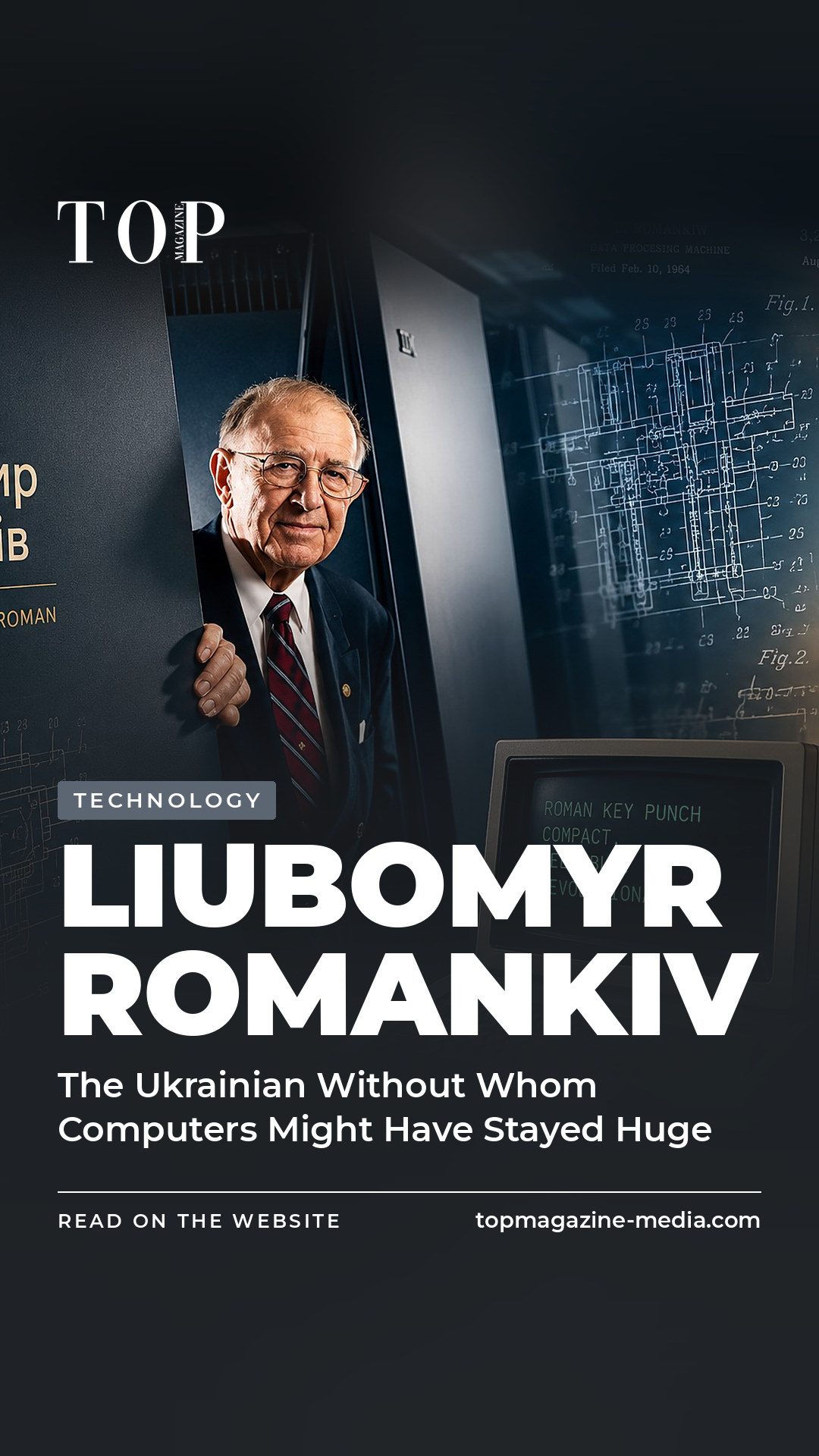
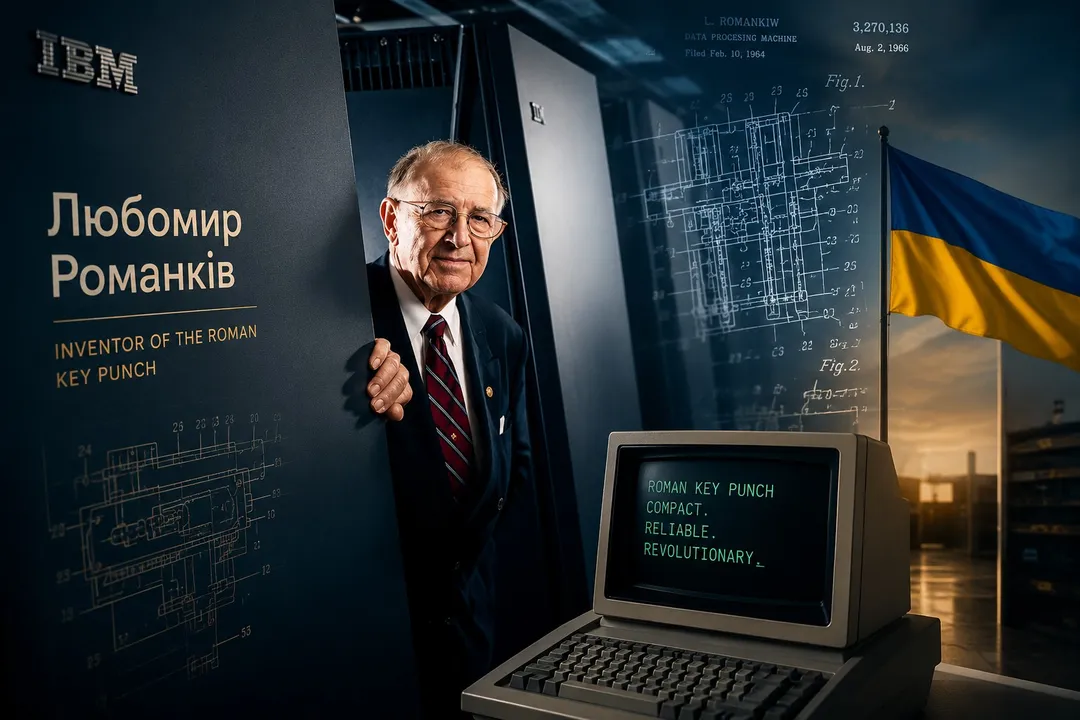
Ukrainian Liubomyr Romankiv, from Zhovkva, became one of the inventors of a technology that sharply increased the capacity of hard disk drives and reduced their size. His invention changed the history of computer technology.
Translated with AI. Original: Українська
Ukrainian Liubomyr Romankiv from Zhovkva became one of the inventors of a technology that sharply increased the capacity of hard disk drives and reduced their size. His invention changed the history of computer technology.
Imagine a computer for which the storage device takes up a significant part of a room. This is what the era of large computer systems looked like before magnetic storage technologies began to shrink rapidly. One of the people who made this transition possible was Liubomyr Romankiv, an IBM engineer born in Zhovkva.
In the 1970s, Romankiv worked with IBM researcher Devid Tompson on thin-film magnetic heads. Their task sounded almost impossible: to create much smaller and more precise elements capable of writing and reading information from a magnetic disk.
The solution was revolutionary. Scientists used photolithography and electrochemical deposition, effectively learning to create tiny magnetic structures layer by layer. The technology made it possible to produce heads that were much smaller and far more precise.
The result was large-scale: recording density grew, disks became smaller, and the cost of storing information dropped sharply. By 1979, thin-film heads were already being used in IBM 3370 disk systems.
Romankiv recalled that IBM initially was in no hurry to use his technology in personal computers. The first disks with his heads were manufactured in San Jose. According to the inventor himself, one IBM engineer who worked with this technology later moved to Apple. Romankiv believed that his invention could have helped Apple develop its own computer technology faster.
However, it would be wrong to credit Romankiv with directly creating the laptop. His contribution was more fundamental: he helped solve one of the key problems of the digital era — how to store more and more information in less and less physical space.
The technology proved so important that its successor generations were used in magnetic storage devices for decades. According to the U.S. National Inventors Hall of Fame, thin-film technology ultimately became the foundation for further development of magnetic heads, including MR, GMR and perpendicular recording technologies.
In 2012, Liubomyr Romankiv and Devid Tompson were inducted into the U.S. National Inventors Hall of Fame. Romankiv was also an IBM Fellow, the author of more than 65 patents and over 150 scientific publications.
He died in June 2024 at the age of 93. But his invention remains in the technologies we use every day.
The irony is that the person who helped make the digital world more compact remained almost unknown to the broad public.
Liubomyr Romankiv did not create the laptop. He did something less obvious — he helped technologies shrink enough that the computer gradually stopped being a machine for the laboratory and became a personal thing.
Read also: Yan Kum: the Ukrainian who created WhatsApp and sold it for $19 billion
Text: Arina Blyzniuk
Comments
No comments yet — be the first.
Discuss on Telegram