
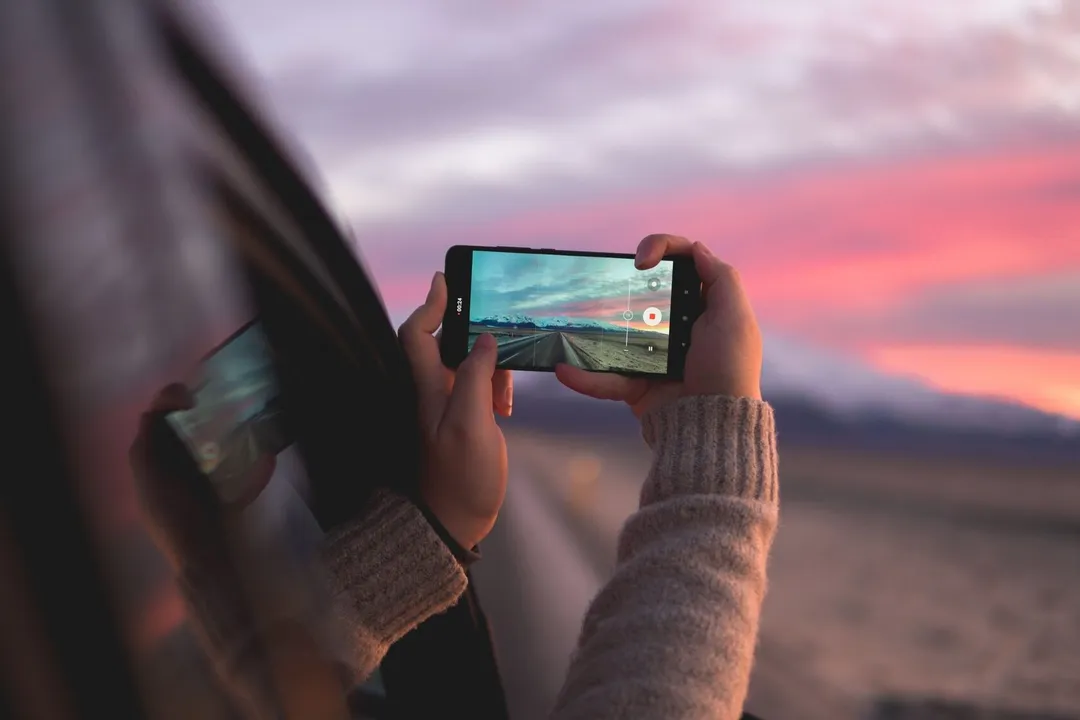
Why people have started photographing everything but remember almost nothing
We photograph concerts, trips, food and even ordinary moments. But do thousands of photos help preserve memories, or do they, on the contrary, get in the way of the brain remembering them?
Translated with AI. Original: Українська
We take more photos than ever
A smartphone can today hold thousands of photos, although just a few decades ago people carefully chose what was worth taking a picture of. The camera has become a constant companion: we photograph trips, concerts, restaurants, purchases, friends and even an ordinary cup of coffee. The problem is that the number of photos does not necessarily mean a greater number of memories.
Psychologists have long studied what is called the photo-taking impairment effect — the effect of impaired memory while photographing. In one of the best-known experiments, participants visited a museum and were asked either simply to look at the exhibits or to photograph them. The next day, those who had photographed the objects remembered the details worse than people who had simply looked.
The explanation is quite logical: when a person decides "I'll photograph this, and look at it later," they essentially hand part of the work of remembering over to the camera. The brain receives the signal that the details are already recorded somewhere outside, so there is no need to hold them in memory so actively.
The camera takes away not the memory, but attention
There is one more problem: attention. To remember an event well, you must first notice it: take in the place, hear the sounds, feel the atmosphere, pay attention to the people nearby. A smartphone can interrupt this process literally within a second.
At a concert, a person raises their phone, looks for the right angle, checks the focus, records a video, looks to see whether it came out well, and then films the next song. Physically they are present at the concert, but part of their attention is spent not on the event but on the screen.
That is why you can return from a vacation with 800 photos and suddenly realize that certain days are remembered far worse than expected. The photos remained. But the details of the experience itself have faded.
But photos still help us remember
And here is an important nuance: the camera does not always work against memory. Research shows that photographing can even improve memory if the person remains engaged in the event.
For example, when we photograph a specific detail, examine it, look for an interesting composition, or later return to the picture, the photo becomes an additional way to fix the memory. The problem begins when the camera turns into an automatic reaction: see something → take out the phone → photograph it → move on.
That is why 100 well-taken photos can preserve more than 5,000 random frames that no one will ever look at.
We have created an archive of our entire lives
The smartphone has changed not only the way we photograph, but also our very attitude toward memory. Today a person effectively carries a digital archive of their own life. Photos are stored for years, and Google Photos, iCloud and other services automatically remind us of events that happened one, five or ten years ago.
This creates a new paradox: we have more evidence of our own past, but not necessarily more memories of it.
A photo can bring back a face, a place or a moment we had almost forgotten. But it cannot fully recreate what the person felt in that second.
Perhaps that is why the most valuable photos are not the thousands we have, but those that we look at years later and immediately remember where we were, who we were with, what we felt, and why this moment was worth keeping in the first place.
Text: Arina Blyzniuk

Comments
No comments yet — be the first.
Discuss on TelegramRead also
 Where Did Kerri Bredshou Get the Money for Designer Shoes? A Financial Mystery People Still Debate
 Avril Lavin Becomes a Mother for the First Time at 42: Singer Unexpectedly Announces Birth of Daughter
 Hollywood No Longer Needed? How YouTube Creators Started Making Movies Worth Hundreds of Millions of Dollars