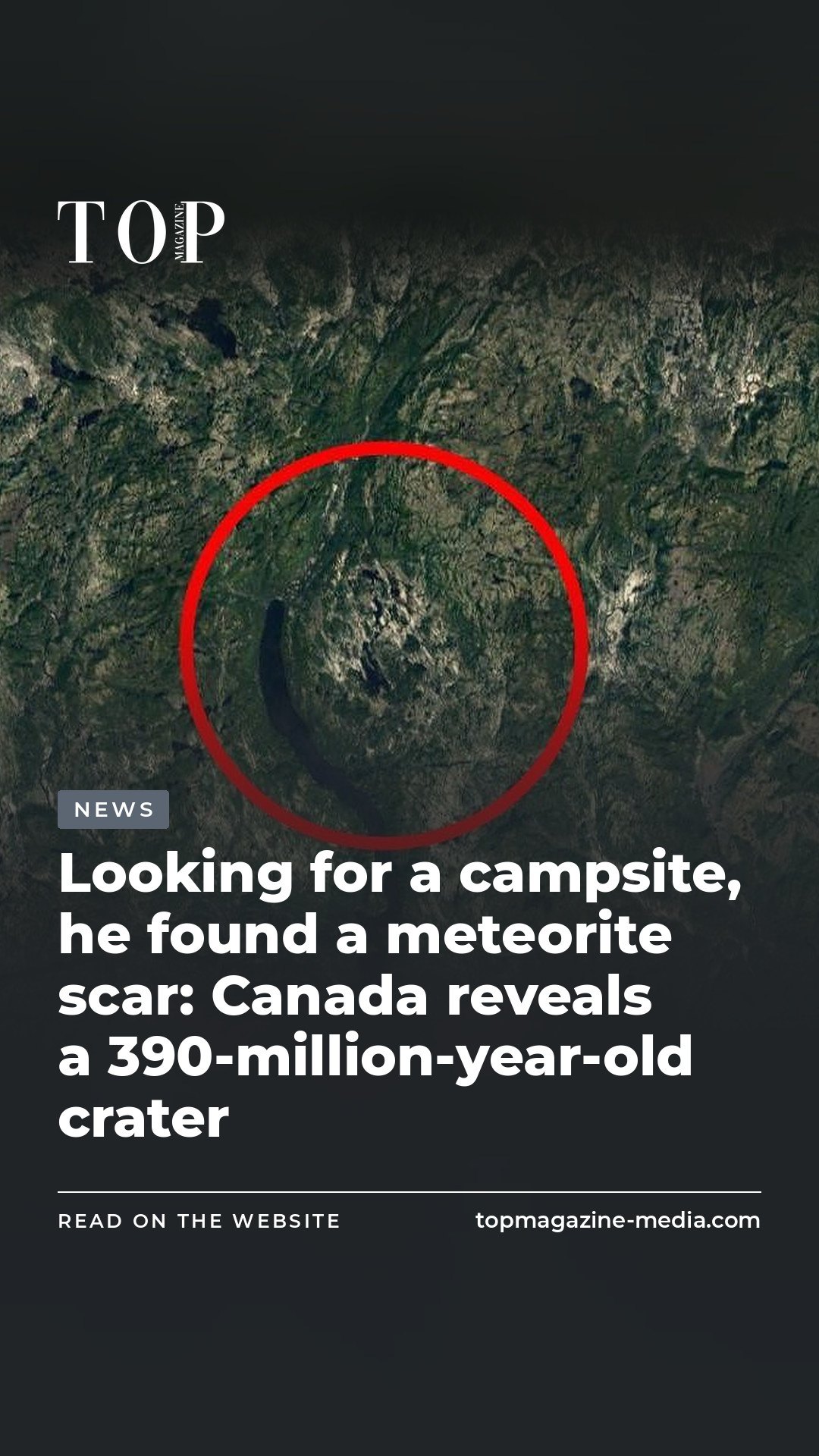
Looking for a campsite, he found a meteorite scar: Canada reveals a 390-million-year-old crater
An amateur searching for a campsite on satellite maps accidentally discovered an impact structure 25 km in diameter in Quebec, formed about 390 million years ago.
Translated with AI. Original: Українська
A crater no one had noticed for 390 million years was found while searching for a campsite.
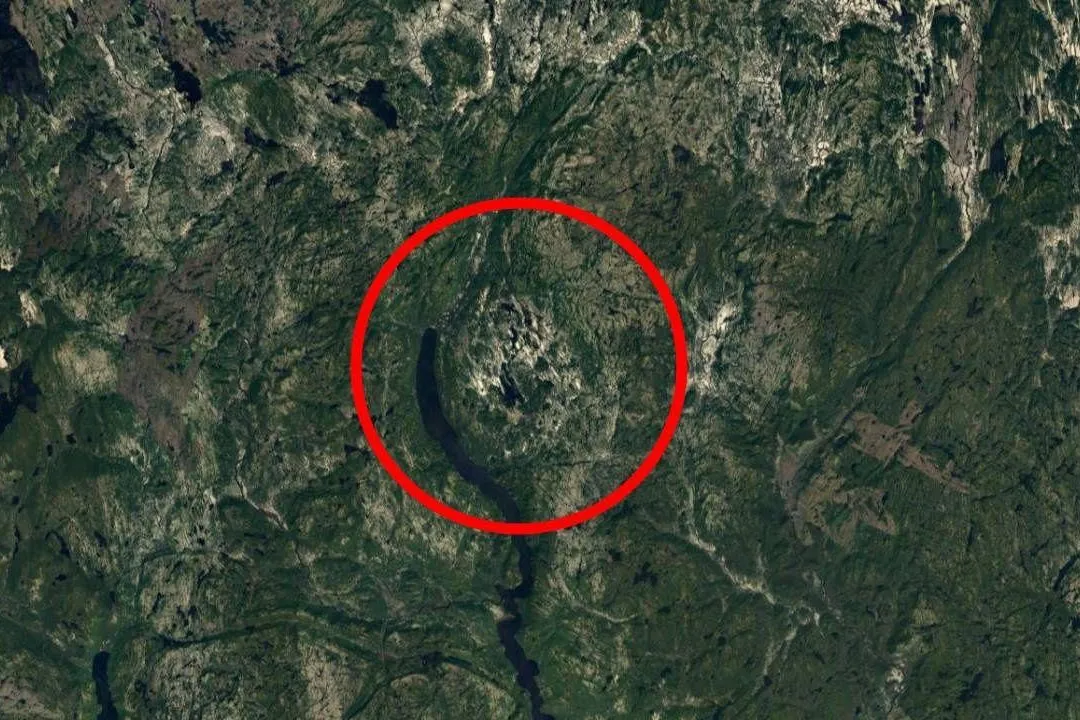
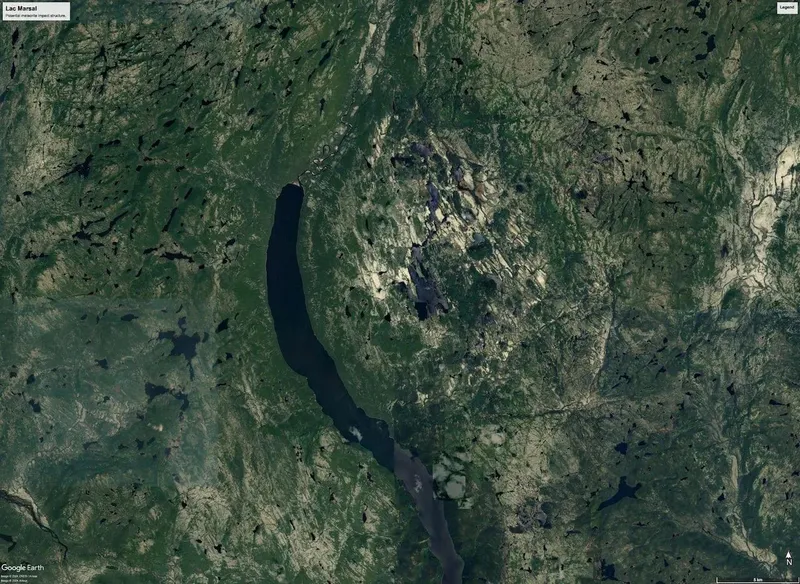
Joël Lapointe was looking for a site for a future campsite on satellite maps of Quebec when he noticed an unusual circular formation near Lake Marsal. On the screen, it looked like an ordinary geological feature of the landscape. Lapointe suspected it could be the trace of an ancient meteorite impact and contacted scientists. Two years later, researchers confirmed that they were indeed looking at a huge impact structure that formed about 390 million years ago.
The discovery began back in 2024, when Lapointe was browsing online satellite maps of the remote Côte-Nord region in eastern Quebec. The circular shape around Lake Marsal seemed unusual enough to him to test the hypothesis of a meteorite origin. His suspicion drew the attention of French researchers, and later Gordon Osinski, a planetary geologist at Western University and director of the Impact Earth database, joined the project.
At first, Osinski was skeptical of the idea. It could only be definitively tested on site. In October 2025, the team traveled to Lake Marsal by seaplane. Reaching the shore turned out to be harder than expected: the researchers had to wade through about 50 metres of water, and then work among bogs, dense vegetation and difficult terrain.
The key finding was so-called shatter cones. These are characteristic geological structures that form in rock under the action of an extremely powerful shock wave. According to the researchers, they became one of the most important signs that geologists were dealing not with a volcanic structure, as previously thought, but with the trace of a cosmic collision.
The scale of the discovery is striking. The Uhackatik impact structure is about 25 kilometres in diameter. A central uplift and other characteristic geological features formed inside it. According to the researchers' estimate, the object that created such a structure was large enough that, if it fell today, it would cause widespread destruction in the region and have global climate consequences.
The age of the structure was determined by analyzing rock samples as about 390 million years. This means the impact occurred long before the appearance of the dinosaurs and about one hundred million years before the period when the number of cosmic body impacts on Earth could have sharply increased due to large-scale collisions in the asteroid belt.
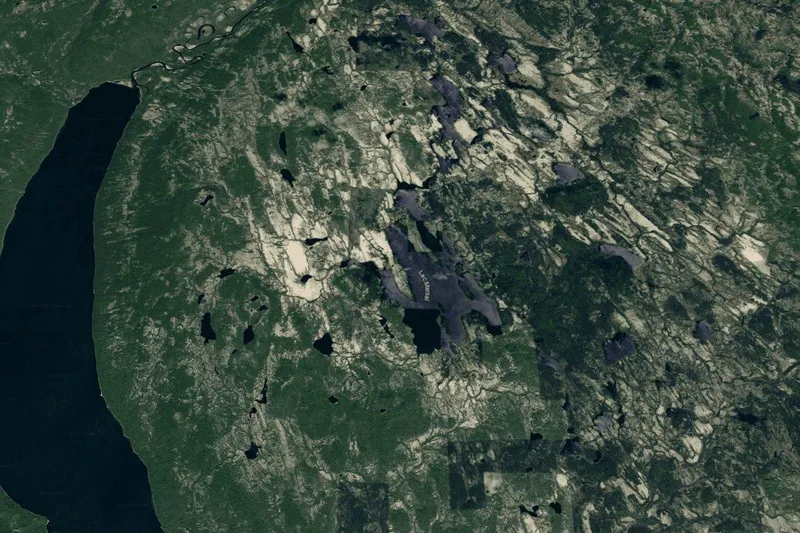
Today, about 200 confirmed impact structures are known on Earth, but geologists believe that hundreds of similar objects may remain undiscovered. The reason is simple: most ancient craters are eventually erased by erosion, covered by vegetation, bodies of water or newer geological layers. Uhackatik also does not look like a classic round crater that is easy to see with the naked eye. It was satellite data that helped reveal its geometry.
The researchers chose the name Uhackatik after consulting the Inuit Council of Ekuanitshit. Formally, the Meteoritical Society's committee still has to recognize the object as an impact crater, although the scientific team considers the evidence sufficient. If the status is officially confirmed, Uhackatik will become the largest impact crater discovered since the Hiawatha structure in Greenland, which was found in 2018.
Lapointe's story shows that a scientific discovery sometimes requires not a laboratory but ordinary attentiveness. He was not part of a large international expedition and was not professionally searching for a crater; he simply noticed an unusual shape on a map and decided to test his own hunch. As a result, a single satellite map used to search for a campsite became the starting point for discovering a geological structure that existed long before humanity appeared.
Read also: Jeff Bezos Is Not Backing Down: Blue Origin Prepares to Return to the Big Space Race
Text: Arina Blyzniuk
Comments
No comments yet — be the first.
Discuss on Telegram