The New York Times Plum Torte Phenomenon: The Recipe the Paper Tried to Stop Printing
The story of Marian Burros's plum torte, which The New York Times first published in 1983. Why the recipe became iconic and turned into an annual autumn ritual.
Translated with AI. Original: Українська
Some recipes are simply passed down from generation to generation. Others become part of the calendar. For readers of The New York Times, one such recipe has remained for more than four decades: Marian Burros's plum torte, a simple dessert that returns every year along with the first autumn plums.
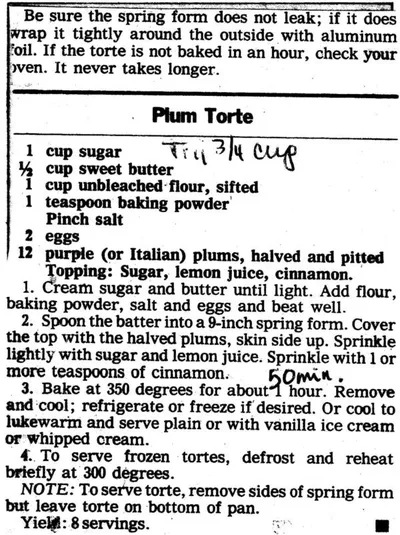
In September 1983, New York Times food writer Marian Burros published the recipe for the plum torte almost unnoticed. It occupied a small space in the bottom corner of a newspaper page, next to a story about the start of the Italian plum season. The recipe had only eight ingredients and a few simple steps. No one in the newsroom expected that it would become one of the publication's most famous recipes.

But readers reacted immediately. After publication, the newsroom began receiving numerous requests to print the recipe again. The New York Times did so the following year, and then once more. In this way, the simple plum torte became an annual September tradition.
 Read also35 years ago, the blue-and-yellow flag was raised over the Verkhovna Rada of Ukraine for the first time
In 1989, the newsroom decided it was time to stop. The recipe was printed for the last time, and the type was deliberately enlarged and the recipe framed with a dotted border, effectively inviting readers to cut out the page, laminate it and keep it. Even this did not help. Letters of protest poured into the newspaper. Readers wrote that the appearance of the torte signaled the end of summer and the arrival of autumn, and its disappearance from the paper was felt almost as the cancellation of a seasonal ritual.
This is where the phenomenon was born. People waited for the recipe not because they could not find it elsewhere. They waited specifically for its annual appearance in the newspaper.
Today this sounds especially unusual. We live in a world where any recipe can be found within seconds, saved to Pinterest, TikTok or a notes app, and never revisited at its original source. In the 1980s the situation was different: a newspaper page could become a home archive, and a repeat publication was a kind of signal that a certain moment of the year had arrived.
Burros's plum torte became exactly such a signal. The plums are back, so it is time to take out the recipe.
At the same time, the history of the dessert began long before The New York Times. Burros received the recipe from her childhood friend Lois Levin. The two worked together on the cookbook Elegant but Easy, where the dessert was originally called simply Fruit Torte. In the book, the recipe was accompanied by a note that it deserved the highest rating.
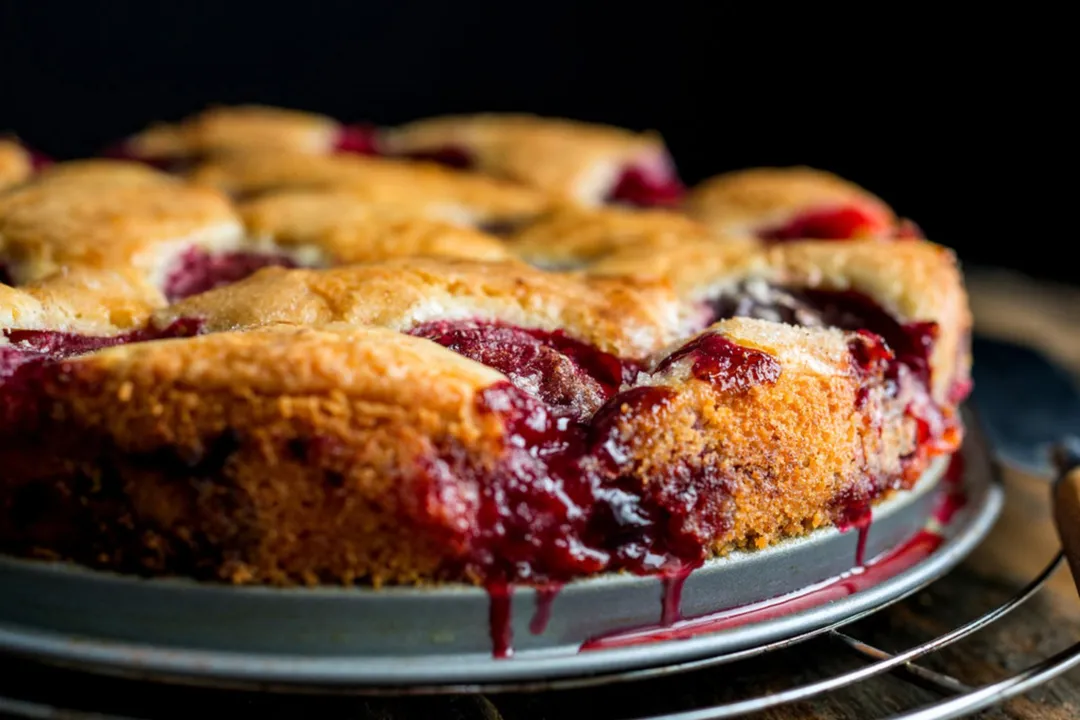
This is another reason for its popularity: the torte is very hard to call complicated. The base consists of butter, sugar, flour, eggs, baking powder and salt, and on top halves of plums are arranged and sprinkled with cinnamon sugar. The classic version uses small dark Italian plums, which appear at markets at the end of summer and in early autumn.
It is this simplicity that allowed the recipe to survive changing culinary trends. Over the decades, readers adapted it to different ingredients and their own tastes: versions appeared with apples and cranberries, peaches, blueberries and other fruits. In 2026, The New York Times again devoted a separate article to the recipe, offering new ways to adapt it, from other fruits to cardamom and changing the shape of the baked good.
Interestingly, over the decades the torte did not simply remain popular; it became part of the collective memory of the paper's readers. When Amanda Hesser was collecting recipes for The Essential New York Times Cookbook in 2010, 247 people separately nominated the plum torte. Hesser called it an "almost perfect recipe."
In the digital era, the phenomenon has gained a second life. In 2016, The New York Times noted that a search for "New York Times plum torte" returned almost 80 thousand results, from food blogs to home cooks' adaptations. The recipe stopped being just a newspaper item and became a separate cultural object.
Today its popularity can be measured not by the number of newspaper clippings but by digital figures. The page of the original recipe on NYT Cooking in September 2026 has more than 23 thousand ratings with an average of five stars. The New York Times continues to return to it in its materials, although the original publication appeared as far back as 1983.
In August 2026, the publication even called the plum torte "the original viral recipe", reminding readers that its popularity began long before social media. In modern terms this is almost a paradox: the recipe became viral without videos, algorithms, bloggers or recommendation feeds. Its main mechanism of spread was the newspaper page, letters from readers and annual anticipation.
That is why the phenomenon of The New York Times plum torte is interesting today not so much as a story about baking. It is a story about how an ordinary recipe can become a seasonal cultural ritual.
In an era of endless choice, repetition itself has become its main advantage. Every year new desserts, new trends and new "viral" recipes appear. But when September arrives, readers again open the same torte that first appeared in the newspaper more than forty years ago.
Also read: Autumn diet: how to change your eating along with the season without going on a diet
Text: Arina Blyzniuk
Comments
No comments yet — be the first.
Discuss on Telegram