
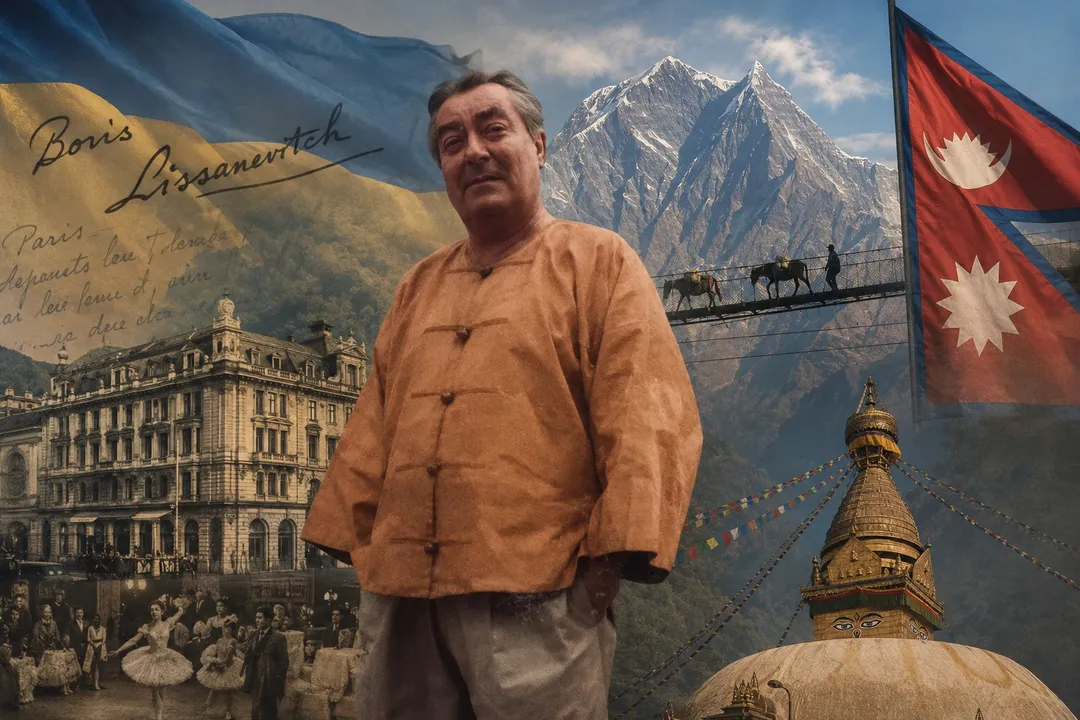
Borys Lisanevych: the Odesa Native Who Introduced Nepal to the World
Odesa native Borys Lisanevych became a ballet dancer, conquered Paris, befriended the King of Nepal and opened the country's first hotel, changing its history forever.
Translated with AI. Original: Українська
One detail best illustrates the scale of this story. In Nepal, Borys Lisanevych was called one of the fathers of local tourism. In Odesa, he is known far less today. This is strange, considering that his life could have served as the plot for several adventure films at once.
The Odesa native was born in 1905 into a family where a script for his life seemed to have already been written. But the revolution upended his plans. Instead of the expected military career, Borys found himself in ballet. He studied in Odesa and later moved to Paris, where he became a dancer in the famous ballet company of Serhii Diahiliev. The boy from Odesa suddenly found himself in the world of international bohemia and began touring Europe, America and Asia.
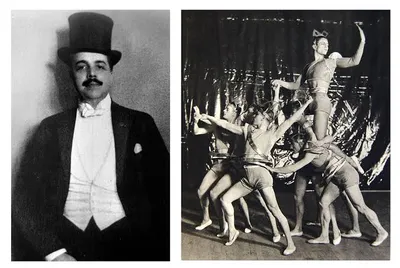
But the stage turned out to be only the first stop. In Calcutta, Lisanevych opened Club 300, an elite establishment frequented by British aristocrats, diplomats, politicians and Indian high society. It was there that he met the Nepalese king Tribkhuvan. The acquaintance grew into a friendship, and the friendship ultimately led Borys to Nepal. In 1953, he moved to Kathmandu, a city that was then nothing like the tourist capital of the Himalayas.
At that time, Nepal was effectively a closed world. Foreigners found it difficult to obtain visas, there was no proper tourist infrastructure, and comfortable hotels of European standard were out of the question. Lisanevych looked at this and saw not a problem but a business opportunity. If people cannot come to Nepal, then it is necessary to make them want to come, and then create a place where they can stay.
In 1954, the Royal Hotel opened in Kathmandu, the first hotel of European type in the country. And here begins perhaps the funniest part of the story. Lisanevych was not a professional hotelier. Kathmandu lacked even basic things: equipment, plumbing, dishes and food supplies. Some of what was needed had to be brought in from India, and the staff had to be literally trained in hotel work from scratch. People had to be taught not only how to work in a hotel, but also how to wear shoes, properly set a table and serve guests according to European standards.
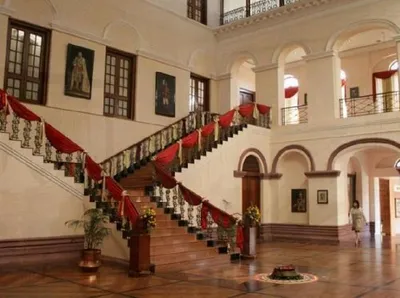
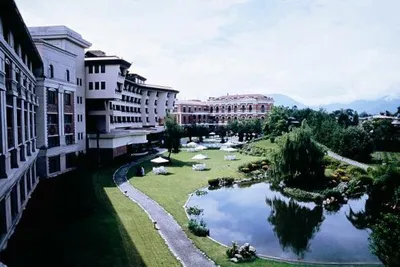
Lisanevych went even further. On the hotel grounds, they grew vegetables that were almost unknown in local cuisine, a bakery operated, and the menu gradually expanded with European dishes. This is how borscht and Kyiv-style cutlets appeared in Kathmandu. For a guest from Europe, it was a comfortable piece of a familiar world in the middle of the Himalayas. For Nepal itself, it was the beginning of an entirely new tourist culture.
And then Borys did what would today be called a brilliant PR move. He understood that one beautiful hotel was not enough. Tourists were needed.
In 1955, Lisanevych persuaded a group of 20 foreigners to come to Nepal and personally obtained entry permits for them. After negotiations with King Makhendra, the group received 15-day visas. This was one of the first organized tourist trips to the country. In effect, these 20 people marked the beginning of the history of an industry that decades later would become one of the main sectors of Nepal's economy.
The Royal Hotel quickly became much more than just a place to spend the night. Completely different worlds intersected there: monarchs, diplomats, mountaineers, writers, travelers and celebrities. Lisanevych organized receptions, worked with the royal court and gradually became part of Kathmandu's tourist legend himself. So much so that people joked: Nepal's main sights were Everest and Borys.
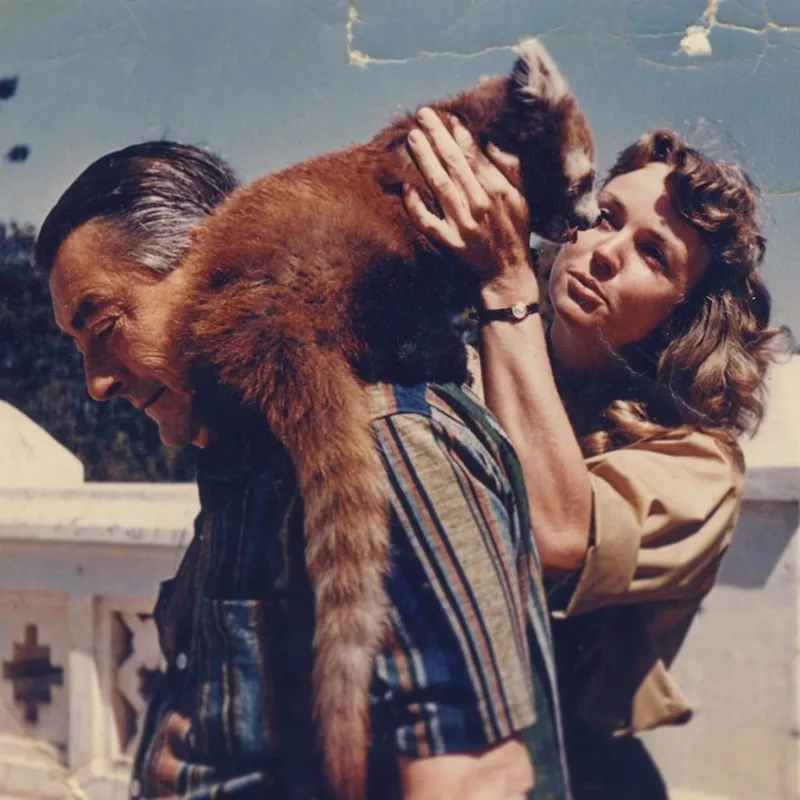
Meanwhile, his life continued to resemble an adventure novel. He was credited with a friendship with Ahata Kristi, an acquaintance with Jean-Paul Belmondo, tiger hunts, stories about the yeti and incredible diplomatic adventures. Some of these stories became legends over the years, but his biography contained enough real stories to fill a book.
The Royal Hotel operated until 1969, after which Lisanevych continued in the restaurant business. His name later became associated with Yak & Yeti, one of Kathmandu's best-known hotel brands. Borys himself died in Nepal in 1985 and remained there forever.
Today, Nepal welcomes millions of travelers, and Kathmandu has long been one of the main gateways to the Himalayas. The country's tourism industry, of course, was not created by one person. But Nepalese researchers directly call Lisanevych a pioneer of commercial tourism who helped the country open up to foreigners and showed that its mountains, culture and atmosphere could become a global magnet.
His story began in Odesa, continued on the Paris stage, passed through Calcutta and ended in Kathmandu. And in between these points, the Odesa native managed to do what sometimes requires an entire state: persuade the world to pay attention to a country that almost no one had seen before him.
Text: Arina Blyzniuk
Comments
No comments yet — be the first.
Discuss on TelegramRead also
 A $100,000-a-Night Suite: What People Really Pay For at the World's Most Expensive Hotels
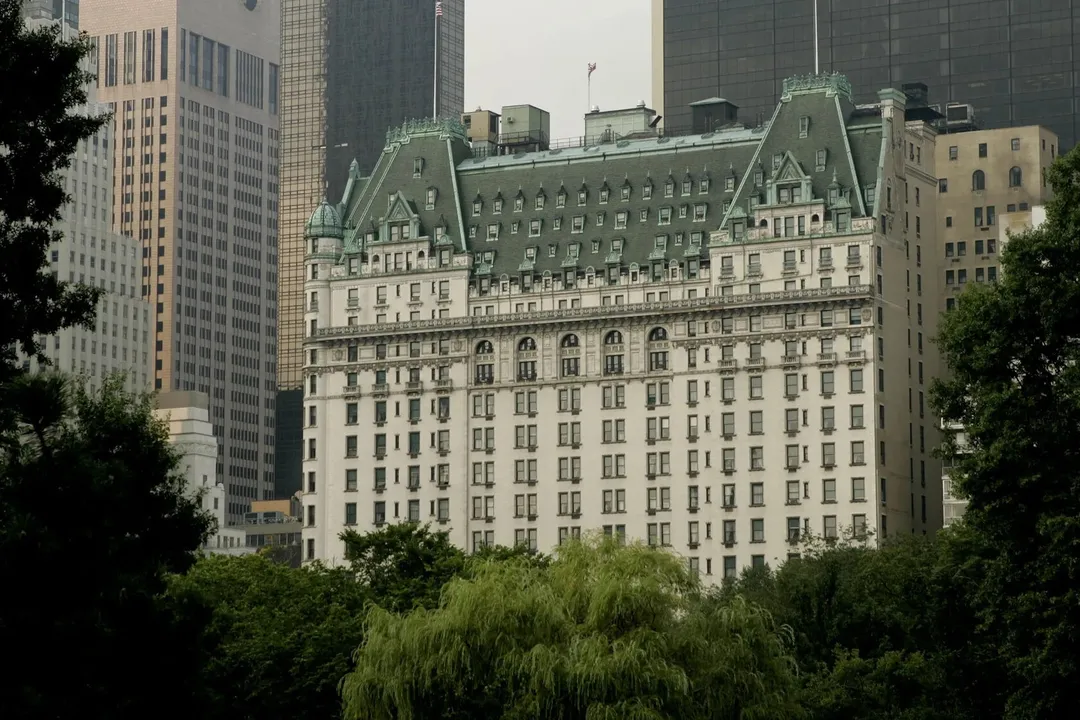 Hotel from “Home Alone 2” Closes Its Doors: Why the Plaza Is Disappearing from New York for Four Years
 Primark gives in: why the biggest opponent of online shopping has finally started delivering clothes to homes